You’ve decided your business is ready for fibre.
Maybe your existing copper links are struggling with cloud traffic and video, maybe you’re linking multiple floors or buildings, or you’re planning a data centre refresh. Whatever the trigger, the next question is usually:
“What actually happens during a fibre optic installation – and how much disruption will it cause?”
From the outside, fibre can sound mysterious or overly technical. In practice, a well‑planned fibre upgrade is a structured, predictable project that can often be delivered with minimal downtime for your users.
In this guide, we’ll walk through:
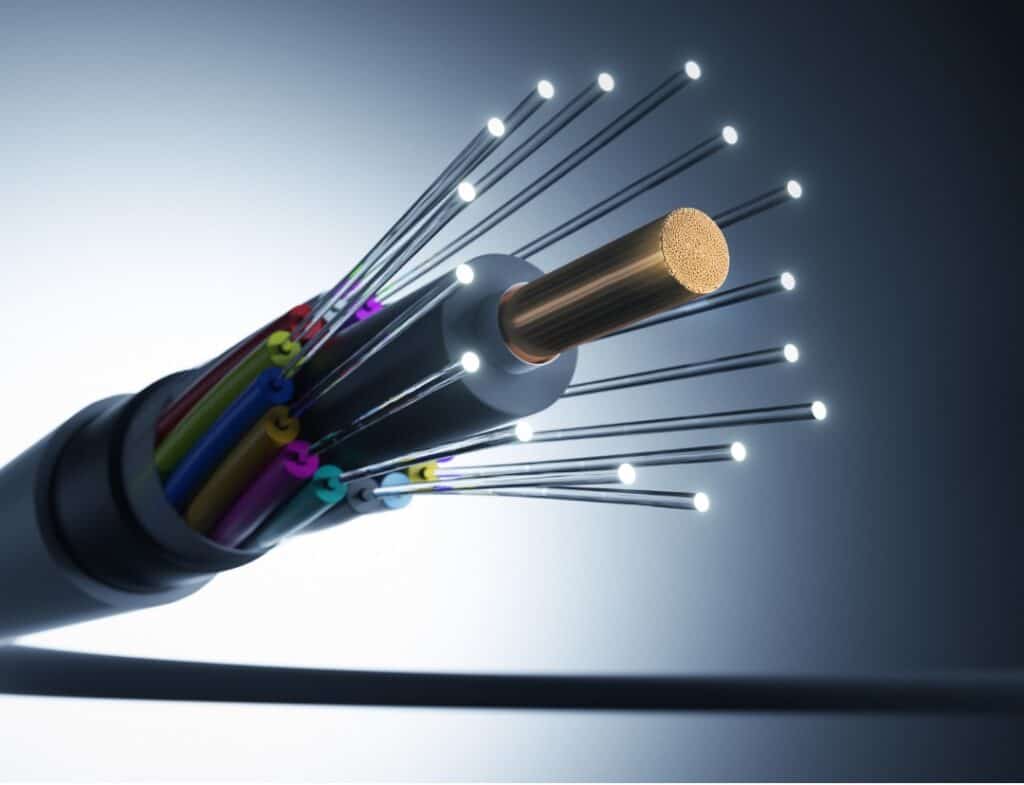
- What fibre optic cabling is (in plain language)
- The typical stages of a business fibre installation
- What you’ll see on site at each stage
- How good planning keeps your network online
- What your IT team needs to do – and what ACCL handles for you
By the end, you should have a clear picture of what to expect, so you can move ahead with confidence rather than uncertainty.
Step‑by‑step: what happens during a fibre optic installation?
Although every site is different, most fibre upgrade projects follow a similar structure. Here’s how it looks from your side.
Step 1: Survey and cabling audit
The starting point is understanding both your building and your existing cabling.
An ACCL engineer will typically:
- Review floor plans and existing comms room layouts
- Walk risers, ceiling voids and cable routes
- Identify current link paths between switches and cabinets
- Check available containment (trays, basket, conduits) and spare capacity
If you don’t have a current view of your cabling, this may form part of a more formal data cabling audit, which gives you a clear baseline to plan from.
What you’ll see on site
- Engineers with plans, torches and test gear in plant rooms, risers and comms rooms
- Minimal interference with staff – most of this work is behind the scenes
The output is a short report and/or drawings showing where fibre should run, how it will be supported, and how it integrates with your existing network.
Step 2: Design and planning
Next comes the design – this is where decisions are made about:
- Which routes will move to fibre (e.g. between specific cabinets, floors or buildings)
- Single‑mode vs multi‑mode fibre, based on your distances and equipment
- Number of cores (fibres) in each cable – including spares for future growth
- Patch panel and termination locations
- Resilience options (e.g. dual diverse routes for critical links)
Your IT team will usually be involved at this stage to confirm:
- Current and future bandwidth requirements
- Which switches or firewalls will connect to the new fibre
- Any change control windows or blackout periods
What you’ll see
- A clear, documented design – not just “we’ll run some fibre”
- Proposed routes and cabinet diagrams you can review and sign off
This is also the point where we’ll plan working hours. In live environments, fibre work is often staged out of hours or over weekends to limit impact.
Step 3: Preparing routes and containment
Before any fibre is pulled, the physical path needs to be ready:
- Existing tray or basket may be tidied or extended
- New containment may be installed where routes don’t currently exist
- Penetrations between fire compartments are planned and prepped
Fire‑stopping is especially important in modern buildings. Any new holes drilled for cable bundles will be correctly sealed once fibre is in place.
What you’ll see
- Some access to risers, ceiling voids or service corridors
- Short periods where ceiling tiles are removed and replaced
- Minor noise and dust in specific areas (usually kept to agreed times)
Good contractors will leave areas clean and reinstated after work. At ACCL, we treat this part with the same care as the cabling itself – neat routes now make future changes much easier.
Step 4: Pulling and installing the fibre
Once routes are ready, the fibre cable is installed.
Depending on the building, engineers may:
- Use draw ropes in existing ducts or conduits to pull new fibre through
- Run fibre in cable basket or tray alongside existing copper
- Install internal or external‑grade fibre between buildings
Care is taken to:
- Protect the cable from crushing, kinks and tight bends
- Maintain correct bend radii according to manufacturer specs
- Label cables clearly at both ends and on any intermediate points
What you’ll see
- Engineers working methodically along agreed routes
- Cables being pulled from drums or boxes into containment
- Very little change for end‑users – most of this happens out of sight
At this stage, there is normally no impact on your live network, as the fibre isn’t yet connected into switches.
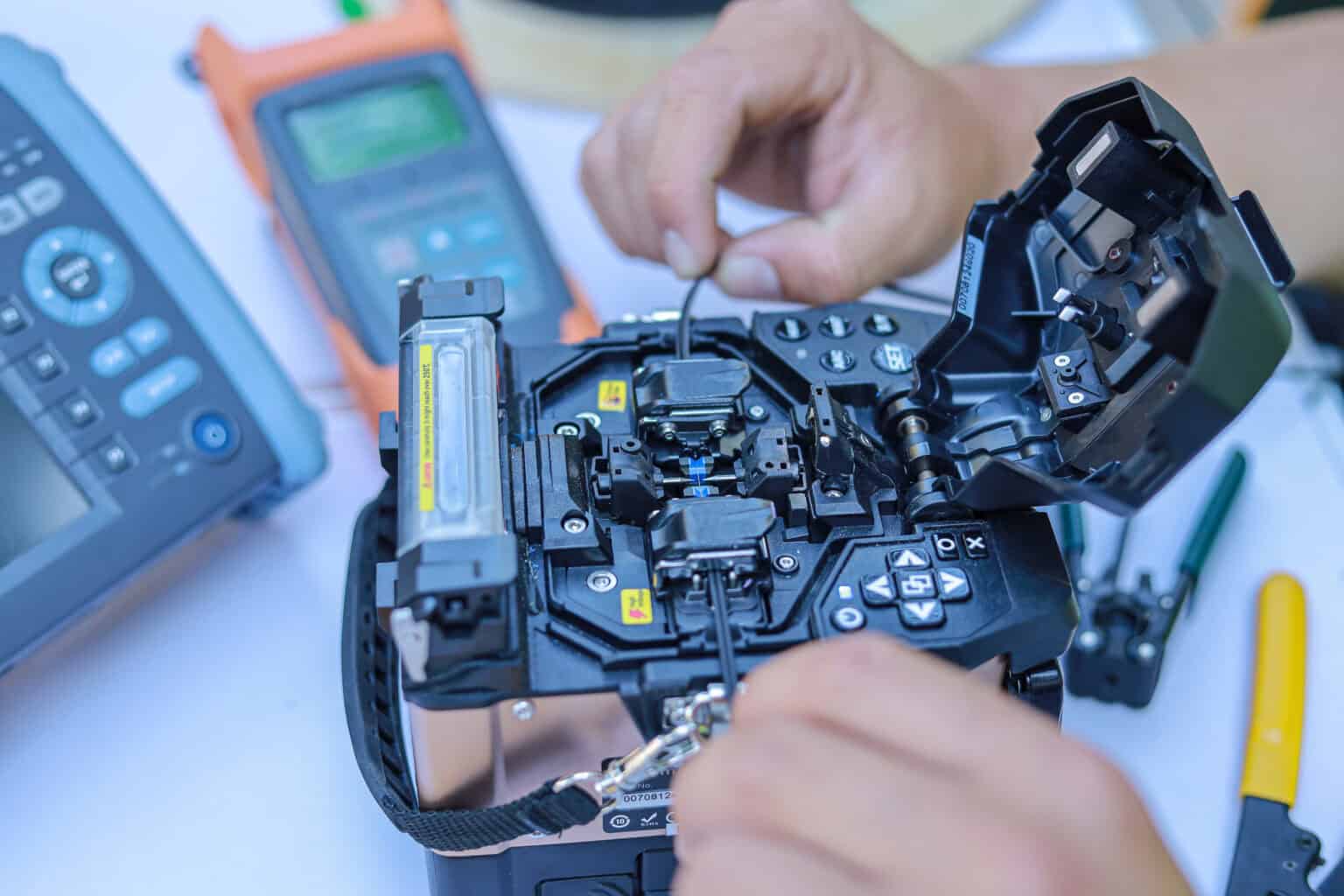
Step 6: Testing every fibre link
After termination, every fibre core is tested.
Engineers use specialist testers (for example, light source and power meter, or OTDR) to check:
- End‑to‑end continuity (no breaks)
- Signal loss within acceptable limits
- Connector performance
Any cores that don’t meet standard are reworked until they pass.
What you’ll see
- Test equipment connected to your new panels
- A test report generated for your records
This testing is your assurance that the new cabling meets both manufacturer and industry standards and will support the speeds you’re planning to run.
Step 7: Network cutover and migration
Up to this point, your existing network can remain largely untouched. The cutover is where new fibre links replace old copper (or lower‑spec fibre) as the live paths between switches or buildings.
To minimise disruption, this is usually:
- Planned during low‑usage periods (evenings or weekends)
- Executed with defined rollback steps if anything behaves unexpectedly
- Tested thoroughly before users return
Typical cutover steps might include:
- Configure new fibre interfaces on switches (e.g. SFP/SFP+ ports).
- Patch switches into the new fibre patch panels.
- Move VLANs or uplink settings from old ports to new ports.
- Verify connectivity, routing and redundancy paths.
What you’ll see
- A short, planned outage window for specific links or sites
- Engineers in comms rooms patching and checking connectivity
- Post‑change confirmation that services are back and performing as expected
In many cases, especially where redundant links exist, outages can be kept to seconds or minutes.
Step 8: Documentation and handover
Finally, your cabling and network records are updated to reflect the new installation. A good handover pack will typically include:
- As‑built drawings showing fibre routes and cabinet layouts
- Test results for each fibre link
- Patch panel schedules and labelling schemes
- Details of any spare cores and how they’re presented
Your internal IT team gets a clear, accurate view of what’s been installed, so they’re not guessing six months down the line.
For sites with more complex infrastructure, this may tie into a broader structured data cabling documentation set, covering both copper and fibre routes.

How long does a typical fibre installation take?
It depends on:
- Number of runs and total length
- Complexity of routes and access (e.g. tight risers, secure areas)
- Whether you’re linking multiple buildings or just internal cabinets
As a rough guide:
- Small office / single new fibre link – often a day or two on site plus planning and cutover.
- Medium office / several floors – typically several days of cabling plus a planned evening or weekend cutover.
- Larger campuses / multiple buildings – phased over several weeks with staged cutovers.
Your installer should provide a clear programme for your specific project so you know what’s happening when.
What do we (the client) need to do?
Most of the heavy lifting sits with the installation team, but you’ll usually be responsible for:
- Providing up‑to‑date floor plans and cabinet locations
- Ensuring building access and permits are arranged
- Approving designs, routes and working hours
- Managing internal change control and communication with users
- Making or approving configuration changes on active network equipment
ACCL’s role is to make this as straightforward as possible by providing clear designs, method statements and change plans that your IT and facilities teams can sign off with confidence.
What happens to our existing copper cabling?
In almost all cases, you’ll keep using copper for end‑user connections. The upgrade is focused on backbone and inter‑cabinet links.
Options for the old backbone cabling include:
- Leaving it in place as a backup (where routes and space allow)
- Repurposing some copper runs for lower‑bandwidth tasks
- Removing truly redundant cabling to tidy up risers and trays
If you have a lot of legacy cabling and cabinets, a fibre upgrade is often a good moment to rationalise and clean things up. ACCL can combine works with a cabinet refresh or tidy so your new fibre sits in a well‑organised environment.
How does fibre installation fit into wider data centre or server room projects?
If you’re upgrading a data centre or core server room, fibre installation is usually one piece of a broader programme that might include:
- New core and aggregation switches
- Racks and cabinet re‑layout
- Power, cooling and resilience improvements
ACCL’s data centre solutions team frequently integrates fibre upgrades into these projects, ensuring that cabling, switching and physical layout all work together rather than being treated separately.
FAQs: fibre optic installation and network upgrades
Q: Do we need to shut the whole network down to install fibre?
No. Most installation work happens alongside your existing network. Only the final cutover – when links are moved from old to new – requires short, planned outages on specific paths.
Q: Can we mix old and new technologies during the upgrade?
Yes. It’s common to run new fibre in parallel with existing copper or older fibre, then migrate links in phases. Your installer will design a staged approach that fits your risk appetite and change windows.
Q: Will our switches support fibre, or do they all need replacing?
Many business‑grade switches already have SFP/SFP+ slots for fibre uplinks. During design, we’ll review your current hardware and advise where small upgrades (e.g. adding modules) or larger replacements are required.
Q: Is fibre only for large enterprises and data centres?
Not at all. Smaller and mid‑sized organisations increasingly use fibre for floor‑to‑floor links, server rooms and inter‑building connections. The decision is less about your headcount and more about your bandwidth, distance and growth needs.
Q: What if we’re not sure whether we really need fibre yet?
A short assessment of your current cabling, link utilisation and growth plans will usually give you a clear answer. That’s exactly what’s covered in a structured cabling audit or pre‑project survey.
Bottom Line
A fibre optic installation doesn’t have to be mysterious or disruptive. With the right planning, it’s a structured, low‑risk way to:
- Remove bottlenecks in your network
- Prepare for future growth in users, devices and applications
- Improve resilience between key cabinets, floors and buildings


Written by
Wayne founded ACCL in 1997 and has led more than 28 years of project delivery, helping organisations design, install and modernise the network infrastructure behind reliable connectivity, office moves and refurbishments. His experience spans copper cabling, fibre backbones, data centre infrastructure, Wi-Fi, CCTV and access control. About ACCL