Wi-Fi installation
Access points installed to the survey design.
Explore Wi-Fi installation →
Wireless Network Installation & Support London
Professional Wi-Fi site surveys across London, Kent and Surrey, with heatmaps, interference and capacity analysis and a prioritised action plan.
Coverage and signal quality mapped on every floor.
Weak signal identified before any kit is chosen.
6 GHz planned in where it suits your devices.
High-bay Wi-Fi around four new production lines in Erith.
Wi-Fi site surveys
Fast, reliable Wi-Fi does not happen by accident: it is engineered. If your teams deal with dead zones, slow speeds, unreliable video calls or Wi-Fi that fails in key areas, an ACCL wireless site survey measures and models what is really happening. We find the cause, from interference and poor access point placement to capacity limits, and give you a clear plan to fix coverage, performance and reliability.
Access points installed to the survey design.
Explore Wi-Fi installation →Managed Wi-Fi for offices and campuses.
Explore corporate wireless →All our commercial Wi-Fi services.
Explore wireless →Cabling and network surveys for your premises.
Explore site surveys →Survey-led Wi-Fi projects
In each of these, the survey shaped the design, and in one it found a problem the client did not know they had.
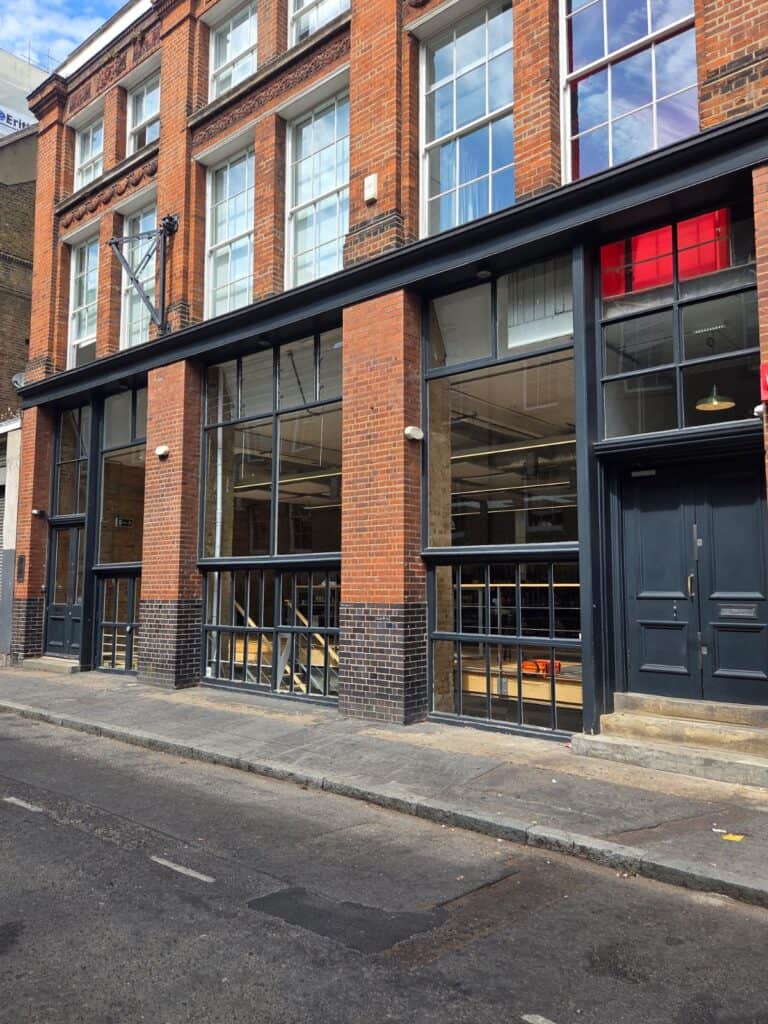
Ekahau survey, 7 access points and legacy cabling reuse, delivered in ten days.

A Wi-Fi survey exposed a fibre backbone renewal Legal 500 did not know it needed.

Site-survey-led high-bay Wi-Fi around live production at an Erith bottling plant.
What a survey looks at
We look beyond ‘is there a signal?’ to whether people can actually work, in the places that matter most.
Coverage and signal quality, contention at peak times, roaming between access points, and backhaul limits such as cabling, PoE budgets, switching and uplinks.
Guest, staff and IoT segmentation, authentication (WPA2, WPA3, captive portal where suitable), signal leaking outside the building and resilience for critical areas.
Concrete, metal and glass, partitions, racking, plant rooms and ceiling heights; how people move; and outdoor yards, terraces and loading bays where needed.
Book a survey and get a plan that fixes it properly.
Book a Free Site SurveySurvey types
The right method depends on whether you are designing new Wi-Fi, fixing existing Wi-Fi or signing off an install.
Design-led, for new installs, refurbishments and fit-outs. We model access point placement from floor plans and materials before any hardware goes in.
Maps signal strength and RF conditions to find dead zones and interference, without loading the network.
Connects devices and tests real throughput, latency and user experience. Ideal when you have signal but it is still slow.
After an install or major change, checks the network against agreed targets and flags any tuning needed, so you can sign off with confidence.
Validated corporate Wi-Fi →What’s included
A typical survey and optimisation engagement follows five stages.
Users, devices, critical areas and growth plans.
Access constraints, mounting options, comms room locations and backhaul routes.
On-site measurement, modelling or both, depending on the survey type.
Interference and channels, capacity and density for busy areas, and security requirements.
We walk your team through the findings, so everyone knows exactly what to do next.
What you receive
An actionable report you can hand to your IT team, a third-party MSP, or keep with ACCL for implementation. Deliverables can include:
What surveys uncover
| What we find | How we fix it |
|---|---|
| Access points placed for coverage but not capacity, so busy areas collapse | Add or relocate access points and tune power and channel plans |
| Too few access points (dead zones) or too many (self-interference) | Right-size density and improve channel reuse |
| 2.4 GHz overload and legacy devices dragging performance down | Prioritise 5 GHz and 6 GHz where suitable and segment legacy devices |
| Poor roaming between access points | Adjust the design, minimum data rates and roaming settings |
| Backhaul bottlenecks: old cabling, limited PoE, switching limits | Upgrade cabling, PoE or switching so the Wi-Fi can perform |
| Interference from neighbouring networks or building services | Channel strategy, placement and shielding considerations |
★★★★★
Excellent60+ Google reviews“We would like to take this opportunity to thank, You, Wayne and the team for such an excellent and professional implementation.”Wise Music Group
Wi-Fi surveys explained
A Wi-Fi site survey, or wireless site survey, measures and models wireless coverage, interference and capacity across your premises. It identifies dead zones and performance bottlenecks, then recommends access point locations, channel plans and configuration changes so the network meets your coverage, speed and device requirements.
Most ACCL surveys include floor-by-floor heatmaps, interference and channel congestion analysis, capacity planning for high-density areas such as meeting rooms, classrooms and auditoriums, recommended access point locations with mounting and backhaul requirements, and a prioritised optimisation plan. For a longer explanation, read how Wi-Fi site surveys work.
A survey is usually the fastest route to the right fix when:
A survey is the difference between ‘buy more access points’ and ‘engineer the right network for this building’. It makes the network ready for IoT devices such as cameras, sensors, printers and access control without hurting staff performance. It gives you a design that scales as headcount, devices and floor plans change. It maps how concrete, metal, glass and dense partitions kill RF performance, so coverage is consistent. It plans for several devices per person, laptops, phones and tablets alike. And it highlights weak points and misconfigurations, supporting better segmentation and a stronger wireless security posture.
Heatmaps are colour-coded coverage maps that show signal quality by area and floor. They make the problem visible: where signal is weak, where access points overlap and interfere, and where coverage leaks outside the building. Combined with how people move through the space, they show where smooth roaming matters most. They are also the baseline for checking any fix.
Interference from neighbouring networks, building services and too many access points on the same channels is one of the most common causes of slow Wi-Fi. A passive survey maps the RF environment without loading the network; channel planning, power settings and placement then reduce the interference. Where legacy devices crowd the 2.4 GHz band, moving capable devices to 5 GHz or 6 GHz frees it up.
We plan around coverage and capacity targets first, then recommend the most cost-effective standard and hardware for your use case, including 6 GHz where your devices support it. A survey before an upgrade stops you buying more access points, or a newer standard, than the building needs.
Outdoor spaces bring their own challenges: interference, mounting, weather exposure and distance. If your business needs Wi-Fi in a yard, on a terrace, in loading bays or in external guest spaces, we include it in the survey from day one, with secure backhaul planned to each outdoor access point.
Wi-Fi is only as good as the cabling behind it. Every access point needs a data link and, usually, Power over Ethernet from the switch. The survey checks cabling, PoE budgets, switching and uplinks, because a backhaul bottleneck can limit Wi-Fi however well the access points are placed. If you need a survey of your wired network or premises cabling too, book a free site survey and we will cover both.
To make the survey faster and the recommendations more accurate, it helps to have:
If you want ACCL to deliver the remediation end to end, we can install and configure access points, including secure guest networks; provide structured cabling to each access point, often with PoE; optimise controller settings, channel plans and roaming; carry out post-install validation testing; and provide ongoing support and maintenance options. See our Wi-Fi survey and optimisation services, Wi-Fi installation and Wi-Fi for offices and corporate workplaces, schools and colleges, banks and financial institutions and other industries.
Wi-Fi surveys are scoped to the site. Typical cost drivers are building size, number of floors and layout complexity; whether you need predictive design, on-site testing or both; density and performance requirements, for example events, education or hospitality; whether outdoor areas are included; and reporting depth, from an executive summary to a full technical annex.
Before you book
A Wi-Fi site survey measures and models wireless coverage, interference and capacity across your premises. It identifies dead zones and performance bottlenecks, then recommends access point locations, channel plans and configuration changes to meet your requirements. Most ACCL surveys include floor-by-floor heatmaps and a prioritised optimisation plan you can act on.
A predictive survey models access point placement from floor plans and building materials, so it suits new installs, refurbishments and fit-outs before any hardware exists. An on-site survey measures the real network: a passive survey maps signal and interference, and an active survey tests throughput and latency on connected devices. Many projects use both.
Yes, especially if you have dead zones, poor meeting room performance or unreliable roaming. A survey shows whether the fix is placement, configuration, more access points, cabling and backhaul improvements or an equipment upgrade, so you spend money on the actual cause rather than guessing.
Yes. Before a new installation, a survey confirms coverage, capacity, interference and access point requirements, so you know how many access points you need, where they go and how they are mounted. That avoids both dead zones from too few access points and self-interference from too many.
It depends on the size and complexity of the building. Many single-site surveys can be completed in a day, with reporting delivered shortly after. Larger or multi-building estates are planned in phases. Surveys are low-impact: we plan access around your working hours and agree any sensitive areas in advance.
You receive an actionable report with heatmaps, recommended access point locations, interference findings, capacity considerations and a prioritised optimisation plan. You can hand it to your IT team or MSP, or keep it with ACCL. If you go ahead with installation, we also provide as-built documentation and validation results.
Yes. ACCL can deliver the remediation end to end, including Wi-Fi installation, structured cabling to access points (often PoE), configuration, optimisation and post-install validation testing. Outdoor coverage can be included, with mounting, weather exposure, interference and secure backhaul designed in from the start.
Yes. We plan around coverage and capacity targets first, then recommend the most cost-effective standard and hardware for your use case, including 6 GHz planning where appropriate. A survey before an upgrade avoids overspending on access points or a standard your devices cannot use yet.
Cost depends on the size and complexity of the building, the number of areas to survey, whether predictive, passive, active or validation methods are needed, outdoor areas and the depth of reporting. We confirm the scope and send an itemised quote before work begins, so there are no surprises.
Yes. ACCL carries out Wi-Fi site surveys across London, Kent, Surrey and the wider South East, for offices, schools and other commercial sites. Larger or multi-building estates are planned in phases. Tell us where your sites are and we will confirm how we can help.

The team behind your survey
Founded in 1997, ACCL surveys, designs, cables and installs commercial Wi-Fi through its own engineers. We work across London, Kent, Surrey and the South East.
Wayne Connors founded ACCL in 1997 and has led our commercial projects ever since, including the survey-led Wi-Fi 7 upgrade at Legal 500 on Fleet Street and Tidraw’s ten-day office move. We are a member of the London Chamber of Commerce and Industry.
Book a Wi-Fi site survey in London
If Wi-Fi performance is holding your team back, talk to one of our Wi-Fi site survey engineers. We confirm the scope, then survey the site and give you a plan you can act on.
Excellent · 60+ Google reviews · Founded 1997 · £10m liability cover
Expert Insights

Diagnose common camera, recording and picture faults, and know when to call in an engineer.
Read guide
Plan a commercial cabling project, from cable types and standards to installation and testing.
Read guide
Understand the key factors that determine commercial cabling costs and project budgets.
Read guideBrowse practical guidance, industry updates and planning tools for commercial network infrastructure projects.
Active Communication Company Ltd trades as ACCL, ACCL Data Cabling London and ACCL Data Cabling Kent · Commercial data cabling and network infrastructure specialists