Built for tenant turnover
Spare capacity means re-letting a floor does not mean re-cabling it.

Structured Data Cabling
Structured data cabling for co-working spaces and serviced offices across London, Surrey and Kent, sized for the next re-let and installed while the space stays open.
Spare capacity means re-letting a floor does not mean re-cabling it.
Member Wi-Fi, admin systems and building services are segmented.
Every run is certified before handover and fully documented.
ACCL cabled three phases of workplace change.
Recent workplace work: Grant Thornton, 30 Finsbury Square, London
Co-working space data cabling
ACCL cables floors that change tenants often: Cat6A with spare capacity, access points placed for hot-desk density, and containment designed to be adjusted. Operators re-let faster, members get dependable Wi-Fi, and any engineer can pick up the records later.
The standards behind ACCL’s wider office and workplace work.
Explore →Moves, adds and changes for occupied offices.
Explore →Access points and backhaul for dense hot-desk areas.
Explore →Where every ACCL sector page and service area is listed.
Explore →Recent projects
Recent office and workspace projects.
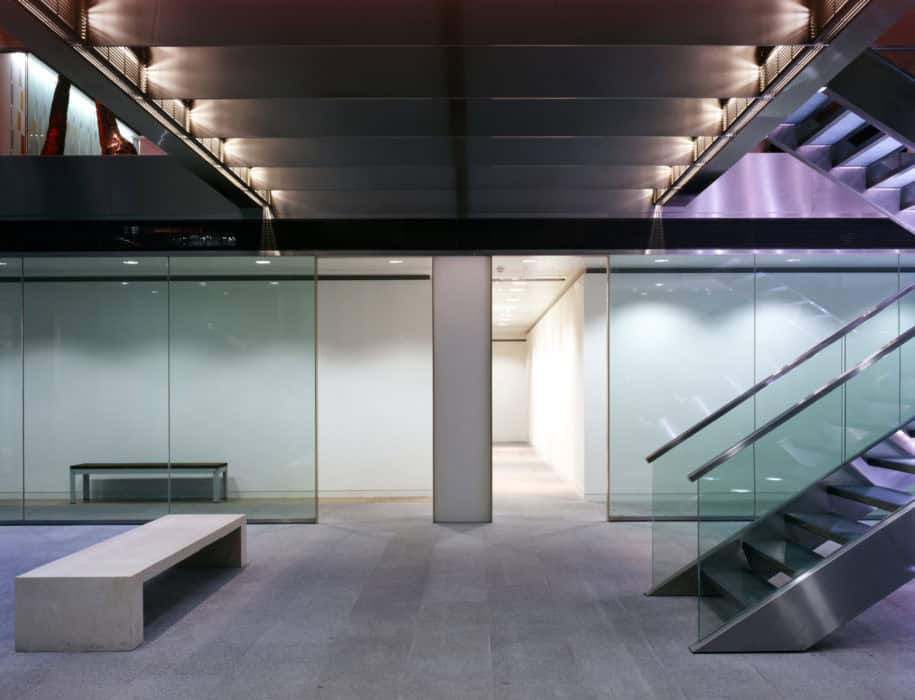
ACCL supported Grant Thornton through three phases of workplace transformation at 30 Finsbury Square over almost a decade: relocation, refurbishment and headquarters consolidation.
Read the case study
Seven engineering teams, seven communications cabinets and one carefully controlled out-of-hours migration.
Read the case study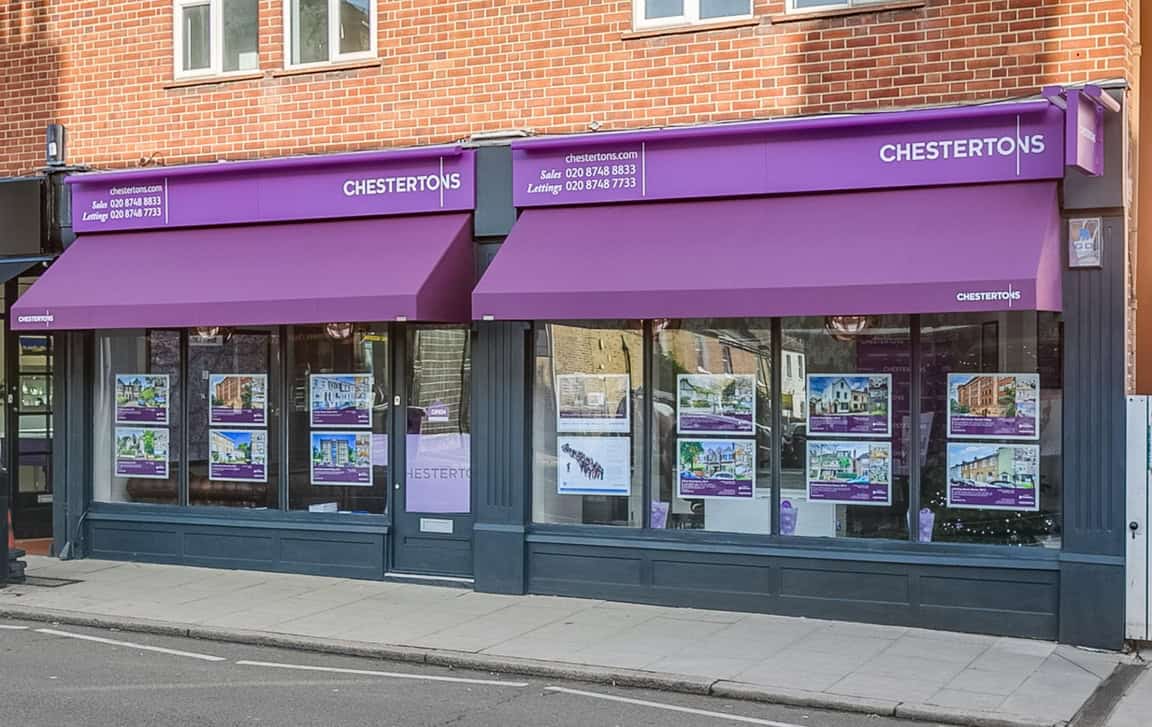
How ACCL grew from an emergency Knightsbridge call-out into the standing infrastructure partner for 37 Chestertons and Chase Buchanan branches.
Read the case study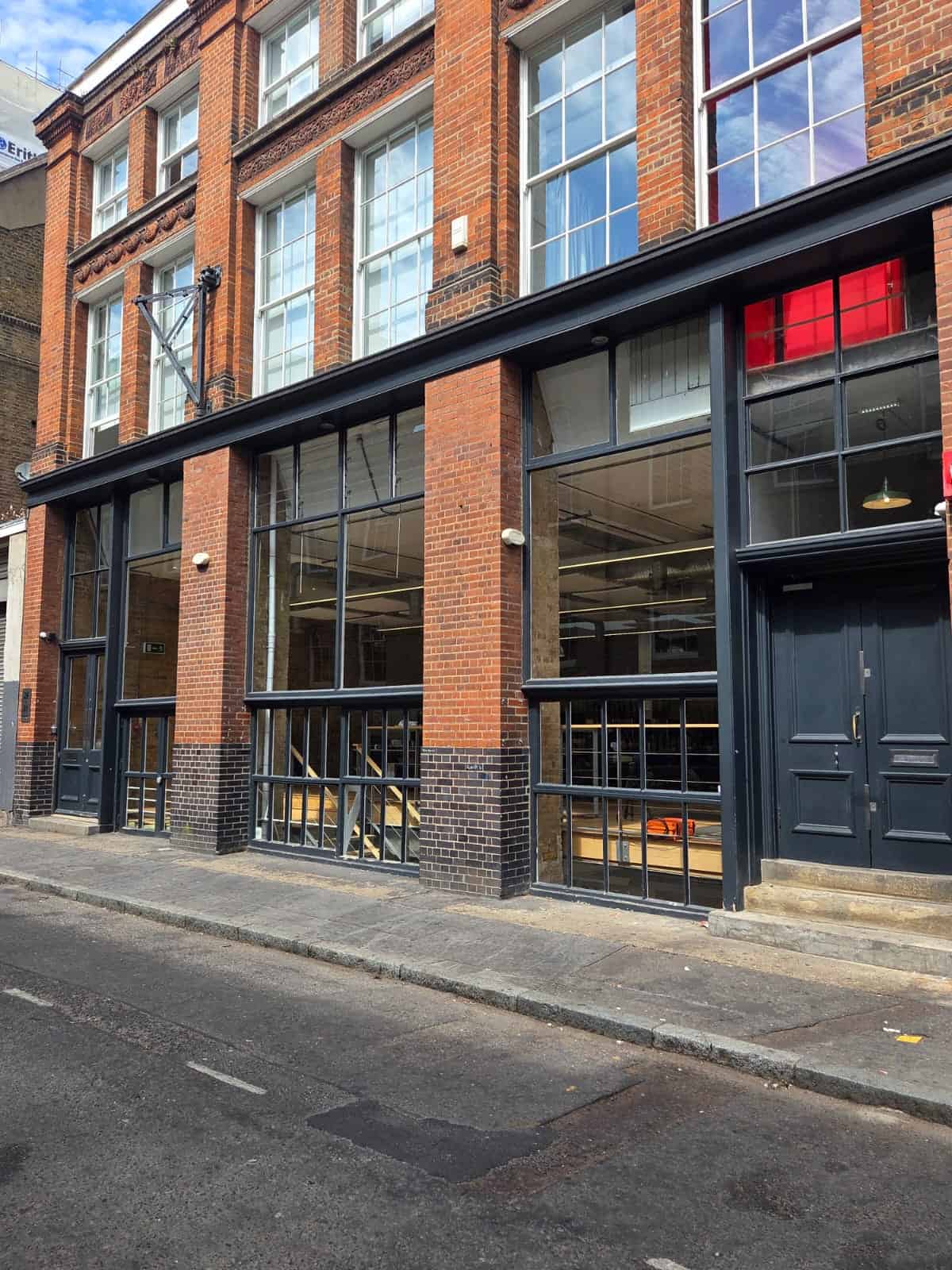
How ACCL delivered a complete Wi-Fi-first office network for Tidraw in Old Street, London, against a ten-day deadline: an Ekahau survey, seven Wi-Fi 7 access points.
Read the case studyDelivered in live offices
Cabling guide
Co-working spaces and serviced offices do not behave like a single-tenant office. Floors are reconfigured between lets, member numbers swing from quiet to fully booked within days, and every desk and meeting room needs dependable Wi-Fi backhaul without a trailing cable in sight.
A layout designed once and never revisited soon becomes the thing that slows down a re-let or the arrival of a new member business. ACCL designs structured cabling around that reality, not against it.
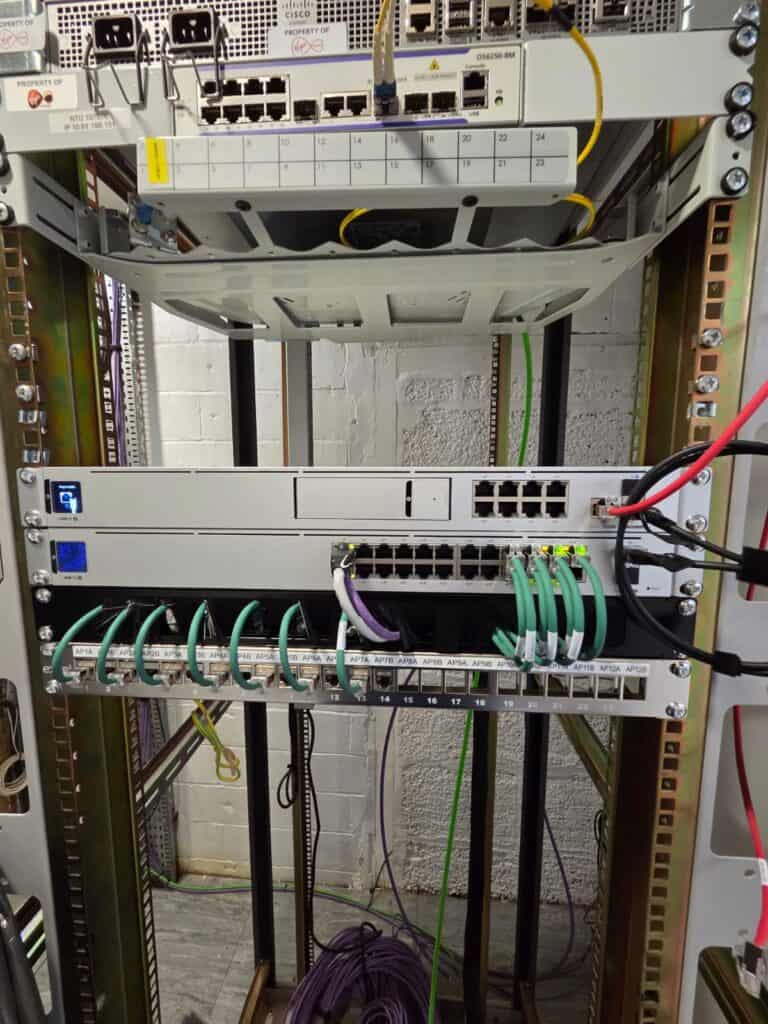
Better cabling removes the problems that cost operators members and rent. The five most common are:
Partitions, desks and private suites need to be reconfigured between lets without a full re-cable each time.
Hot-desks and meeting rooms need enough access points and backhaul bandwidth for many users at once, not a single router.
Member Wi-Fi, admin systems and building management must stay properly separated.
A vacant floor or suite must be cabling-ready quickly, because every empty day is lost rental income.
Open-plan, design-led spaces need tidy, out-of-sight cable management, not exposed trunking.
Left unaddressed, these issues show up as member complaints, slower re-lets and higher long-term maintenance costs.
Co-working-ready cabling is built to be changed. The main elements are:
Spare capacity from day one means partitions can move and desks can be added without new runs each time.
Coverage is planned for busy open-plan floors, not just the boardroom.
A different engineer can pick up future changes without starting from scratch.
Routes are designed to be adjusted, not installed once and forgotten.
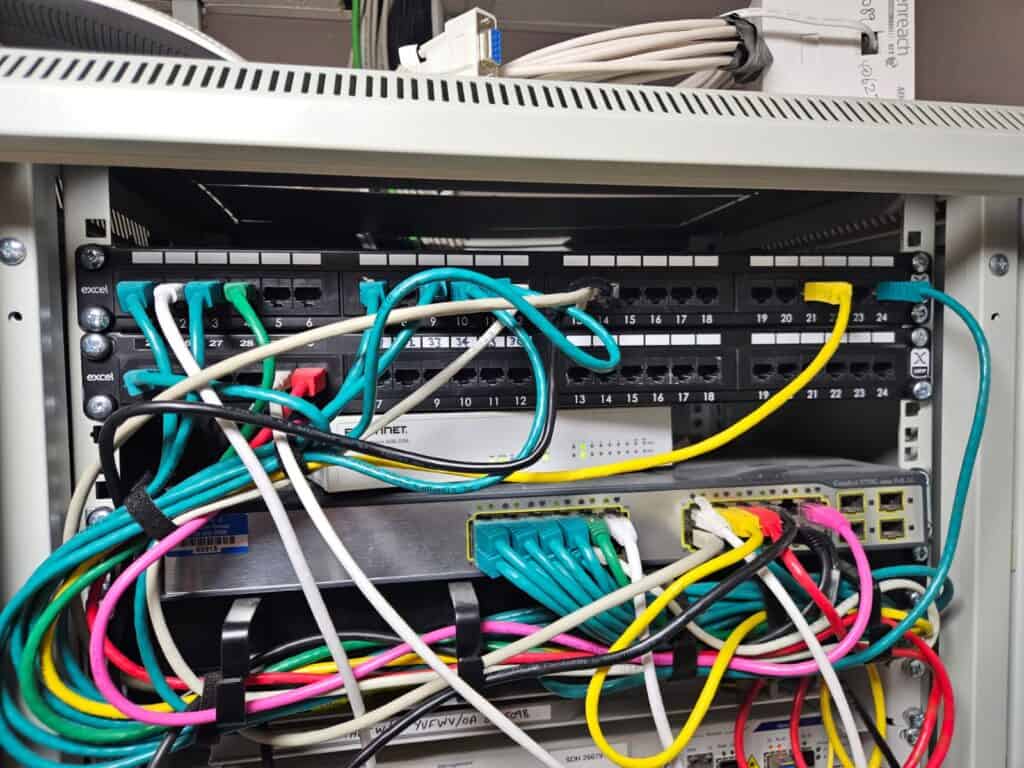
Operators should plan the cabling for the turnover, not for the current floor plan. Four decisions at design stage make every later re-let quicker:
Spare runs are placed where partitions and desks are most likely to move, so a new layout reuses existing cabling.
Patching and outlets carry clear labels that match the network diagrams, so a change is a short job rather than a trace-and-guess exercise.
Member Wi-Fi, admin systems and building management are separated from the start, so a new member business never touches the building’s own systems.
Test results and as-built diagrams go to the operator, so any engineer can take on the next change.
A co-working project follows six steps, from survey to ongoing support.
Engineers record current and expected member density, meeting-room layout and planned reconfiguration.
Cable runs and containment are sized with spare capacity for future layout changes, not just today’s plan.
Work is scheduled around existing members and events, floor by floor or suite by suite rather than as a full shutdown.
Every cable run is tested and certified before handover.
Labelled patching, network diagrams and a clear record of what is installed where go to the operator.
ACCL is available for future changes as the space is reconfigured or re-let.
The work is planned so the rest of the building keeps trading. Four practices make that possible:
Noisy or disruptive tasks are scheduled outside business hours where needed, and the rest of the space stays open.
Penetrations are reinstated correctly and containment is routed to satisfy landlord and insurance requirements.
Member Wi-Fi, admin and building management systems stay on properly separated infrastructure.
As-built documentation and test results go to the space’s IT support, so future changes can be made with confidence.
Facilities and IT managers gain faster re-lets, steadier Wi-Fi and simpler change. The benefits are:
Flexible cabling accommodates the next tenant’s layout without a fresh installation each time.
Fewer complaints and better retention of member businesses.
Documented, tested infrastructure that any engineer can work with, not just the original installer.
Design, installation and testing are handled together, with a single point of contact throughout.
ACCL has applied the same approach to multi-site and high-turnover environments, including a seven-floor London network infrastructure upgrade for The Writer and a multi-site programme for Chestertons and Chase Buchanan. The approach draws on the standards used across ACCL’s wider commercial cabling and office cabling work.
Before you book
Yes. Work is planned around existing members and events and phased floor by floor or suite by suite, so the rest of the space stays open.
The design includes spare capacity and flexible containment. Partitions, desks and meeting rooms can then be rearranged without a full re-cable each time.
Yes. Every cable run is tested and certified, and results and network diagrams are handed over so future changes are straightforward.
Yes. Cabling and access points are designed to support properly separated networks for member Wi-Fi, admin systems and building management.
Yes. Spare capacity, labelled patching and reconfigurable containment let the next tenant’s layout use the existing infrastructure, so only the outlets and patching that change need work.
Work is phased floor by floor or suite by suite, and noisy tasks are scheduled outside business hours where needed, so the rest of the space keeps its connection.
Book a free, no-obligation site survey. ACCL assesses the space and recommends the right cabling approach for your layout and timeline.
A co-working survey is free of charge and the itemised quote arrives before any work starts. A fixed-price proposal follows within 48 hours of receiving your co-working floor plans. How long the work takes depends on the size of the site and which floors can be closed between lets, so the phasing is agreed with the operator at survey.

The team behind your cabling project
Wayne Connors founded ACCL in 1997 and has led our commercial cabling projects ever since. We’re a member of the London Chamber of Commerce and Industry.
Free cabling site survey
One of our own engineers surveys your site at no cost and with no obligation.
Excellent · 60+ Google reviews · Founded 1997 · £10m liability cover
Expert Insights

Cabling for multi-tenant buildings is no place for guesswork.
Read guide
Upgrading from Cat5e to Cat6A isn’t about chasing the latest badge.
Read guide
A well-designed data network cabling is not only a solid foundation today but also keeps your business open to the possibilities of tomorrow.
Read guideBrowse practical guidance, industry updates and planning tools for commercial network infrastructure projects.
Active Communication Company Ltd trades as ACCL, ACCL Data Cabling London and ACCL Data Cabling Kent · Commercial data cabling and network infrastructure specialists