
Thames Tideway Tunnel, London: mission-critical fibre infrastructure
Ruggedised fibre optic connectivity for six tunnel boring machines on London’s “Super Sewer” programme.
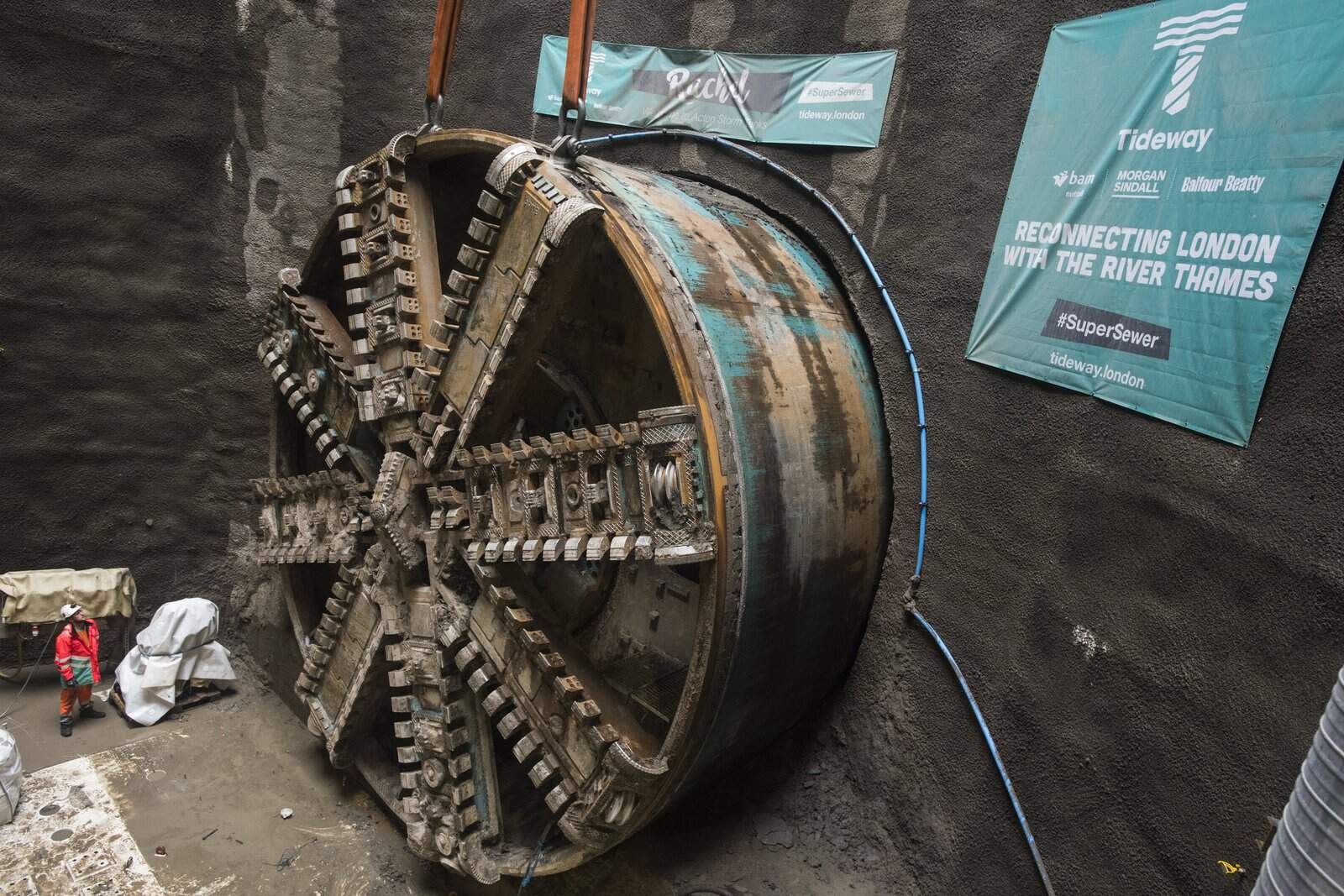
Photo: Tideway
ACCL installed around 30km of ruggedised Excel 16-core single-mode fibre optic cabling, in 500-metre sections, to support six tunnel boring machines on the Thames Tideway Tunnel, including the largest, Millicent and Ursula, at up to 8.84m in diameter. The network carried telemetry, positioning and safety communications for crews working up to 65 metres beneath central London.
The result
ACCL designed and installed the fibre optic backbone behind one of London’s largest civil engineering programmes. The completed network provided the Thames Tideway Tunnel project with:
- 30km+ of high-specification fibre backbone in a hostile tunnelling environment
- Resilient 500-metre data collection nodes for precision telemetry
- Positioning integration across six TBMs boring simultaneously at 35–65m depth
- Constant worker communications meeting strict health and safety requirements
- Real-time structural monitoring data for ground movement risk management
- Intrinsically safe cabling suited to a high-risk, confined, wet environment
Services delivered
Overview
The Thames Tideway Tunnel, known as London’s “Super Sewer”, is a 25km tunnel running beneath the River Thames to intercept sewage overflows that previously discharged into the river. Delivering it required an ambitious tunnelling programme: six Tunnel Boring Machines (TBMs), including the largest, named Millicent and Ursula, with diameters of up to 8.84m, continuously excavating and installing reinforced tunnel linings beneath central London.
For the TBMs and the wider tunnelling operation, robust fibre optic connectivity was mission-critical. It had to support precision GPS tracking, telemetry data collection, and communications and safety systems for workers operating up to 65 metres underground. ACCL was entrusted to design and install the data cabling infrastructure behind these functions.
The challenge
A conventional office cabling approach would not survive this environment. ACCL needed to design and install a robust, high-capacity fibre optic network able to perform under uniquely difficult tunnelling conditions, supporting multi-bore GPS and communications, with telemetry and data collection integration across the length of the tunnel.
That meant working in deep, confined and often wet conditions, routing cable through active tunnelling operations, and using materials and methods rugged enough to survive alongside heavy engineering plant. The network also had to be intrinsically safe, carrying no electrical charge, so it could operate safely in a high-risk underground environment. And because six TBMs were boring simultaneously at depths of up to 65 metres, the network had to scale across every active shaft and tunnel face at once, not just a single site.
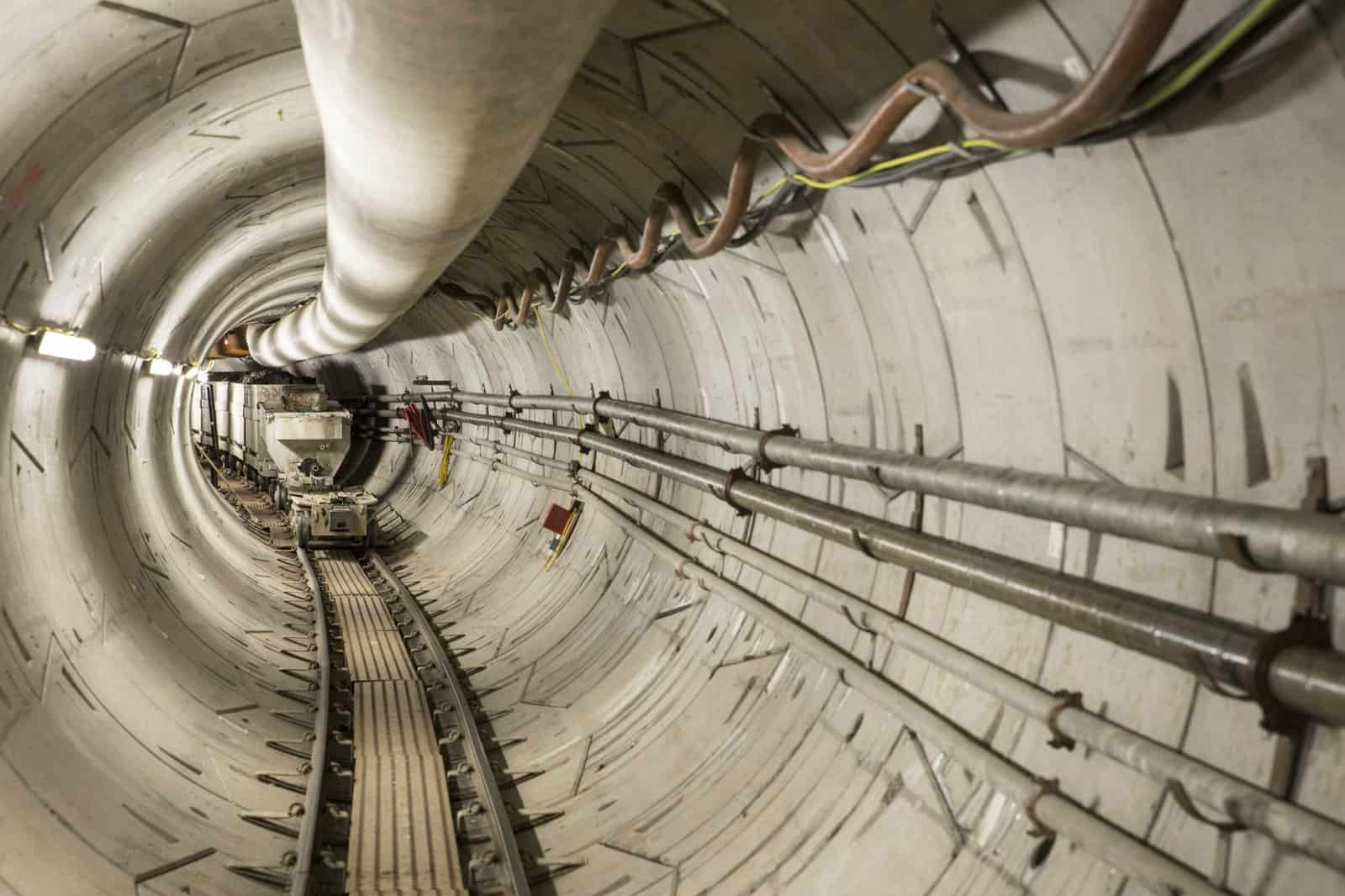 Photo: Tideway
A 30km fibre backbone through the tunnel
ACCL deployed approximately 30km of ruggedised Excel 16-core single-mode fibre optic cabling, installed in 500-metre sections along the tunnel route. Fibre links ran from surface shafts down into the tunnel environment, with spliced interconnections creating an uninterrupted data network from the surface to the tunnel face.
Each 500-metre section acted as a resilient data collection node, so precision telemetry could be gathered consistently along the full length of the route rather than only at a handful of fixed points.
Project context
Civil engineering · Central London
Structured data cabling for major infrastructure programmes →Working in a hostile or safety-critical environment?
ACCL designed and installed a 30km ruggedised fibre backbone for six tunnel boring machines on the Thames Tideway Tunnel. Talk to us about a similarly demanding civil engineering or infrastructure environment.
Telemetry, positioning and worker safety
Beyond raw connectivity, the fibre network did several distinct jobs at once. Permanent fibre links between the bore machines (moles) and surface control systems carried real-time telemetry, including bore head position, machine strain, pressure levels and environmental conditions.
Fibre-fed GPS positioning systems supported accurate boring alignment across 25km of London subsoil, while the same network carried voice and safety communications, keeping crews connected reliably between the tunnel and the surface.
The network also monitored strain and ground movement during construction. Because fibre optic cabling carries no electrical charge, it was intrinsically safe for this kind of structural health monitoring in a high-risk, energetic construction environment, a property copper cabling cannot match.
Technologies used
ACCL’s role
This project needed more than routing cable through a tunnel. ACCL’s scope covered:
- Designing a ruggedised fibre backbone for tunnelling conditions
- Installing around 30km of Excel 16-core single-mode fibre in 500-metre sections
- Splicing surface-shaft-to-tunnel fibre interconnections
- Establishing permanent telemetry links between TBMs and surface control systems
- Supporting fibre-fed GPS positioning across the tunnel route
- Providing voice and safety communications for underground and surface crews
- Enabling real-time structural health and ground-movement monitoring
- Delivering intrinsically safe cabling for a high-risk tunnelling environment
Why the project matters
The Thames Tideway Tunnel shows how far ACCL’s fibre optic capability extends beyond a typical office or retail installation. This was a live, multi-shaft civil engineering programme, with six TBMs boring simultaneously at depths of up to 65 metres, and the fibre network had to keep working through every stage of it.
It also shows fibre optic cabling doing more than carrying data. On this project, one ruggedised network supported precision positioning, machine telemetry, worker safety communications and structural health monitoring, each a critical function in its own right, on a single intrinsically safe infrastructure.
Related guidance
Foreword by Wayne

“The Thames Tideway Tunnel is one of the most demanding environments we have ever installed fibre into, not because of any one part of the job, but because everything had to work at once. Six tunnel boring machines running simultaneously, workers up to 65 metres underground, and a single fibre network expected to carry positioning data, machine telemetry, safety communications and structural monitoring, all through spliced sections running from the surface right down to the tunnel face. Copper simply is not an option down there: it carries an electrical charge in an environment where that is a genuine risk, and it will not reliably cover 30km of ruggedised route through a live construction programme. Fibre was really the only sensible answer, but specifying it is one thing; installing 500-metre sections through an active tunnel, correctly spliced and performing, is another. That is the kind of project our team is built for.”Wayne Connors, Managing Director, ACCL
Frequently asked questions
What did ACCL deliver on the Thames Tideway Tunnel project?
ACCL designed and installed the data cabling infrastructure for the Thames Tideway Tunnel, deploying around 30km of ruggedised Excel 16-core single-mode fibre optic cabling to support six tunnel boring machines.
What is the Thames Tideway Tunnel?
The Thames Tideway Tunnel, known as London’s “Super Sewer”, is a 25km tunnel beneath the River Thames built to intercept sewage overflows that previously discharged into the river.
How much fibre optic cabling did ACCL install?
ACCL installed approximately 30km of ruggedised Excel 16-core single-mode fibre optic cabling, deployed in 500-metre sections along the tunnel route.
Why was fibre optic cabling used instead of copper?
Fibre optic cabling carries no electrical charge, making it intrinsically safe for a high-risk, wet and confined tunnelling environment. It also supported the distance, ruggedisation and data capacity the project needed.
How many tunnel boring machines did the network support?
Six Tunnel Boring Machines (TBMs) bored simultaneously at depths of up to 65 metres. The largest, named Millicent and Ursula, had diameters of up to 8.84m.
What did the fibre network carry?
The network carried real-time telemetry from each TBM, including bore head position, machine strain, pressure levels and environmental conditions, fibre-fed GPS positioning data, voice and safety communications between underground and surface crews, and structural health monitoring data.
How did the fibre network reach the tunnel face?
Fibre links ran from surface shafts down into the tunnel, with spliced interconnections creating an uninterrupted data network from the surface to each active tunnel face.
Did the network support worker safety?
Yes. The fibre network carried voice and safety communications between crews working up to 65 metres underground and teams on the surface, supporting site-wide health and safety requirements.
What was the fibre-fed GPS positioning used for?
It supported accurate boring alignment for the TBMs across 25km of London subsoil, helping ensure each machine bored on the correct line.
Did the fibre network support structural monitoring?
Yes. Fibre optic cabling was used to monitor strain and ground movement during construction, helping engineers manage risk and maintain the stability of surrounding infrastructure.
Why was this project significant for ACCL?
It demonstrated ACCL’s ability to deliver mission-critical fibre infrastructure at scale, in a hostile civil engineering environment, supporting multiple simultaneous functions on a single intrinsically safe network.
Delivering infrastructure in a hostile or safety-critical environment?
Talk to the team that installed a 30km ruggedised fibre backbone for six tunnel boring machines on the Thames Tideway Tunnel.
Book a free site survey 0333 900 0101