
TUI UK & Ireland, Luton: 10 Gigabit network infrastructure upgrade
Migrating a live 24/7 head office of 3,000+ staff onto a new 10 Gigabit fibre network without disrupting business operations.
TUI UK & Ireland’s Luton Head Office supports more than 3,000 people and a wide range of business-critical systems, from Wi-Fi and CCTV to access control and meeting room technology, around the clock. ACCL was appointed to design, coordinate and deliver a completely new 10 Gigabit fibre backbone and network cabinet infrastructure across the building, migrating the organisation onto it in controlled phases while the headquarters continued operating 24/7.
The result
ACCL delivered a complete fibre backbone and network migration programme for a live 24/7 headquarters. The completed project provided TUI with:
- A new 10 Gigabit fibre backbone across 20 cabinets
- 8km of OM4 fibre across 40 diversely routed links
- 65 Cisco switches built, tested and installed
- A four-weekend phased migration, one floor at a time
- No more than three fault calls after any changeover
- Zero disruption to 24/7 live business operations
- A documented, resilient network ready for future growth
- A full network audit and communications cabinet remediation
Services delivered
Overview
TUI UK & Ireland serves millions of holidaymakers each year and operates one of the UK’s largest travel businesses. Its Luton Head Office accommodates more than 3,000 people and supports a wide range of business-critical technology and operational systems.
As technology requirements increased, TUI needed to modernise its network infrastructure to support faster applications, more consistent Wi-Fi and an increasingly connected workplace. The headquarters operates around the clock, meaning ACCL had to deliver a major infrastructure migration while maintaining business as usual throughout the project.
TUI selected ACCL to design, coordinate and deliver the cabling and physical network infrastructure required for the upgrade.
The challenge
TUI’s existing infrastructure was no longer suitable for the performance requirements of the planned network upgrade. A new 10 Gigabit network was required, including a completely new fibre optic backbone connecting 20 network cabinets throughout the building.
The infrastructure supported considerably more than conventional user connectivity. It provided the physical network platform for systems including:
- Corporate IT and business applications
- Wi-Fi
- CCTV
- Access control
- Meeting room technology
- Other IP-connected building services
Any significant network outage therefore had the potential to affect both employees and operational systems. Adding to the complexity, the existing network configuration was not fully documented and some communications cabinets contained disorganised and unidentified cabling. ACCL therefore needed to understand the existing infrastructure before migrating TUI onto the new network.
Phase 1: resilient OM4 fibre backbone
Rather than approaching the project as a conventional cabling replacement, ACCL developed a carefully controlled four-phase migration strategy, with contingency planning built in from the outset so each stage could be completed and verified before the next part of the network was migrated.
The existing fibre infrastructure could not support the new 10 Gigabit switching environment, so ACCL installed an entirely new fibre optic backbone. An eight-person ACCL engineering team installed approximately 8 kilometres of OM4 fibre optic cable across 40 fibre links, connecting 20 network cabinets, completed across two weekends.
Crucially, the fibre routes were diversely routed through the building, using both underfloor and above-ceiling pathways: introducing physical route diversity that reduces the risk of a single incident affecting the entire building’s connectivity.

Phase 2: network audit, documentation & cabinet remediation
Before the network could be migrated safely, ACCL needed to establish exactly what was connected to the existing infrastructure. The legacy network configuration had not been comprehensively recorded, and communications cabinets contained unlabelled and disorganised patching.
ACCL engineers carried out a detailed audit to identify existing circuits, trace network connections, establish the function of services, record cabinet configurations, identify redundant cabling, develop the migration schedule and produce accurate network documentation. ACCL also undertook a comprehensive communications cabinet tidy, creating an organised and clearly labelled infrastructure.
This stage transformed an undocumented legacy environment into a structured network that could be safely migrated and subsequently managed by TUI’s IT team.
Project context
24/7 headquarters · Luton, UK
Planning a network upgrade for a live head office? Get a free site survey →Need a live network migration like TUI’s?
ACCL designed, tested and delivered a new 10 Gigabit fibre backbone across 20 cabinets for a 3,000-person 24/7 head office, with no more than three fault calls after any changeover. Talk to us about a similar project.
Phase 3: off-site Cisco switch build & testing
TUI purchased 65 Cisco network switches as part of the infrastructure upgrade. Rather than introducing untested equipment directly into the live headquarters environment, ACCL built, configured and tested the switches at its off-site build facility before deployment.
This allowed the equipment and associated components to be checked before arriving on site. Pre-building the equipment reduced installation time during the critical migration weekends and helped minimise the risk of hardware or configuration issues occurring during the live changeovers.
Phase 4: four-floor live network migration
The final stage was the migration of the headquarters onto the new infrastructure. This was completed over four weekends, with one floor migrated at a time, and each migration followed a tightly controlled programme.
Friday: preparation
Existing cabling and network services were checked and verified before the migration began. Employees working over the weekend were identified and temporarily relocated to areas of the building where network services would remain active.
Saturday: migration
Existing patching and switching equipment was removed from the relevant cabinets. The new organised cabling, patching and Cisco switches were then installed and connected to the new fibre backbone.
Sunday: testing
ACCL and TUI systematically checked IT equipment and connected systems across the migrated floor, including the wider IP infrastructure relying on the network, ensuring services were operational before employees returned.
Monday: business as usual
Final troubleshooting was undertaken as employees returned to work. Despite the scale and complexity of each migration, no more than three fault calls were received following any of the weekend changeovers: a significant measure of the effectiveness of the planning and testing undertaken beforehand, for a project involving thousands of users, multiple network cabinets, 65 switches and numerous connected systems.
Project management in a 24/7 environment
The technical installation represented only one part of the challenge. ACCL worked closely with TUI’s technical team throughout the project to coordinate access, network availability, employee movements, testing and migration activities.
Detailed contingency plans were prepared for each stage. Close communication between ACCL and TUI meant potential issues could be identified before individual migration weekends rather than during them: a collaborative approach that allowed a major infrastructure transformation to take place while TUI continued operating.
Technologies used
ACCL’s role
This project required considerably more than the installation of cables and switches. ACCL provided TUI with a complete network infrastructure programme, including:
- Design of a four-phase migration strategy
- Installation of 8km of OM4 fibre across 40 links
- Diverse fibre routing for resilience
- Full network audit and circuit tracing
- Communications cabinet tidy and labelling
- Production of accurate network documentation
- Off-site build, configuration and testing of 65 Cisco switches
- Four-weekend phased floor-by-floor migration
- Friday preparation and employee relocation planning
- Weekend installation and Sunday systems testing
- Monday go-live troubleshooting support
- Coordination with TUI’s technical team throughout
A network built for the future
The project provided TUI with a structured, resilient and documented network infrastructure capable of supporting the organisation’s future technology requirements:
- 10 Gigabit network capability: the new OM4 fibre backbone provided the high-speed infrastructure required to support TUI’s upgraded switching environment and increasingly bandwidth-intensive applications
- Improved resilience: diverse fibre routing reduced the risk associated with a single physical cable route
- Minimal business disruption: the phased weekend migration allowed the headquarters to remain operational throughout the programme
- Improved network management: cabinet remediation, structured patching, labelling and comprehensive documentation made the network considerably easier for TUI’s technical teams to maintain and modify
- Improved communications room efficiency: removing redundant cabling and organising the cabinets improved airflow, supporting more effective cooling and easier maintenance
- Infrastructure for future growth: a scalable foundation for future Wi-Fi, security, workplace technology and network expansion
From the initial network audit and cabinet remediation through to 8 kilometres of OM4 fibre, diverse routing, 65 Cisco switches, off-site testing and carefully controlled weekend migrations, every stage was designed around one overriding requirement: TUI had to keep operating. For ACCL, the project demonstrated what can be achieved when structured cabling, fibre infrastructure, network migration and project management are considered as one coordinated programme.
Related guidance
Foreword by Wayne
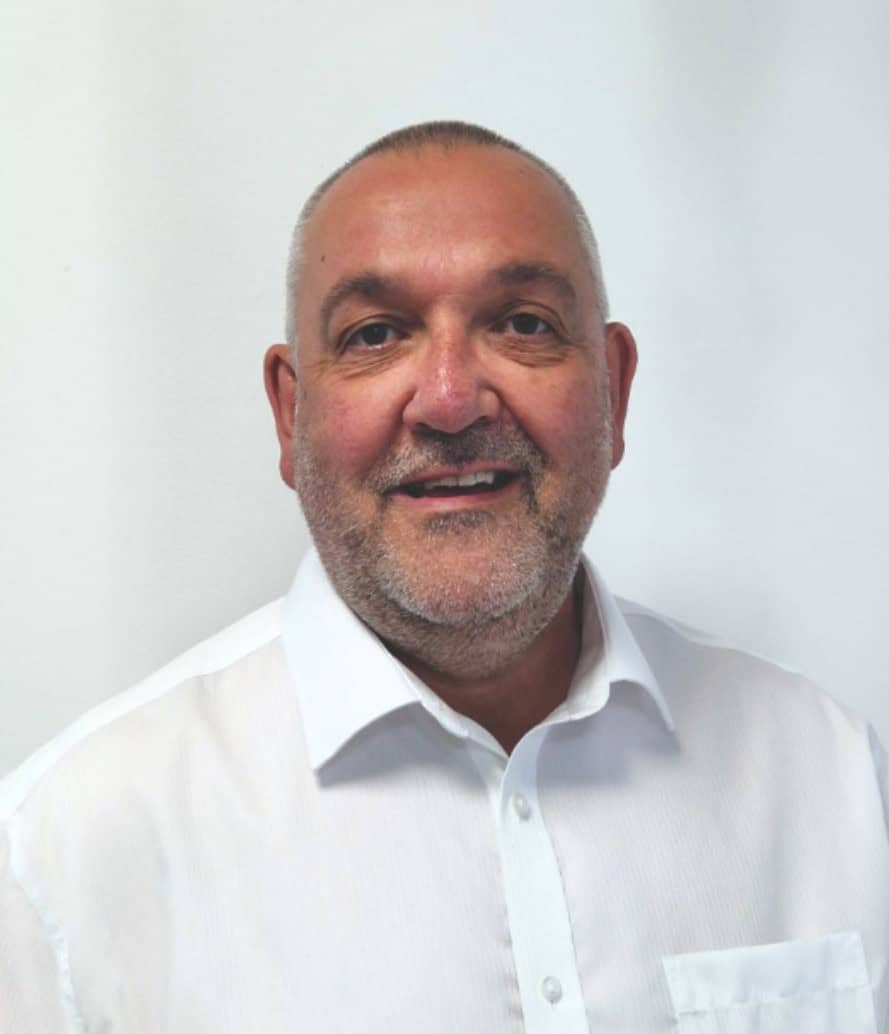
“This was a challenging project, both because of the technical requirements and the level of coordination needed to maintain business-as-usual operations throughout the migration. The success of the project came down to planning. We weren’t simply installing fibre and switches; we had to understand the existing network, document it, create the new infrastructure and then migrate a live 24/7 organisation onto it floor by floor. The fact that we were seeing no more than three fault calls after each major weekend changeover demonstrates just how much preparation went into the project. I was extremely pleased with the way the ACCL and TUI teams worked together.”Wayne Connors, Managing Director, ACCL
“Installation of our new network was an amazing piece of teamwork. To coordinate this work around other issues was challenging, but Wayne and the ACCL team were great, and I am delighted that they will be TUI UK and Ireland’s preferred cabling partner going forward.”
Scott Ronan, General Manager of Technical Services, TUI UK & Ireland
Frequently asked questions
What was the scope of ACCL’s network infrastructure upgrade for TUI?
ACCL designed, coordinated and delivered a completely new 10 Gigabit fibre optic backbone connecting 20 network cabinets across TUI’s Luton Head Office, alongside a full network audit, cabinet remediation, the off-site build and testing of 65 Cisco switches, and a phased four-weekend live migration.
How did ACCL upgrade the network without disrupting TUI’s 24/7 operations?
ACCL developed a four-phase migration strategy with contingency planning built in from the outset. Work was carried out in controlled stages, largely out-of-hours and over weekends, with employees temporarily relocated during each floor’s migration so services remained available elsewhere in the building.
How much fibre was installed and how was it routed?
An eight-person ACCL engineering team installed approximately 8 kilometres of OM4 multimode fibre optic cable across 40 fibre links, connecting 20 network cabinets. The fibre was diversely routed through both underfloor and above-ceiling pathways, reducing the risk of a single incident affecting the whole building’s connectivity.
Why did ACCL audit the existing network before migrating TUI?
TUI’s legacy network configuration was not comprehensively documented, and some communications cabinets contained disorganised, unlabelled cabling. ACCL carried out a detailed audit to identify circuits, trace connections, record cabinet configurations and produce accurate documentation before any safe migration could take place.
How were the 65 Cisco switches deployed?
Rather than introducing untested equipment directly into the live headquarters, ACCL built, configured and tested all 65 Cisco switches at its off-site build facility first. This reduced installation time on migration weekends and minimised the risk of hardware or configuration issues occurring during the live changeovers.
How was each floor migrated?
Each floor followed a tightly controlled weekend programme: Friday preparation and employee relocation, Saturday removal of old equipment and installation of new cabling, patching and switches, Sunday systems testing, and Monday go-live troubleshooting as staff returned to work. This was repeated over four weekends, one floor at a time.
How many fault calls were reported after each migration weekend?
No more than three fault calls were received following any of the weekend changeovers, despite the scale of the project, which involved thousands of users, multiple network cabinets, 65 switches and numerous connected systems.
What ongoing benefits did the new infrastructure provide TUI?
TUI gained a 10 Gigabit-capable, more resilient network with diverse fibre routing, significantly improved network documentation and cabinet organisation, better communications-room airflow and cooling, and a scalable foundation for future Wi-Fi, security and workplace technology expansion.



Upgrading network infrastructure for a live 24/7 site?
Talk to the team that delivered a 10 Gigabit fibre backbone across 20 cabinets and 65 Cisco switches for TUI’s Luton Head Office: with no more than three fault calls after any changeover.
Book a free site survey 0333 900 0101