EMI-aware design
Shielded cable is routed clear of motors and drives.

Structured Data Cabling
Structured data cabling for industrial and manufacturing sites across London, Surrey and Kent, routed clear of motors and drives and phased around shifts.
Shielded cable is routed clear of motors and drives.
Installation is phased around shifts and schedules.
Fire-survival OS2 fibre linking eight water cannons.
Diverse OM4 fibre and high-bay Wi-Fi around live lines.
Recent industrial work: Sun Chemical, Orpington
Industrial and manufacturing data cabling
ACCL provides data cabling solutions and network cabling for manufacturing: the connections between machines, sensors, control systems, wireless access points and security on industrial sites. Operators get a network designed for large layouts, interference and live production, with capacity to add automation later.
Rugged, shielded cabling for production lines.
Explore factory cabling →Interference-proof backbones across large sites.
Explore fibre →Wireless access points placed for reliable coverage.
Explore wireless →Entry systems that manage and monitor site access.
Explore access control →Recent projects
Recent industrial projects.
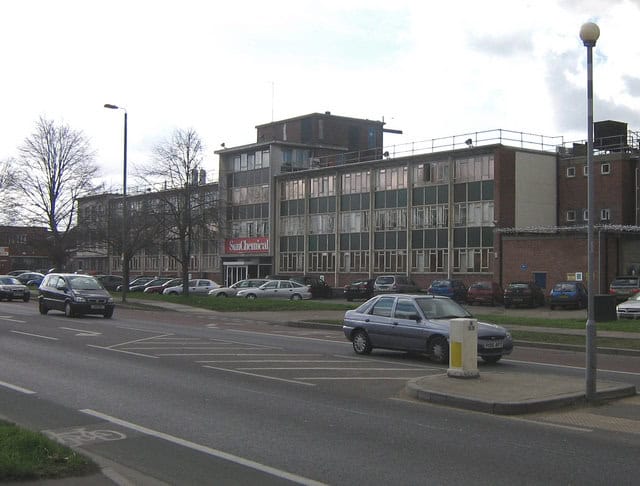
ACCL designed and installed an external fire-survival OS2 fibre optic ring connecting eight fire suppression water cannons to the fire control centre at Sun Chemical’s Orpington plant.
Read the case study
ACCL upgraded the network infrastructure at the Edible Oils Erith site to support four new production lines, installing Cat6a cabling.
Read the case study
ACCL designed and installed a complete structured cabling, Wi-Fi, CCTV and access control solution for a marine technology manufacturer’s new 17,000 sq ft Portsmouth facility.
Read the case study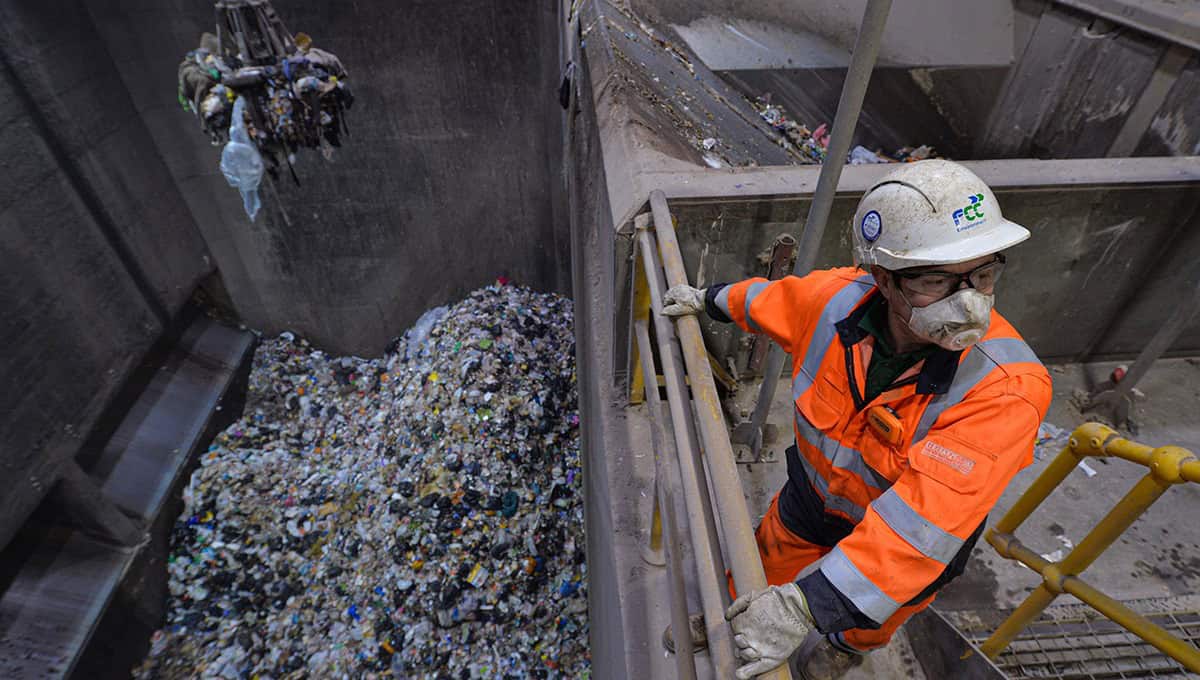
ACCL replaced four end-of-life thermal imaging cameras and built a new armoured fibre backbone for Kent Enviropower’s safety-critical fire suppression system.
Read the case studyDelivered on industrial sites
Cabling guide
Industrial sites pose their own challenges for cabling. The buildings are often vast, the layouts are complex, the existing cabling may be old, and new technology has to be integrated with it. Data cabling is the backbone of the network, enabling communication between machinery, real-time monitoring and the integration of advanced technology across the facility.
In the UK, industries are turning to expert cabling to improve productivity, keep connectivity consistent and support growing demands for automation and IoT. Whether the goal is smooth data transmission between machines, less downtime or a future-proof operation, professional cabling is essential to staying competitive.

Industrial cabling is harder than office cabling because of the buildings and the equipment inside them. Four factors shape every design:
Industrial buildings vary widely, from plant rooms to large production halls, and each affects how cable can be routed.
Long distances between machinery, control rooms and server rooms need careful planning of routes and backbones.
Older network cabling may already be in place, and the design has to work with it or replace it in stages.
IoT devices, sensors and automation have to be integrated without disrupting what already runs.
Robust, well-structured cabling gives an industrial site a reliable, efficient base for everything else. Eight benefits matter most:
Cabling carries data between machines, systems and people, which enables the real-time monitoring and control that industrial environments need.
A well-structured system moves data quickly and efficiently, which reduces delays and improves workflow.
High-quality cabling lowers the risk of network failures, so systems stay up and production lines run smoothly.
As a company grows, its network needs grow too. Structured cabling can be upgraded and expanded to handle more traffic and new technology.
With the right cabling, a company can adopt IoT and automation without overhauling the whole system.
Properly installed cabling reduces electrical hazards and supports compliance with industry regulations.
Wi-Fi, fixed and in-building cellular networks give tailored approaches that match different environments.
Joined-up network management keeps systems working in harmony and reduces the risk of downtime.
Software changes every year, but a well-planned cabling system lasts far longer and protects the business against whatever comes next. ACCL’s strategic focus on both infrastructure and wider network solutions also helps organisations control spend while the network supports growth.
Cabling is the base for automated spaces that make supply chain management faster. Two systems stand out:
These automated solutions are designed to scale, so a business can expand quickly as demand grows, whether it is optimising a single facility or overhauling a whole supply chain.
An industrial project follows five steps, from survey to handover.
Engineers review the building, the machinery layout and the existing cabling, and identify high-interference areas.
Shielded cable is specified and routed away from motors, drives and heavy machinery, with scalability built in so machinery, sensors or access points can be added later.
Work is planned around production schedules and shift patterns, so operations are not halted.
Every cable run is tested and certified before handover.
The site team receives documentation that gives a clear record of what has been installed.
ACCL has delivered cabling and fibre on live industrial and manufacturing sites. Three examples show the range:
Before you book
Yes. Motors, drives and heavy machinery generate interference that can disrupt standard cabling, so ACCL specifies shielded cable and routes it away from high-interference sources where needed.
Yes. Work is planned around production schedules and shift patterns, and phased installation avoids halting operations.
Yes. Every cable run is tested and certified, and documentation handed over records exactly what has been installed.
Yes. Designs account for scalability, so additional machinery, sensors or access points can be added without a full re-cable.
Not always. The survey reviews what is already installed, and the proposal recommends the right approach for your facility, which can mean replacing cabling in stages rather than all at once.
ACCL provides Wi-Fi, fixed and in-building cellular networks, chosen to match the demands of each environment and tied together under one approach to network management.
Book a free, no-obligation site survey. ACCL will assess your facility and recommend the right cabling approach.
A industrial survey is free of charge and the itemised quote arrives before any work starts. A fixed-price proposal follows within 48 hours of receiving your industrial floor plans. How long the work takes depends on the size of the site and shift patterns and production schedules, so the phasing is agreed with the site team at survey.

The team behind your cabling project
Wayne Connors founded ACCL in 1997 and has led our commercial cabling projects ever since. We’re a member of the London Chamber of Commerce and Industry.
Free cabling site survey
One of our own engineers surveys your site at no cost and with no obligation.
Excellent · 60+ Google reviews · Founded 1997 · £10m liability cover
Expert Insights

When copper is still the right choice, when fibre is, and how to tell which your business needs.
Read guide
From the outside, fibre can sound mysterious or overly technical.
Read guide
Every strategic technology decision made in a modern workplace stacks on the same foundation: your physical network.
Read guideBrowse practical guidance, industry updates and planning tools for commercial network infrastructure projects.
Active Communication Company Ltd trades as ACCL, ACCL Data Cabling London and ACCL Data Cabling Kent · Commercial data cabling and network infrastructure specialists