Industrial Cat6A
Shielded cable resists interference from motors, drives and welding cells.

Structured Data Cabling
Structured data cabling for factories and plants across London, Surrey and Kent, scheduled in shutdowns and out-of-hours windows so production keeps moving.
Shielded cable resists interference from motors, drives and welding cells.
These are built for vibration and wash-down areas.
ACCL installed cabling and high-bay Wi-Fi around four new production lines.
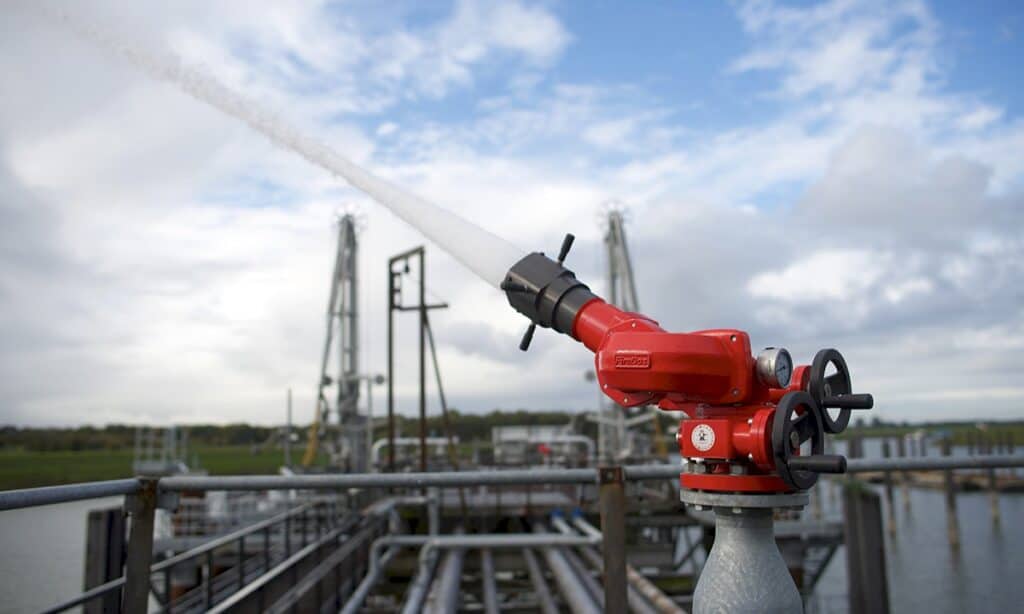
ACCL installed fire-survival OS2 fibre linking eight water cannons.
Recent factory work: Edible Oils, Erith
Factory and plant data cabling
ACCL installs the shielded copper and fibre that connects PLCs, vision cameras, sensors and production-line Wi-Fi. Plants get low-latency links that hold up against interference, oils and vibration, installed around planned downtime.
Wider plant-floor and industrial-site infrastructure.
Explore →Interference-proof backbones between halls and server rooms.
Explore →Cabling ready for machine vision, private 5G and new systems.
Explore →The sectors and services ACCL cables, listed on one page.
Explore →Recent projects
Recent factory and production-site projects.

ACCL upgraded the network infrastructure at the Edible Oils Erith site to support four new production lines, installing Cat6a cabling.
Read the case study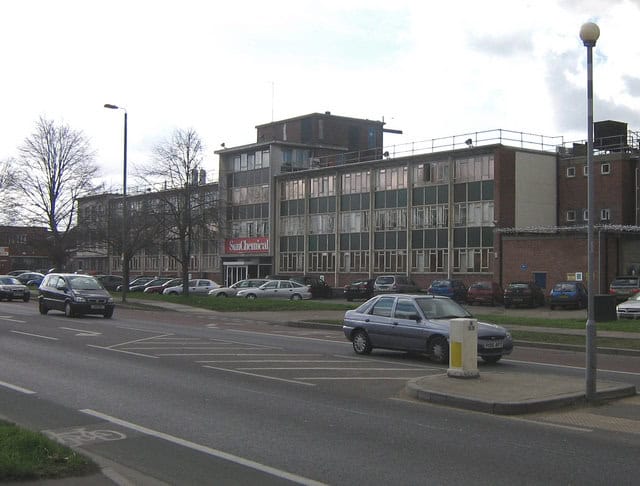
ACCL designed and installed an external fire-survival OS2 fibre optic ring connecting eight fire suppression water cannons to the fire control centre at Sun Chemical’s Orpington plant.
Read the case study
ACCL designed and installed a complete structured cabling, Wi-Fi, CCTV and access control solution for a marine technology manufacturer’s new 17,000 sq ft Portsmouth facility.
Read the case study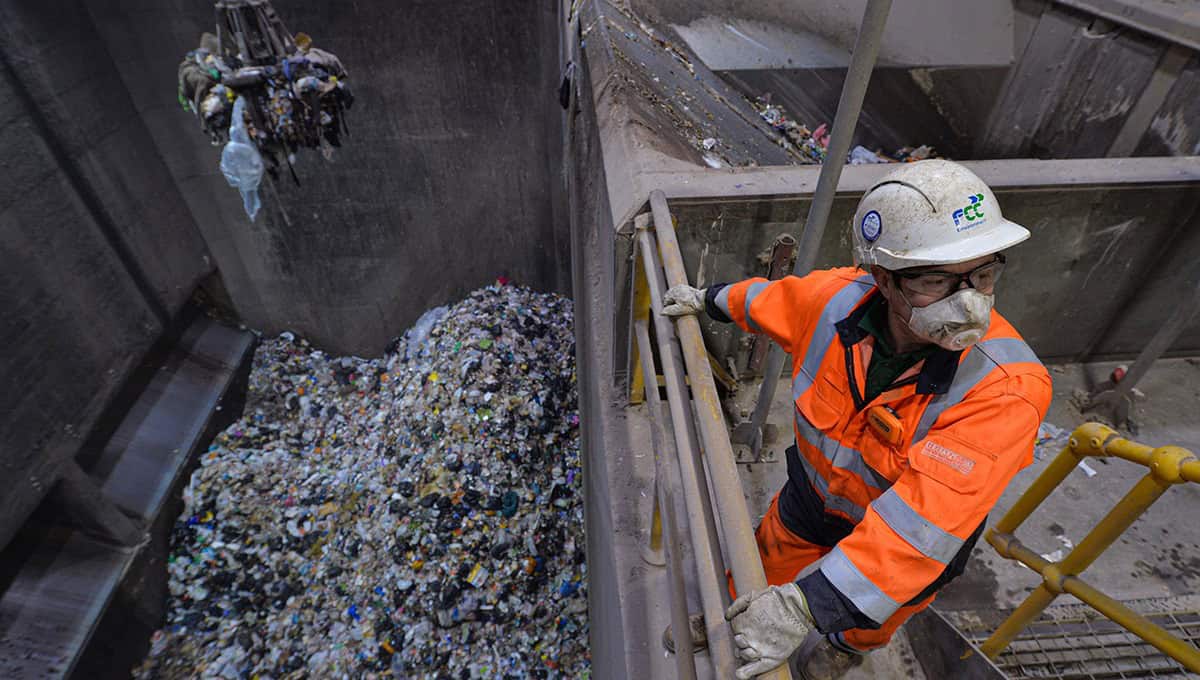
ACCL replaced four end-of-life thermal imaging cameras and built a new armoured fibre backbone for Kent Enviropower’s safety-critical fire suppression system.
Read the case studyDelivered on production sites
Cabling guide
Smart factories run on real-time control loops, sensor data and cloud analytics, and all of it travels over cable. CNC machines stream status frames by the millisecond, vision-inspection cameras push 4K images to edge AI, and AGVs ask for route updates on the fly. One lost packet can halt a production cell, scrap material and delay a delivery.
Many sites still run 100 Mb Cat 5e laid when dial-up modems sat in IT cupboards. Ageing jackets crack in oils, unshielded runs pick up interference and crowded trays choke airflow. ACCL’s manufacturing-grade structured cabling gives predictable, low-latency bandwidth where every minute of downtime is costly.
Better cabling removes the faults that stop lines and slow fixes. The six most common are:
Variable-frequency drives, welders and heavy conveyors induce noise that corrupts unshielded pairs and triggers retries.
Fork-lift impacts, chemical vapours and temperature extremes degrade PVC jackets and cause intermittent faults that are hard to trace.
Legacy 100 Mb copper strangles OPC UA, Ethernet/IP and ProfiNet traffic, which delays SCADA alarms and predictive-maintenance uploads.
Engineers lose time tracing device drops, which stretches change-over windows and drives overtime.
New production lines cannot plug in without long cable pulls, which delays the return on new equipment.
Office traffic mixed with machine networks breaches cyber-security and ISO 27001 segmentation policies.
Unchecked, these issues erode throughput, raise scrap rates and put health-and-safety targets at risk.
Factory-ready cabling pairs shielded copper with interference-proof fibre and rugged terminations. The main elements are:
Foil around every pair plus an overall braid rejects interference from motors and weld guns and sustains 10 Gbps at 90 metres.
Steel-tape armour or chemically inert low-smoke jackets withstand oils, coolants and cleaning agents.
Fibre ignores electrical noise and runs 40/100 Gbps between production halls and the data core for MES and analytics.
Devices can be identified at once, even on a dim mezzanine, which shortens repairs on night shift.
Dust-tight, waterproof terminations protect connections in wash-down zones and outdoor yards.
90 W of headroom feeds IP66 cameras, rugged tablets and IIoT sensors without extra sockets.
Sealed industrial cabinets with filtered positive pressure and temperature alarms keep out dust and prevent thermal trips.
A manufacturing project follows six steps, from a workflow consultation to a tested handover.
Maintenance managers, plant engineers and OT security teams agree cycle-time targets, expansion plans and safety constraints.
Engineers map containment around busy lines, overhead cranes and explosive-atmosphere zones outside production hours.
Shielded Cat 6A, OS2 fibre and IP-rated hardware are specified to IEC 60079 where it applies, with dual-path redundancy to critical PLC racks.
Work shifts line up with planned downtime or maintenance weekends. Temporary bypass links keep SCADA online, and lock-out/tag-out procedures protect people around live machinery.
Fluke DSX-8000 tests certify every copper pair for 10 Gbps, OTDR sweeps verify fibre loss, and interference tests run across welding cycles.
Plant engineers receive as-built schematics, digital twin files and a 25-year warranty. ACCL’s rapid-response SLA dispatches on-site engineers within two hours of critical faults.
Safety and quality are written into the plan before the first shutdown. ACCL is ISO 9001, ISO 14001 and SafeContractor accredited, which covers repeatable quality, environmental care and health and safety in high-risk sites. The other safeguards are:
Cabling and connectors are rated for harsh-environment vibration, temperature and chemical exposure.
Explosion-risk zones get intrinsically safe conduit routes, stainless glands and flameproof junctions.
Work permits and LOTO boards make sure machinery cannot energise during cable pulls.
Intumescent collars restore compartmentation in mezzanine offices and MCC rooms, which keeps insurer requirements met.
Scrap copper is recycled and solvent-free wipe-downs protect discharge waterways, supporting ISO 14001 audits.
Plant managers, OT engineers and finance teams gain steadier lines, easier maintenance and room to grow. The benefits are:
Stable, low-latency links cut micro-stoppages and improve cycle consistency.
Uninterrupted sensor streams let analytics forecast bearing failures before they cause downtime.
Spare ports and labelled drops allow retooling without new cabling, which shortens SMED cycles.
Clear labelling and ruggedised hardware cut the time spent finding faults, which saves overtime and lost production.
Physically separate OT and IT networks support IEC 62443 and ISO 27001 segmentation policies and protect intellectual property.
10/40 Gbps headroom supports machine-vision upgrades, AGV fleets and private 5G small-cell backhaul.
ACCL applied the same rugged, high-interference approach to a marine technology manufacturer in Portsmouth. For a production-site example closer to London, read how ACCL delivered structured cabling, fibre and high-bay Wi-Fi for Edible Oils in Erith. The industrial and fibre optic installation pages cover wider plant-floor infrastructure.
Before you book
Yes, but the safest route is to plan around scheduled maintenance blocks. Where work must happen near live lines, insulated tools and lock-out/tag-out protect staff and machinery.
Industrial Cat 6A operates from -40C to +75C, and armoured fibre can reach +85C. For ovens or freezers, specialist high-temperature or low-temperature jackets are available.
For long runs, high interference or 40 Gbps backbones, yes. Short, low-noise segments can stay copper if budgets dictate, and the design balances capital cost against performance.
Yes. Shield continuity from device to switch is critical, so ACCL supplies IP67 or M12X connectors where vibration or wash-down calls for them.
It starts with a site survey. Small cells can be completed in one weekend, and full-plant rewires may be staged across several shutdowns.
A factory survey is free of charge and the itemised quote arrives before any work starts. A fixed-price proposal follows within 48 hours of receiving your factory floor plans. How long the work takes depends on the size of the site and shutdowns and out-of-hours windows, so the phasing is agreed with plant managers at survey.

The team behind your cabling project
Wayne Connors founded ACCL in 1997 and has led our commercial cabling projects ever since. We’re a member of the London Chamber of Commerce and Industry.
Free cabling site survey
One of our own engineers surveys your site at no cost and with no obligation.
Excellent · 60+ Google reviews · Founded 1997 · £10m liability cover
Expert Insights

When copper is still the right choice, when fibre is, and how to tell which your business needs.
Read guide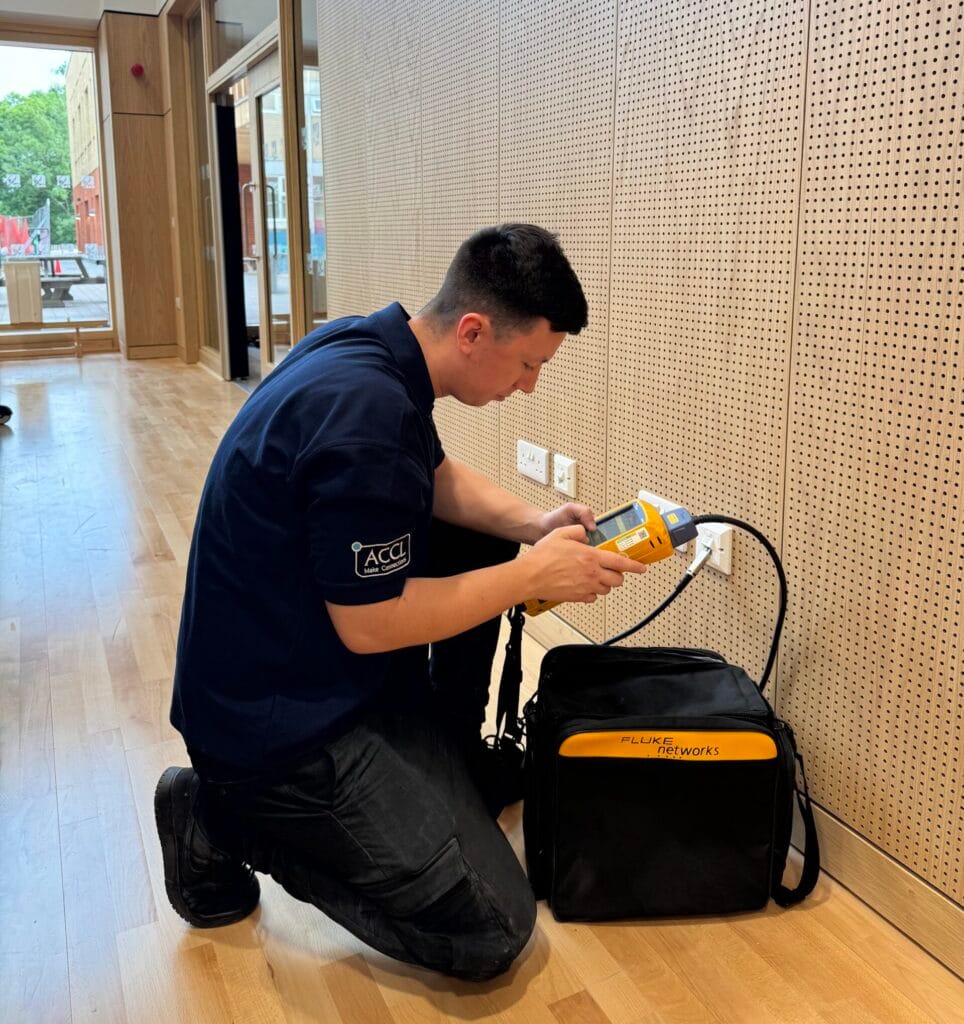
Network cabling performance headroom is the difference between a basic PASS result and long-term confidence.
Read guide
Cabling fire safety can prove to be complicated, especially if you don’t have the necessary experience.
Read guideBrowse practical guidance, industry updates and planning tools for commercial network infrastructure projects.
Active Communication Company Ltd trades as ACCL, ACCL Data Cabling London and ACCL Data Cabling Kent · Commercial data cabling and network infrastructure specialists