Surveyed, then specified
Cat6, Cat6A or fibre chosen on speed, distance and PoE.

Commercial copper and fibre cabling for offices and complex sites across London and the South East, designed, installed, tested and documented.
Cat6, Cat6A or fibre chosen on speed, distance and PoE.
Certified results and labelled schedules at handover.
Network partner for 28 years.
Five-floor comms room move with zero network downtime.
Recent cabling work: Wise Music Group, 20 Water Street, Canary Wharf, DHL Heathrow
Structured cabling services
Structured data cabling from ACCL: Cat6, Cat6A and fibre networks designed, installed, tested and certified for offices, campuses and industrial sites across London and the South East, with a 25-year warranty on the structured cabling.
Workplace outlets, fit-outs and office network cabling planned around desks, teams and business moves.
Office cabling →Rack, cabinet, backbone and high-density infrastructure for controlled data-centre environments.
Data centre solutions →Single-mode and multimode fibre design, installation, termination and testing for longer or higher-capacity links.
Fibre optic installation →Planned cabling changes for office relocations, expansions, reconfigurations and additional data points.
Moves, adds and changes →Structured cabling adapted to the access, safety, resilience and operating needs of different sectors.
Industry-specific installations →An engineer surveys the site for free and recommends the specification.
Book a Free Site SurveyRecent cabling projects
From a five-floor comms room move to 1,532 Cat6A outlets at 20 Water Street, Canary Wharf.
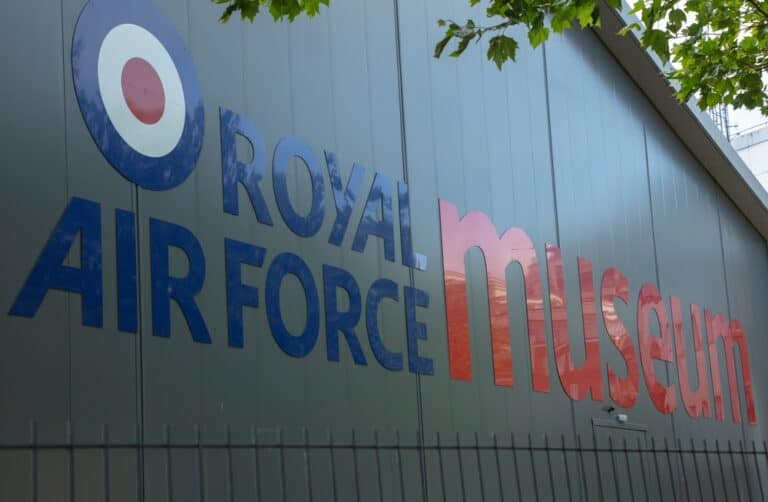
The structured cabling and fibre platform behind a major technology-led museum exhibition redevelopment.
Read the case study
A staged five-floor comms room relocation, completed during normal working hours with zero network downtime.
Read the case study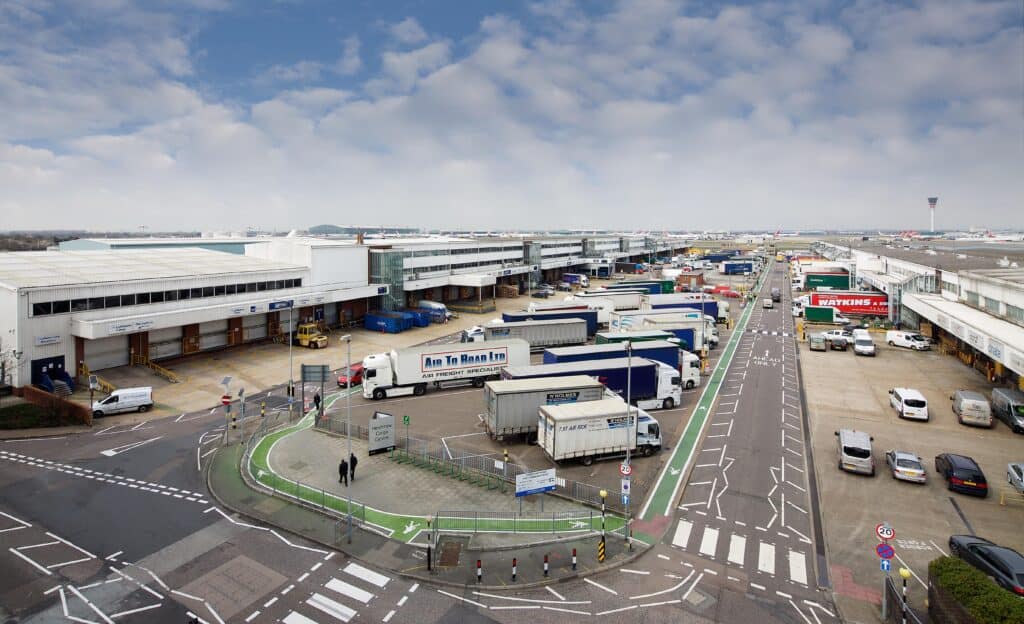
DHL Heathrow structured cabling project: 260 Excel Cat6 outlets and 3 km of fibre installed by ACCL around a live air-cargo operation.
Read the case study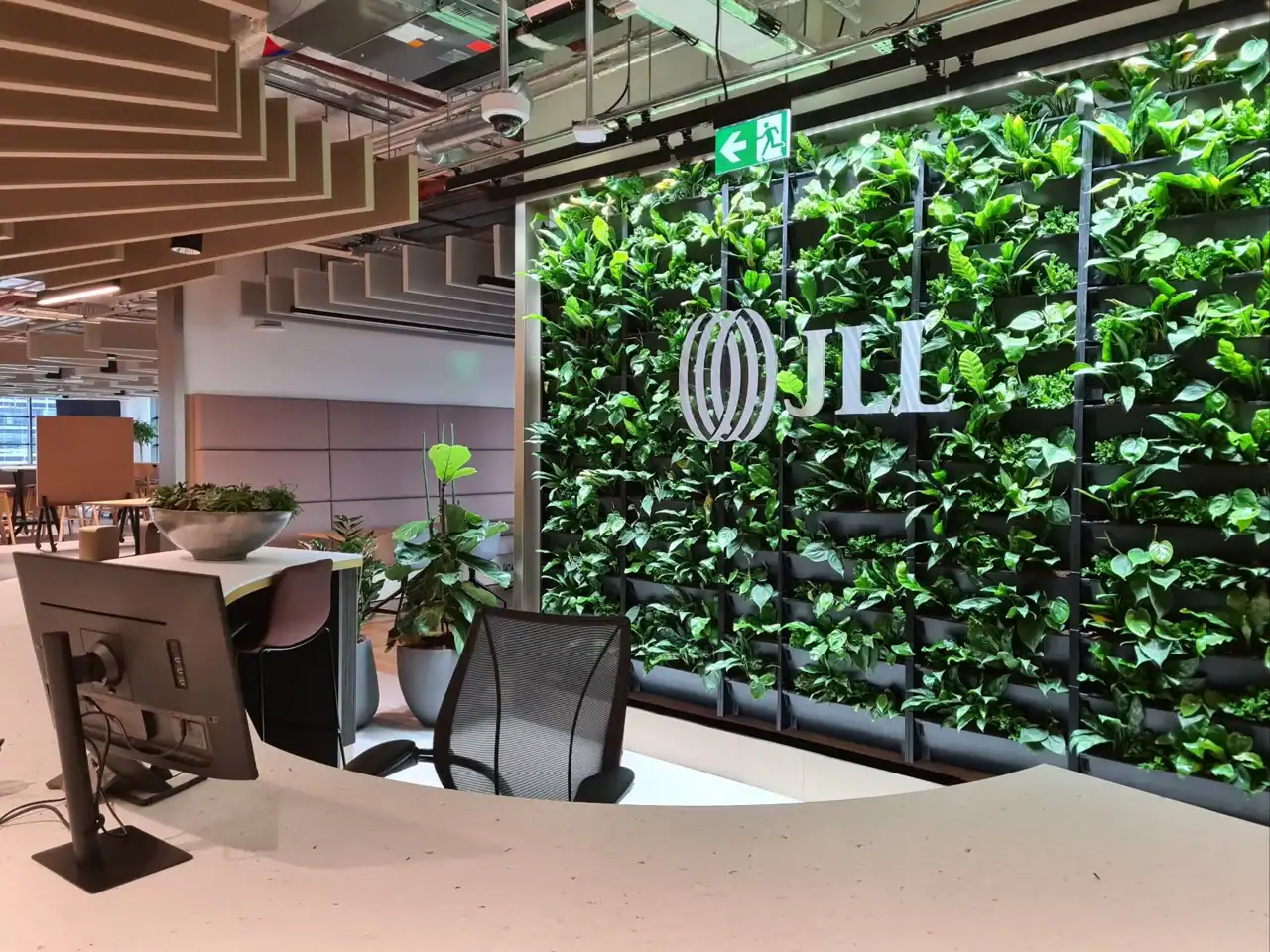
20 Water Street structured cabling by ACCL: 1,532 Cat6A outlets and a resilient dual-MER copper and fibre backbone for JLL's Canary Wharf office.
Read the case study
Cat6, Cat6A or fibre?
The right choice depends on link speed, distance, interference, PoE load and how the space will change. We check those on site before we specify anything.
Where we work
Our London office is at the Royal Exchange and our Kent office is in Orpington.
Structured cabling explained
ACCL provides structured data cabling installation and services for organisations planning around their premises, users and operational priorities. We design, install, test and document copper and fibre infrastructure for new fit-outs, upgrades and building changes. Whether you’re searching for structured cabling or general data cabling London services, the same surveyed, tested and documented process applies either way.
Use the related services above when your requirement is primarily office-specific, fibre-led, data-centre focused or part of a wider move. Planning a complete office fit-out rather than cabling alone? See our office fit-out technology infrastructure page for the coordinated package.
A project can include the site survey, outlet and cabinet design, route and containment planning, copper or fibre cabling, patch panels, faceplates, labelling, testing and handover records. The agreed scope depends on the building, supported equipment, network design and working restrictions.
Book a cabling survey to define the installation before a quotation is prepared.
The right medium depends on required link speed, channel length, interference, PoE load, equipment and future change. ACCL assesses those factors before recommending a specification.
Choosing Cat6 or Cat6A
Cat6 is commonly used for business Ethernet and can suit many shorter horizontal links. Cat6A supports 10 Gigabit Ethernet over the full standard channel length and offers additional headroom where higher bandwidth, alien-crosstalk control or demanding PoE applications are expected. Cable size, containment and termination requirements also affect the choice.
Where Fibre Fits into the Cabling Design
Fibre is often used for building backbones, links between floors or cabinets, longer distances and electrically noisy environments. The fibre optic installation scope should define fibre type, core count, connector format, routes, termination, testing and capacity for future connections. For a practical example in an industrial setting, see ACCL’s fire-survival fibre network for Sun Chemical’s Orpington plant, designed to connect critical fire-suppression equipment.
Unshielded (U/UTP) Cat6A suits most offices and is quicker to install. Shielded (F/UTP or S/FTP) Cat6A gives more protection from interference near heavy electrical plant, lift motors, medical equipment or long parallel power runs, and needs correct earthing at every panel.
The choice is made at survey from the building and the equipment nearby. At Caring Dental in Petts Wood, for example, we installed 38 shielded Cat6A outlets during the practice’s new fit-out.
A professionally planned data cabling installation can support computers, phones, printers, servers, wireless access points, IP cameras, door access hardware and other networked building systems. Designing these connections together helps avoid isolated cable runs, unclear labels and cabinets that become difficult to manage.
ACCL works across offices, education, healthcare, leisure, public-sector and industrial premises. Each environment brings different access, containment, security and working-hour requirements. Routes may pass through ceiling voids, risers, plant areas, warehouses or occupied workspaces, so the survey records practical constraints before installation begins.
For workplace-specific moves and fit-outs, see our office cabling services. For specialist operational environments, explore our industry-specific structured cabling pages.
Each sector below has its own page.
Comms rooms and server rooms need high-density cabling, cabinets with room for airflow, and backbones that can grow. Pre-terminated fibre and copper trunks speed up installation and reduce risk in live rooms. See data centre solutions and server cabinet installation.
Containment carries and protects the cables: cable tray, basket, trunking or conduit, sized with spare capacity for future changes. Where cables pass through fire-rated walls and floors, the openings are fire stopped to keep the building’s fire compartments intact. Both are planned at survey because they affect cost and programme. See containment installation.
Every network cabling installation follows a defined route from survey and design through to testing, labelling and handover.
Survey and design
We review the premises, required data points, supported equipment, cabinet positions, pathways, power and PoE needs, programme constraints and likely future changes. The resulting proposal defines what will be installed and the assumptions behind it.
Installation and change control
Cable routes, containment, outlets, patch panels and cabinet terminations are installed to the agreed design. Work in occupied buildings can be phased around access windows and business operations. Any route or scope change is agreed before it affects cost, programme or performance.
Testing, labelling and handover
Installed links are tested against the agreed cable category and project specification. Patch panels, faceplates and cables are labelled consistently, and the handover pack records the final installation, test results and relevant product or warranty information.
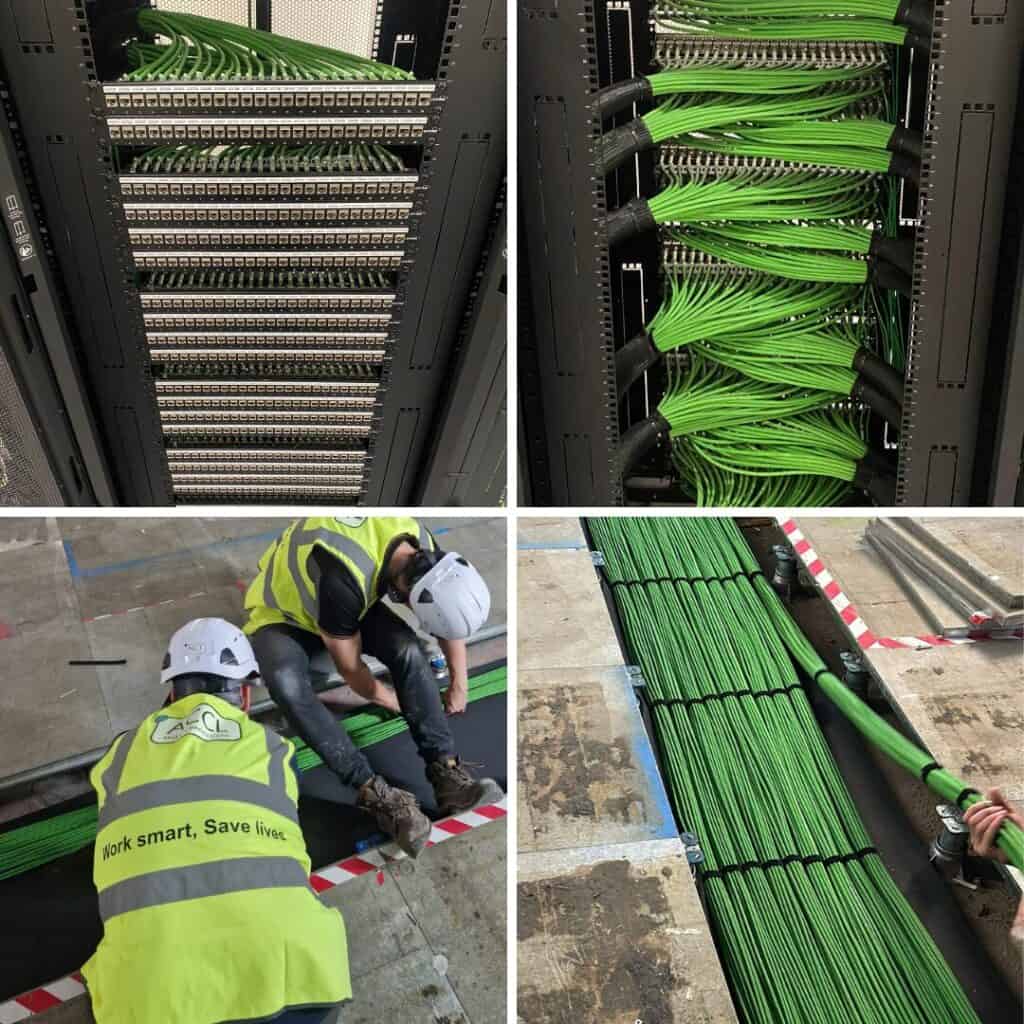
Structured cabling should be designed and installed against the standards and manufacturer requirements relevant to the project. Depending on the scope, this may include the BS EN 50173-1 generic cabling requirements and ISO/IEC 11801 principles, alongside the selected system manufacturer’s installation rules.
Testing is agreed with the specification rather than described as a vague performance guarantee. Copper certification can record wire map, length, loss and crosstalk results for the selected category. Fibre testing may include loss measurement and OTDR work where the route and handover requirements call for it.
Project documentation can include labelled outlet and panel schedules, test results, cabinet records, drawings and product information. Eligible certified manufacturer systems may also qualify for extended system warranties; eligibility and coverage are confirmed for the specified products and installation rather than assumed for every project.
Related infrastructure can be coordinated through ACCL’s wireless networking, commercial CCTV installation and commercial access control installation services.
Structured cabling installation costs depend on more than the number of data points. The survey considers cable category, fibre requirements, route length, containment, ceiling or floor access, fire stopping, cabinet and patch-panel work, out-of-hours access, testing level, documentation and whether existing infrastructure can be reused.
A clear data cabling installation quotation should identify the assumed routes, quantities, products, testing and exclusions. This gives buyers a useful basis for comparing proposals and reduces avoidable change during delivery. ACCL’s network infrastructure calculators can help with early budgeting and capacity checks, before a site survey turns those initial figures into a project-specific scope and quotation.
As structured cabling installers in London, ACCL brings cabling, fibre, wireless and IP infrastructure knowledge into one project team. That matters when the passive cabling must support switches, access points, cameras, phones and other connected systems without competing designs.
Our approach focuses on a defined survey, practical route planning, an agreed specification, controlled installation, test evidence and usable handover information. Relevant project examples include work for Wise Music Group’s London headquarters and the Royal Air Force Museum London.
Where existing infrastructure needs remedial work, see our data cabling repair service and data cabinet tidy service.
ACCL supports organisations across London, Kent, Surrey and the wider South East, subject to project location, access and scope.
Discuss the premises, required connections, supported systems and programme with ACCL. A survey lets us define routes, products, testing and handover requirements before installation begins.
Recent projects in:
Before you book
Structured data cabling is an organised system of copper or fibre cables, outlets, patch panels, cabinets and records that supports a building’s networked services. A standards-led design makes connections easier to identify, test, manage and change than isolated point-to-point wiring.
The scope can include a site survey, outlet and cabinet design, containment planning, copper or fibre cabling, termination, patch panels, faceplates, labelling, testing and handover documentation. The final specification depends on the building and the equipment the cabling must support.
Cat6 can suit many business Ethernet links. Cat6A supports 10 Gigabit Ethernet over the full standard channel length and may be preferable where higher bandwidth, alien-crosstalk control or demanding PoE applications are expected. Route space, containment and equipment requirements should also be considered. For guidance on choosing the right copper cable, see our Cat5e vs Cat6 vs Cat6A vs Cat7 vs Cat8 comparison guide.
Fibre is commonly selected for longer links, building or floor backbones, higher-capacity connections and environments affected by electromagnetic interference. Copper is often practical for horizontal connections to workplace and building devices. Many structured systems use both.
Yes. Suitable structured cabling can provide network and Power over Ethernet connections for access points, VoIP phones, IP cameras and compatible access-control equipment. Port capacity, bandwidth, PoE budgets, resilience and network configuration still need to be designed correctly.
Testing follows the agreed cable category and project specification. Copper certification can measure wire map, length, loss and crosstalk. Fibre testing may include optical loss and OTDR measurements where required. The handover should state what was tested and provide the agreed results.
Depending on scope, handover information can include outlet and patch-panel schedules, cable labels, test results, cabinet records, drawings, product details and warranty information. Required formats should be agreed before installation.
The programme depends on data-point quantities, routes, access, containment, fibre work, cabinet changes, testing and working-hour restrictions. ACCL confirms an expected programme after surveying the premises and agreeing the design.
Yes. Work can be phased around occupied areas, access windows and business operations. The survey should identify noisy work, ceiling or floor access, temporary service requirements and areas that must remain available.
Cost is affected by cable and fibre type, quantities, route length, containment, access, fire stopping, cabinets, working hours, testing, documentation and the condition of existing infrastructure. A site-specific scope provides a more reliable quotation than a generic price per point.
Yes. ACCL can audit existing outlets, routes, cabinets and test results before recommending additions, targeted replacement or a new installation. Reuse depends on condition, category, documentation, capacity and compatibility with the required services.
Warranty coverage depends on the specified products, manufacturer scheme, installer eligibility and completion of the required certification process. Eligible certified systems may receive extended manufacturer-backed cover. ACCL confirms the applicable term and exclusions in the project documentation.
ACCL delivers commercial structured cabling across London, Kent, Surrey and parts of the wider South East, subject to project location and scope. Larger projects elsewhere can be discussed with the team.
Use the free site survey page or call ACCL on 0333 900 0101. Share the site location, approximate number of connections, supported systems, programme and any access restrictions so the survey can focus on the required outcome.

The team behind your cabling project
Founded in 1997, ACCL surveys, designs, installs, tests and documents structured cabling through one accountable team, for offices, trading floors, schools, hospitals and industrial sites across London and the South East.
Wayne founded ACCL in 1997 and has led the delivery of commercial cabling and network infrastructure projects ever since, including 22,000 outlets for MF Global at Canary Wharf.
Free site survey
One of our own engineers surveys your site at no cost and with no obligation. Not a sales visit.
Excellent · 60+ Google reviews · Founded 1997 · £10m liability cover
Guides for planning cabling work

What drives the price of a commercial cabling project.
Read guide
What the test results in your handover pack show.
Read guide
What to plan before your network moves with you.
Read guideBrowse practical guidance, industry updates and planning tools for commercial network infrastructure projects.
Active Communication Company Ltd trades as ACCL, ACCL Data Cabling London and ACCL Data Cabling Kent · Commercial data cabling and network infrastructure specialists