Fibre optic installation
Backbones and building links, PON or point to point.
Explore fibre →
Fibre Optic Cable Installation
PON/POL design and installation across London and the South East, from fibre and splitter architecture to endpoints and commissioning.
PON and POL simplify distribution across larger estates.
Fibre, splitter design and ONT commissioning in one scope.
ONTs specified with PoE for APs, cameras and controllers.
Fibre for structural monitoring in a rail tunnel.
PON and POL installation in London
A passive optical network (PON), often deployed inside a building as a passive optical LAN (POL), uses fibre and passive splitters to distribute connectivity across a site. For the right estate it can reduce comms room sprawl, simplify distribution and give a scalable backbone for Wi-Fi, CCTV, access control and smart building services. ACCL designs and installs PON and POL across London and the South East: fibre, splitter architecture, endpoints, commissioning and clear documentation.
Backbones and building links, PON or point to point.
Explore fibre →Splicing and termination for splitters and backbones.
Explore fibre splicing →Loss tests and OTDR traces for every link.
Explore fibre testing →Copper Cat6 and Cat6A where it is the better fit.
Explore cabling →Fibre projects
Fibre installed by our own engineers, from fire-survival networks to 50km of single-mode fibre in a live distribution warehouse. A passive optical network is built on the same fibre work.
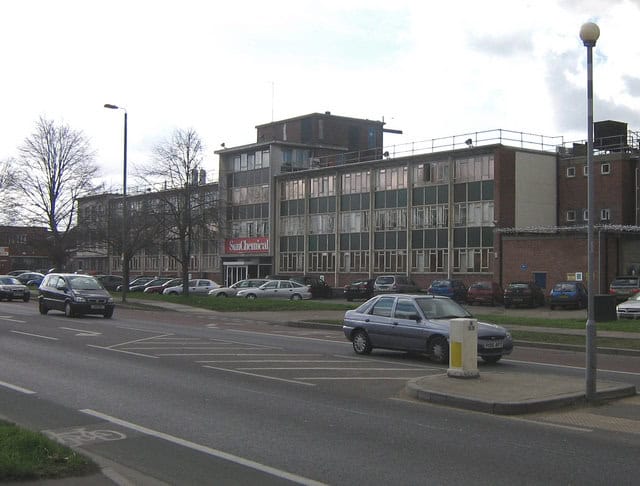
Fire survival fibre optic network designed by ACCL using external OS2 fibre to connect eight suppression water cannons at Sun Chemical, Orpington.

ACCL installed sports venue fire survival fibre at Wimbledon: 3km of 8-core OM4 fibre linking 13 stations for Trinity Fire & Security.

DHL East Midlands Airport fibre infrastructure project by ACCL, including 50 km of OS2 fibre, 13 cabinets and 10 parcel handling tracks.

A Wi-Fi survey exposed a fibre backbone renewal Legal 500 didn’t know it needed.
What is a PON?
A passive optical network is a point-to-multipoint fibre architecture. An optical line terminal (OLT) connects to many endpoints through passive splitters, with no powered switching in between. In a building network, a passive optical LAN, the endpoints (ONT or ONU devices) present Ethernet ports, sometimes with PoE, for desks, access points, cameras and controllers.
In plain English: a traditional building network runs copper (Cat6 or Cat6A) to desks from powered switches in comms closets on each floor. POL pushes more of the distribution onto fibre, from a central location through splitters to endpoints near the user or device. The splitters need no power or configuration, which can cut the powered kit spread around the building, but it puts more weight on design, documentation and endpoint strategy.
When is PON or POL a good fit?
PON or POL is usually considered when at least one of these is true.
If your main problem is Wi-Fi performance, start with a Wi-Fi survey and design. PON may be part of the answer, but it is not the first diagnostic step.
PON/POL vs traditional structured cabling
Both can be right. The decision depends on the shape of the estate, how it is run and how it will grow.
| Traditional structured cabling | PON or POL | |
|---|---|---|
| Distribution | Copper to desks from powered switches on each floor | Fibre from a central point through passive splitters to endpoints |
| Comms closets | Works well where you already have one per floor | Potentially fewer distribution switches and closets to maintain |
| Distance and growth | Copper runs are limited in length | Long runs and bandwidth growth without re-cabling the backbone |
| Choose it when | You need straightforward Ethernet everywhere and the current model works | You want a fibre-first distribution architecture and long-distance scalability |
Most estates still use Ethernet at the endpoint, so the design question is where fibre ends and copper begins. Our structured cabling team handles the copper side, and our guide to fibre optic vs copper cabling covers the basics.
What’s included in an ACCL PON/POL installation
We deliver PON and POL projects end to end, or work alongside your IT team and chosen platform or vendor.
Coverage zones, device types, service separation and growth; risers, containment, patch locations and comms space constraints.
OLT location, splitter strategy, endpoint placement and the redundancy approach.
Fibre installed, terminated and certification tested as specified, with containment considered.
Splitters installed securely and labelled; tidy patching, labelling and airflow in racks and cabinets.
ONT or ONU deployment, service hand-off to Ethernet, Wi-Fi, CCTV and access control, and validation checks.
Book a suitability assessment. If PON or POL is not the right fit, we will recommend the simpler alternative.
Book a Free Site SurveyOur process: assess, design, install, test, document
We run PON and POL as an engineered infrastructure project, not a fit-and-hope install.
Confirm whether PON or POL suits your estate and goals. If not, we recommend the simpler, lower-risk option.
Define the architecture, redundancy, fibre routes, containment and endpoint strategy.
Install fibre, splitters and containment safely and neatly, with the correct bend radius and labelling.
Commission the optical distribution and validate service delivery to endpoints and connected systems.
Provide the as-left pack: fibre schedule, splitter maps, endpoint inventory and operational notes.
Passive optical networks explained
A typical project covers:
The practical benefits usually fall into four groups:
A trustworthy PON plan is open about the trade-offs:
PON and POL succeed long term when the documentation is clear. Your handover pack can include:
Fibre testing and as-left documentation can be included in the scope to match your project requirements and procurement expectations. Links are tested and certified by our fibre testing and certification engineers, and any later damage is handled by our fibre optic repair team.
PON and POL projects are scoped individually. The main cost drivers are:
Our fibre team installed the ruggedised network for six tunnel boring machines on the Thames Tideway Tunnel and the fibre for millimetre-precision structural monitoring in King’s Cross Gasworks Tunnel. For an introduction to the technology, read our article on what a passive optical network is, and for the cable itself, what a fibre optic cable is. Where PON is part of a comms room consolidation, see our data centre solutions.
Before you book
A passive optical network (PON) is a point-to-multipoint fibre architecture. An optical line terminal connects to many endpoints through passive splitters, with no powered switching in between. Inside a building it is called a passive optical LAN (POL), and the endpoints present Ethernet ports, sometimes with PoE, for desks, access points, cameras and controllers.
PON is the general fibre architecture: one optical line terminal serving many endpoints through passive splitters. A passive optical LAN (POL) is PON used as the local network inside a building or campus, replacing much of the floor-by-floor switching. In practice the terms overlap, and we design and install both across London and the South East.
Not exactly. Fibre internet usually describes the wide area connection into your building from a provider. PON or POL is the internal distribution architecture inside your estate, used to deliver network services across floors and zones. You can have one without the other, and a PON can carry services from any internet connection you choose.
In some environments PON or POL can reduce the amount of copper distribution, but most estates still use Ethernet at the endpoint. The design choice is about where fibre ends and copper begins, and which endpoints you need. A suitability assessment shows whether PON, copper or a mix is the better answer for your building.
It can be, particularly in multi-tenant or multi-floor buildings where you want a fibre-first distribution model. Many offices are still best served by traditional Cat6A cabling with a strong switching design. A suitability assessment clarifies the best path, and if PON is not right for you we will say so and recommend the simpler option.
The splitters are passive, but the endpoints, the ONT or ONU devices, are powered. Endpoint specification, including whether PoE is needed for access points, cameras or controllers, is a key part of the design. We capture every device type during discovery so each endpoint has the ports and power it needs.
Often, yes. A phased rollout lets you validate performance and operational processes on part of the estate before wider deployment. We plan the migration so existing switching keeps running while the fibre, splitters and endpoints go in, then cut services over zone by zone once each stage has been tested.
It depends on estate size, routes and access constraints. Many projects are delivered in phases: backbone fibre and splitters first, then endpoints and service cutover. We set out the programme after the site survey, including any out-of-hours working needed to avoid disrupting the people and systems already using the building.
Yes, when it is designed correctly. Each service has different performance and security requirements, so the service mix is captured in discovery and built into the design. Endpoints are specified with the ports and PoE each system needs, and services can be separated so cameras, door controllers and Wi-Fi run independently.
It depends on building size and floors, route and containment complexity, the number of endpoints and PoE needs, fibre type and strand count, redundancy, out-of-hours working and integration with other systems. We do not quote a fixed price without that detail. Book a free survey and we will send an itemised quote before work starts.

The team behind your passive optical network
Founded in 1997, ACCL designs, installs, tests and documents fibre networks through one accountable team. Our engineers work across London, Kent, Surrey and the South East.
Wayne Connors founded ACCL in 1997 and has led our commercial cabling projects ever since, including 30km of fibre for the Thames Tideway Tunnel and the monitoring fibre in King’s Cross Gasworks Tunnel. We are a member of the London Chamber of Commerce and Industry.
Book a PON/POL suitability assessment
Planning a refurbishment, consolidation or backbone upgrade? We will assess whether PON or POL is the right fit and, if not, recommend the simpler alternative. One of our own engineers surveys at no cost and with no obligation.
Excellent · 60+ Google reviews · Founded 1997 · £10m liability cover
Expert Insights

Diagnose common camera, recording and picture faults, and know when to call in an engineer.
Read guide
Plan a commercial cabling project, from cable types and standards to installation and testing.
Read guide
Understand the key factors that determine commercial cabling costs and project budgets.
Read guideBrowse practical guidance, industry updates and planning tools for commercial network infrastructure projects.
Active Communication Company Ltd trades as ACCL, ACCL Data Cabling London and ACCL Data Cabling Kent · Commercial data cabling and network infrastructure specialists