Data Centre Fibre Cabling in London

Data centre fibre cabling from ACCL covers backbone, cross-connect and MTP/MPO trunk cabling for London data centres, comms rooms and server halls, designed, installed, tested and documented as one project.

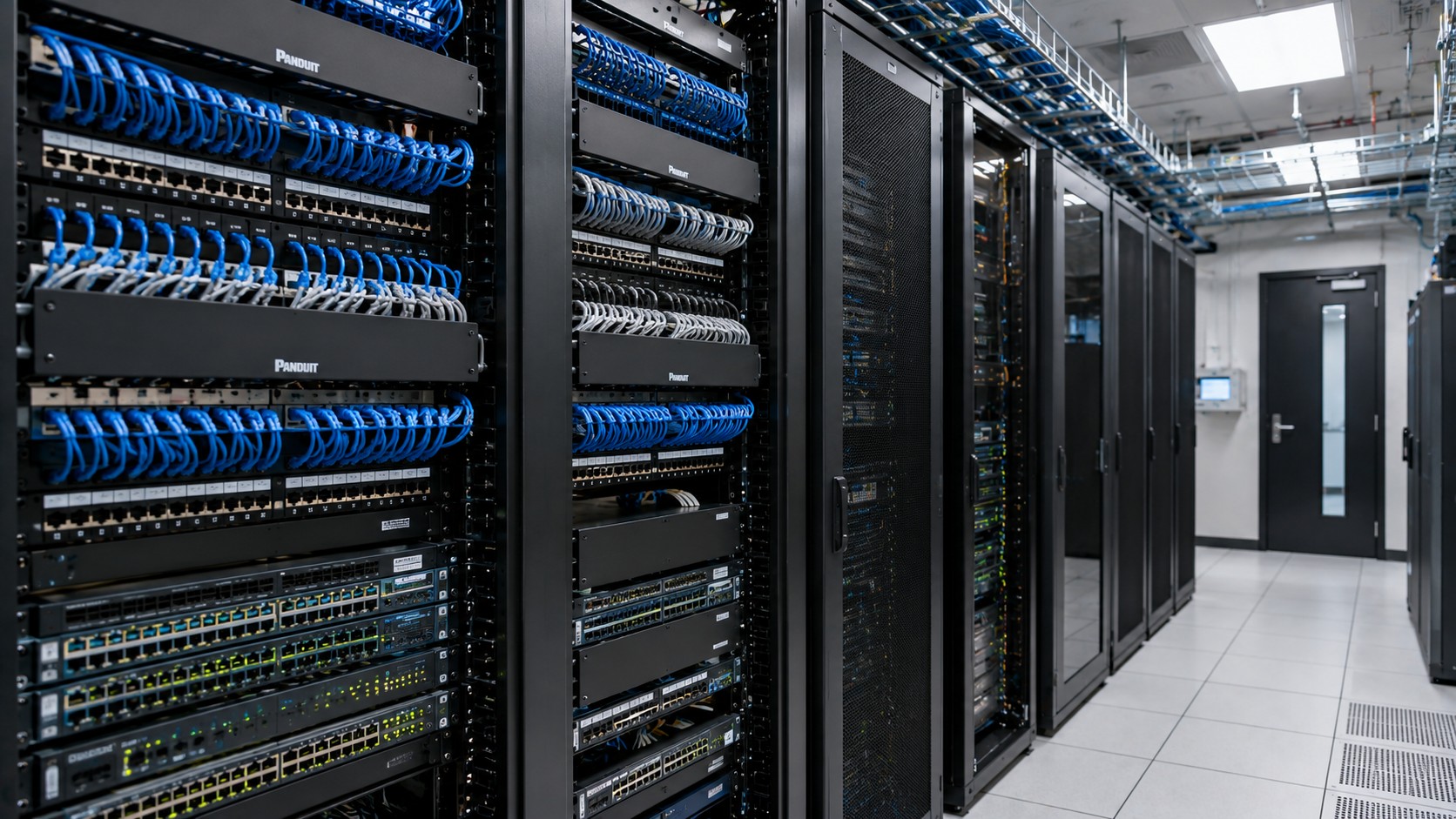
Data centre fibre cabling and patch panels in an organised server room

Why fibre matters inside the data centre

Data centre fibre cabling covers the backbone, cross-connect and trunk links that keep a data hall running. Copper reaches its practical limit fast inside a data hall. Fibre is what actually carries switch-to-switch, row-to-row and building-to-building capacity, and it is far less forgiving of a rushed install than a comms room patch lead. A backbone that is poorly routed, badly spliced or untested against a defined loss budget can bottleneck an otherwise well-specified network, and faults are far more disruptive to trace once cabinets, containment and live equipment are in place.

ACCL treats data centre fibre as a structured, survey-led project rather than a reactive cabling job: the same design, splicing, termination and test discipline used across our wider fibre optic installation service, applied to the higher density and tighter tolerances a data hall demands.

What the service covers

  • Fibre backbone and riser cabling between comms rooms, data halls, cabinets and rows
  • MTP/MPO trunk cabling and breakout cassettes for high-density switch-to-switch and spine-leaf links
  • Single-mode (OS2) fibre for longer inter-building, campus and inter-site data centre links
  • Multimode (OM3/OM4) fibre for shorter, high-bandwidth intra-hall and cabinet-to-cabinet links
  • Fusion splicing, LC/SC/MTP termination and enclosure/patch panel installation
  • Optical-loss and OTDR testing against an agreed loss budget, with full project documentation and cable schedules
  • Coordination with cabinet installation, containment and cable management inside live or fit-out data centre environments

Fibre types for data centre environments

ConsiderationSingle-mode (OS2)Multimode (OM3/OM4)
Typical use in a DCInter-building, campus and longer inter-row linksIntra-hall, cabinet-to-cabinet and short row links
Distance profileLonger reach with the correct optics and link budgetShorter, higher-density links within the same hall
Why it’s specifiedDistance and future-proofing beyond a single hall or buildingCost-effective density for common Ethernet applications over shorter runs
Deployment formatOften single/duplex or smaller trunk countsFrequently deployed as MTP/MPO trunks with breakout cassettes

The right mix is set by equipment interfaces, row layout, expansion plans and loss budget, not a blanket rule. A site survey defines core count, connector format and construction before any installation work begins.

Trunk cabling, cable management and containment

High-density data centre fibre is rarely installed as loose duplex runs. Most modern halls use pre-terminated MTP/MPO trunk cable with breakout cassettes at each end, which keeps cabinet-level patching tidy, speeds up future adds/moves/changes, and reduces the number of live splices required inside a working data hall.

Containment and routing planning has to account for hot/cold aisle layout, overhead or underfloor pathways, bend radius, pulling tension and fire stopping between compartments, all of which are agreed at survey stage alongside the wider structured cabling and containment design.

Testing, certification and documentation

Every data centre fibre link is tested against its designed loss budget using optical-loss measurement, with OTDR traces used where the route, fault investigation or handover specification calls for it. Results, cable schedules, labelling and product information are handed over as part of project documentation, in line with BICSI data centre cabling best practice: the same certified handover process used on our fibre testing and certification service, scaled to data centre density and change-control requirements.

Working in a live data centre

Most data centre fibre work happens around live equipment, not in an empty shell. ACCL plans installation, splicing and testing around agreed change windows, access restrictions and other trades, and coordinates fibre works with cabinet installation, relocation and server room tidy projects where those are running in parallel.

Who this is for

  • In-house IT and infrastructure teams specifying a new data hall, comms room or server room fit-out
  • Facilities managers coordinating a data centre relocation, expansion or consolidation across London or the wider South East
  • Businesses migrating to higher-bandwidth switching (10G/40G/100G) that need backbone and trunk cabling to match
  • Multi-site organisations connecting comms rooms and server environments across several London or M25-area buildings

Why choose ACCL

ACCL coordinates fibre backbone work with wider copper, wireless and IP infrastructure rather than treating it as an isolated cabling job: the same approach used on live fibre backbone work at The Observer Building and the broader infrastructure programme for Bring Energy at Queen Elizabeth Olympic Park. Every data centre fibre project is survey-led, tested against an agreed loss budget, and handed over with full documentation.

Frequently Asked Questions – (FAQs)

Q. What is data centre fibre cabling?

It is the design, routing, splicing, termination, testing and documentation of optical fibre links inside and between data centres, comms rooms and server environments, covering backbone, cross-connect and trunk cabling between cabinets, rows, halls and buildings.

Q. Should a data centre use single-mode or multimode fibre?

It depends on distance, equipment interfaces and expansion plans. Single-mode (OS2) is typically used for longer inter-building or campus links, while multimode (OM3/OM4) is commonly used for shorter, high-density intra-hall links. A site survey confirms the right specification.

Q. What is MTP/MPO trunk cabling and why is it used in data centres?

MTP/MPO trunks are pre-terminated, multi-fibre cable assemblies that connect to breakout cassettes at each end. They reduce the number of live splices needed inside a working hall, speed up installation, and keep high-density switch-to-switch cabling organised.

Q. Can fibre cabling be installed in a live data centre without disrupting operations?

Yes. Work is planned around agreed change windows, access restrictions and other trades, with routing, splicing and testing sequenced to avoid disrupting live equipment or existing links.

Q. How is data centre fibre tested and certified?

Every link is tested against its designed loss budget using optical-loss measurement, with OTDR traces used where the route or handover specification requires them. Results, cable schedules and labelling are supplied as part of project documentation.

Q. Does ACCL coordinate fibre cabling with cabinet installation and data centre relocation?

Yes. Fibre backbone and trunk cabling projects are coordinated with cabinet installation, relocation and server room tidy work where those projects are running in the same environment.

Q. What affects the cost of data centre fibre cabling?

Cost depends on route length, core count, single-mode vs multimode specification, trunk or splice format, containment, access, enclosures, testing scope and documentation requirements. A survey-led quotation sets out assumed routes, products, tests and exclusions.

Q. Which areas does ACCL cover for data centre fibre projects?

ACCL serves London, Kent, Surrey and parts of the wider South East, subject to project scope and location. A survey can be arranged through the site survey page or by calling 0333 900 0101.

Book a Data Centre Fibre Survey

Speak to a fibre specialist about backbone, cross-connect or trunk cabling for your data centre, comms room or server environment.

Standards: Cabling design follows BICSI data centre best practice.

Related: Fibre Optic InstallationFibre SplicingPassive Optical NetworkFibre Testing & CertificationFibre Optic RepairData Centre Solutions