
Warner Bros network infrastructure: resilient links across three London buildings
ACCL used CableFree laser, microwave and point-to-point Wi-Fi technology to overcome delayed ISP circuits between three central London locations.
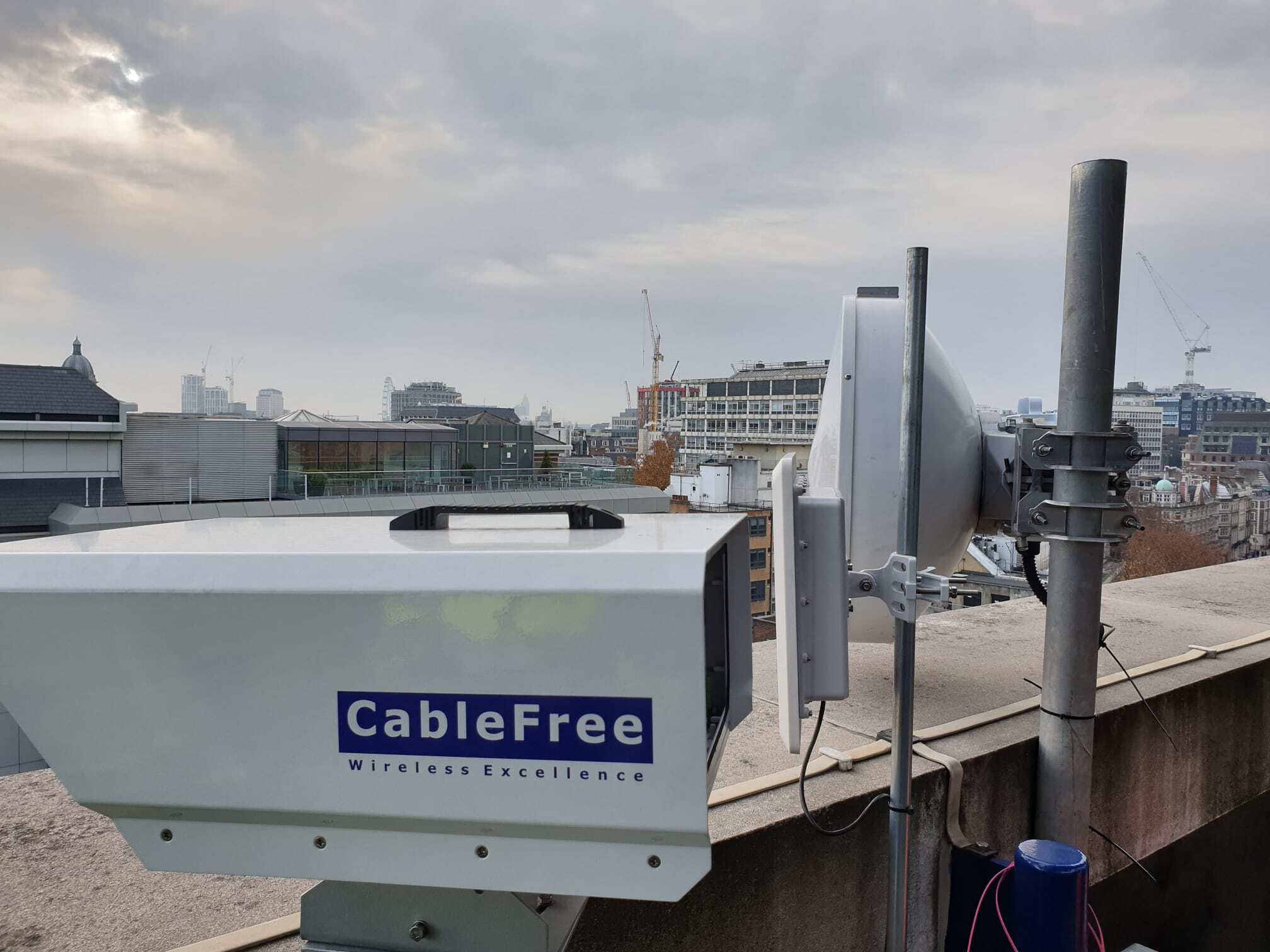
When delayed ISP circuits threatened connectivity between Warner Bros’ new premises at 98 Theobalds Road and its operations at 35 High Holborn and 200 Gray’s Inn Road, ACCL engineered an alternative. Three CableFree wireless technologies created dedicated data and voice connections with an additional resilient backup path.
The result
The completed project gave Warner Bros:
- Dedicated laser connection for the data network
- Separate microwave connection for the voice network
- Point-to-point Wi-Fi link providing backup resilience
- Licence-free operation as a core design requirement
- Roof-mounted equipment installed across all three sites
- Fibre, Cat6A, coaxial and power connecting the roof equipment to each comms room
Services delivered
Overview
When Warner Bros moved into 98 Theobalds Road, the new premises needed reliable communications with the company’s existing operations at 35 High Holborn and 200 Gray’s Inn Road. The planned ISP circuits were not going to be available in time, with delivery expected to take several more weeks.
Warner Bros required dedicated connectivity for its corporate data and voice networks, plus resilience if a primary connection became unavailable. ACCL was asked to develop an alternative that could be delivered quickly enough to support the move.
The challenge: connectivity before the carrier circuits arrived
The issue was not simply bandwidth. The new network had to be available within a much shorter programme than the ISP could offer, while keeping voice and data connectivity separate and providing a resilient alternative path.
ACCL identified three considerations that would determine the solution: speed of equipment delivery, speed of installation and licence-free operation. Any proposal that introduced a long procurement period, complex installation or additional licensing delay would fail the core requirement.
Turning rooftop line of sight into installed links
The physical relationship between 98 Theobalds Road, 35 High Holborn and 200 Gray’s Inn Road created the opportunity for a rapid wireless solution. All three buildings had good line of sight from roof level and each link was less than approximately 500 metres.
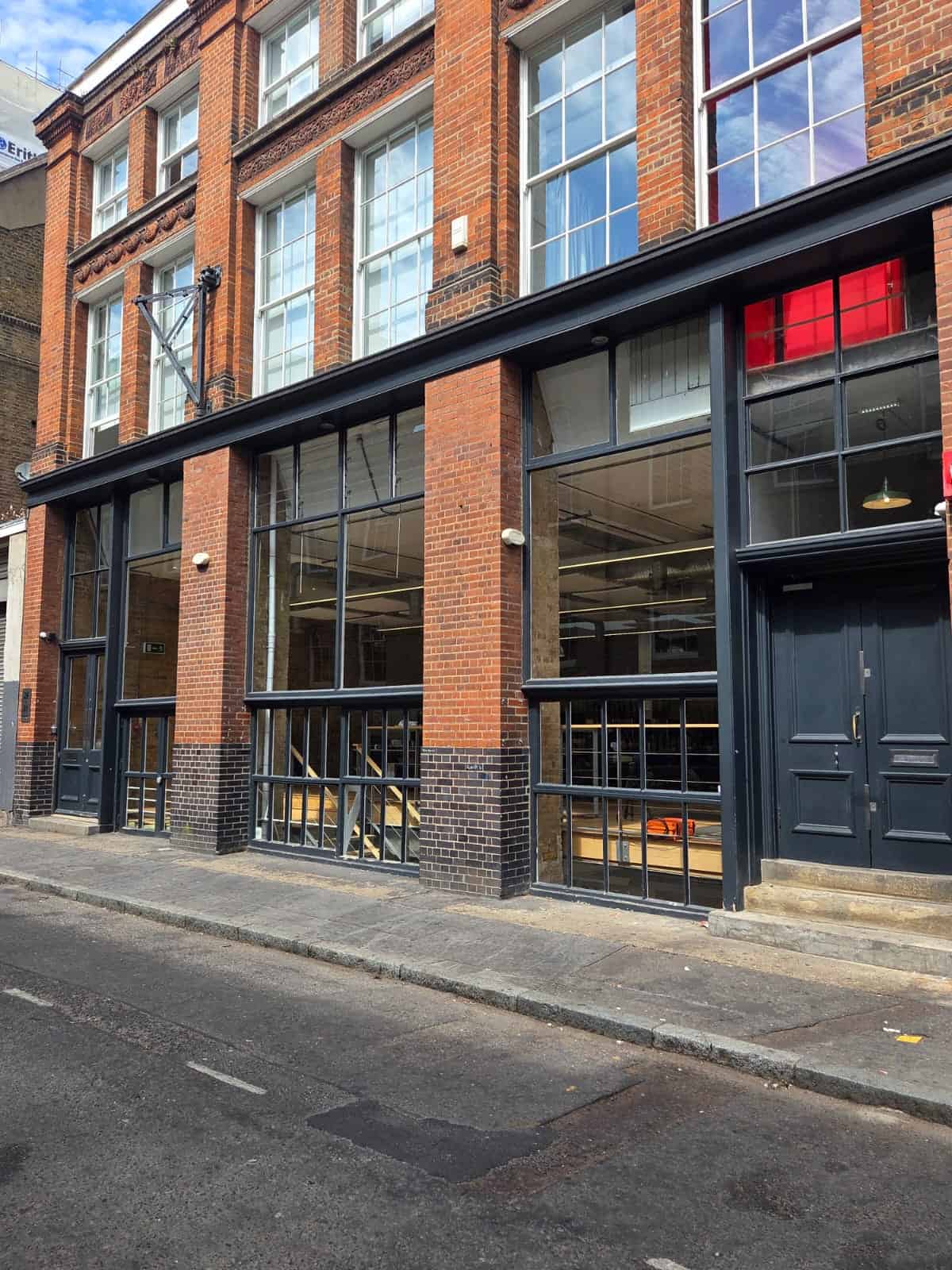
35 High Holborn, pictured here, was one of the three Warner Bros locations connected by ACCL’s rooftop wireless links. Using the buildings themselves avoided waiting for new physical circuits to be delivered through the carrier network.
Three CableFree technologies, each with a defined role
ACCL selected equipment from the CableFree range manufactured by Wireless Excellence in Oxford. The design deliberately used three transmission technologies rather than placing every critical service onto one wireless path.
- 1 Gigabit Free Space Optics laser: dedicated primary data network
- Microwave: dedicated voice network
- Point-to-point Wi-Fi: resilient backup connection
Using different technologies allowed ACCL to separate the principal voice and data functions while retaining a third path for resilience. Wireless Excellence supplied all three elements from its CableFree product range, and the equipment was delivered to site within one week of the order being placed.
Project context
Three Warner Bros locations, central London, each within approximately 500 metres with roof-level line of sight
Structured cabling in the City of London →Need a rapid building-to-building network?
ACCL can assess line of sight, cable routes, resilience and network requirements where conventional carrier delivery cannot meet the project programme.
Engineering the rooftop triangle
The three buildings effectively formed a triangle. Although overall line of sight was good, the transmission equipment could not simply be grouped together at one convenient position on each roof.
Different sections of the rooftops had to be used to establish the required line of sight for the individual laser, microwave and Wi-Fi paths. ACCL therefore had to consider equipment position, alignment and the route back into each building as part of the same design.
Connecting the rooftop equipment back to the comms rooms
The roof-mounted transmission equipment was only one part of the installation. Each element also had to be connected back to the communications room within its respective building.
ACCL installed the required combination of fibre optic, Cat6A, coaxial and power cabling between the rooftop equipment positions and the internal communications infrastructure. The project therefore combined specialist wireless links with the physical cabling required to integrate those links into the Warner Bros network.
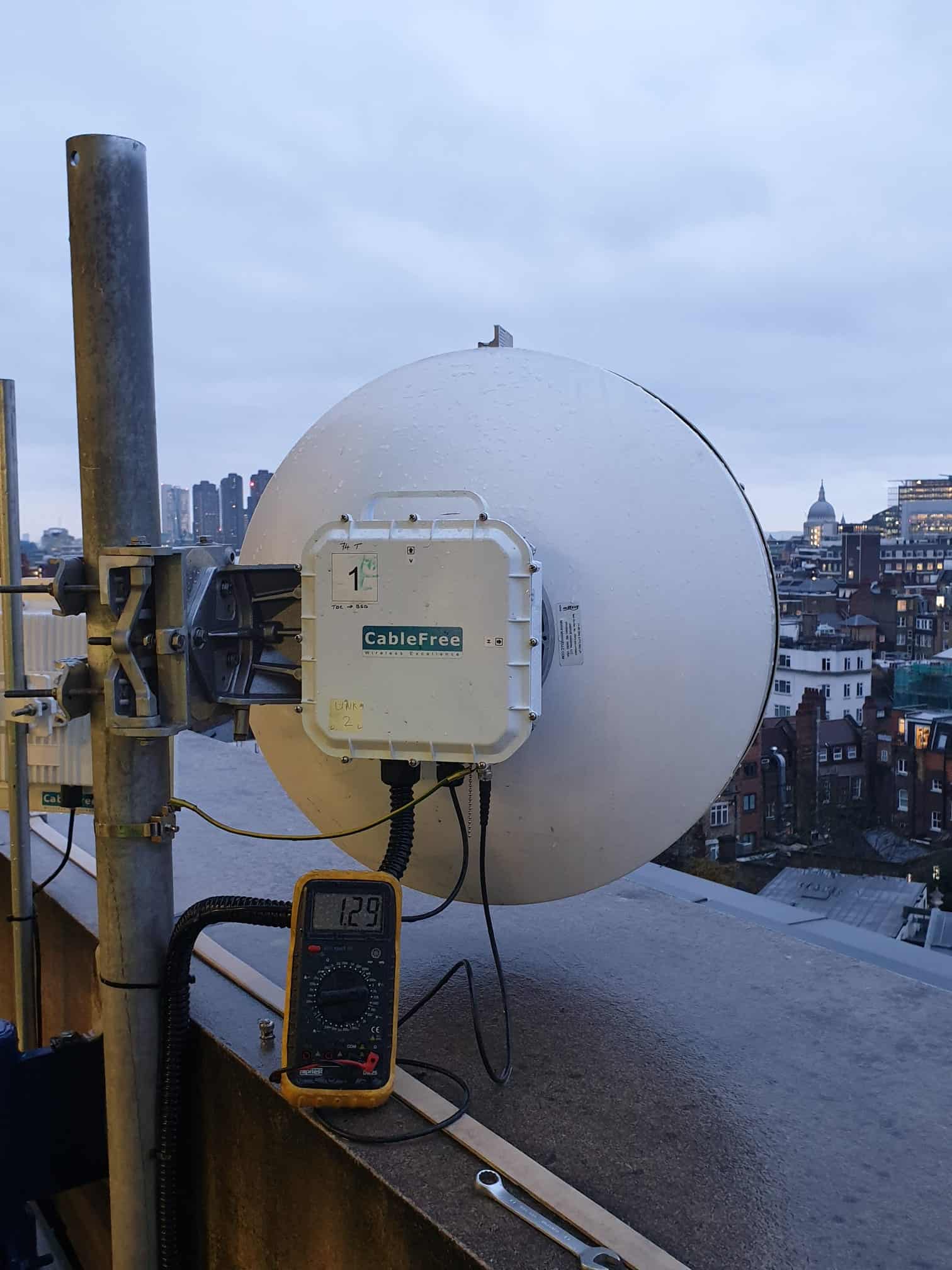
Rapid installation, alignment and commissioning
Once the CableFree equipment arrived, each of the three sites required approximately two days for the physical installation, including the roof-mounted equipment and the supporting cabling back to the building communications rooms.
Configuration and precise alignment of the three wireless systems required a further three days. Alignment and electrical checks were completed at roof level because the point-to-point links depended on clear and accurately established paths between the buildings.
The completed system gave Warner Bros a dedicated 1 Gigabit laser path for data, a separate microwave path for voice and a point-to-point Wi-Fi path for backup, allowing the new building to obtain the required connectivity without waiting several weeks for the planned ISP circuits.
Technologies used
ACCL’s role
Our role included:
- Assessment of the three-building connectivity problem
- Line-of-sight assessment between the London locations
- Selection of CableFree wireless technologies
- Design of separate data, voice and backup paths
- Installation of roof-mounted transmission equipment
- Fibre optic, Cat6A, coaxial and power cabling to rooftop equipment
- Alignment, testing and commissioning across all three sites
Explore related ACCL services
Foreword by Wayne
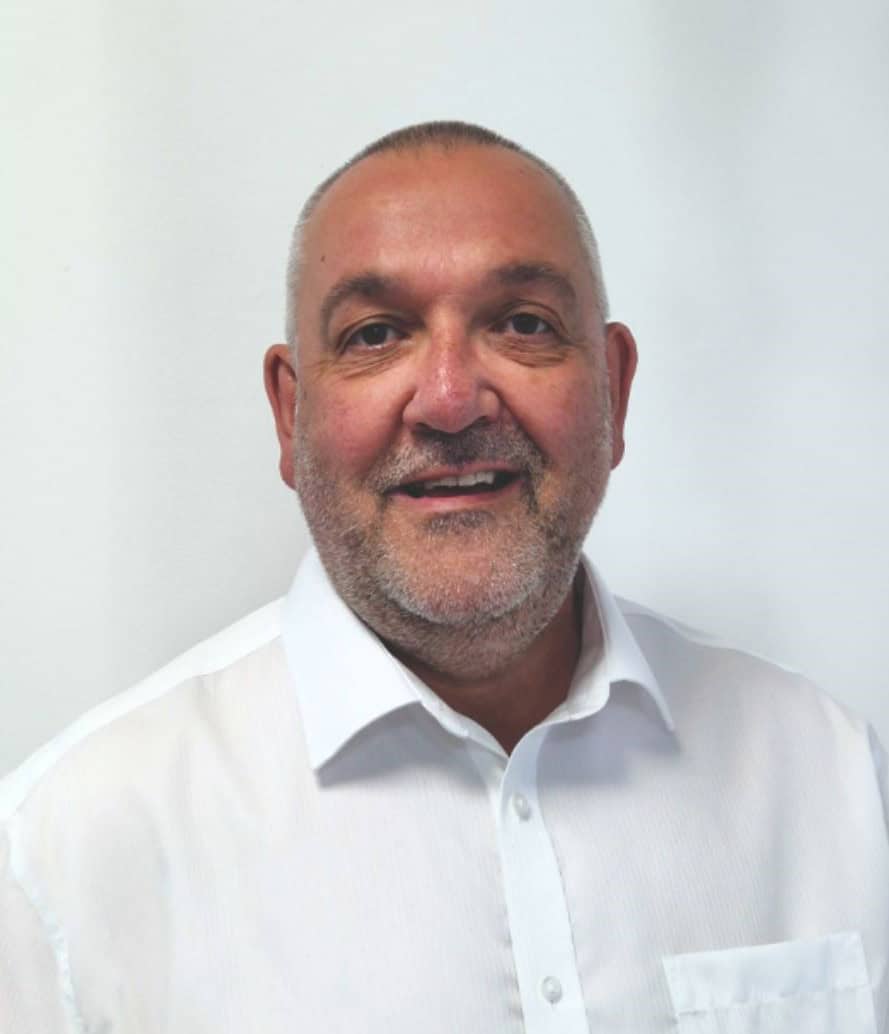
“This project came down to three things: how quickly we could obtain the equipment, how quickly we could install it and whether we could create the links without introducing further licensing delays. The three Warner Bros buildings had good line of sight, so rather than wait several weeks for the carrier circuits, we designed three separate wireless paths. The laser carried data, microwave carried voice and point-to-point Wi-Fi provided resilience. It is a project I particularly remember because the technology was driven entirely by the client’s operational problem.”Wayne Connors, Managing Director, ACCL
Frequently asked questions
Why did Warner Bros need an alternative network connection?
The ISP responsible for the planned circuits between 98 Theobalds Road, 35 High Holborn and 200 Gray’s Inn Road could not provide the services for several weeks. ACCL was asked to develop a faster interim solution for voice, data and resilience.
Which buildings did the ACCL solution connect?
The solution connected Warner Bros locations at 98 Theobalds Road, 35 High Holborn and 200 Gray’s Inn Road in central London.
What technology carried the data network?
A CableFree 1 Gigabit Free Space Optics laser link was designated for the primary data network.
What technology carried the voice network?
A separate CableFree microwave link was designated for the voice network.
How was resilience provided?
A point-to-point Wi-Fi link was installed as the backup path, giving the design a third wireless technology in addition to the laser and microwave links.
Why was line of sight important?
The laser, microwave and point-to-point Wi-Fi systems linked rooftop equipment between the buildings. Good line of sight and distances of less than approximately 500 metres made the building-to-building design practical.
How quickly was the equipment delivered?
The CableFree equipment from Wireless Excellence was delivered to site within one week of the order being placed.
How long did installation take?
Each of the three sites required approximately two days for physical installation. Configuration and alignment of the complete solution required a further three days.
What cabling connected the rooftop equipment to the comms rooms?
The installation used the required combination of fibre optic, Cat6A, coaxial and power cabling to connect the roof-mounted equipment back to the communications rooms.
Who manufactured the wireless equipment?
The laser, microwave and point-to-point wireless equipment came from the CableFree range manufactured by Wireless Excellence in Oxford.


Need resilient connectivity between buildings?
Talk to ACCL about line-of-sight wireless links, fibre infrastructure and resilient network design for business-critical locations.
Talk to us about your site 0333 900 0101Image credits
Commissioning image: Testing and commissioning the rooftop wireless equipment before the links entered service.