
Tidraw office relocation: Wi-Fi-first network, Old Street, London
Wi-Fi-first office network for Tidraw’s Old Street HQ, delivered against a ten-day deadline.
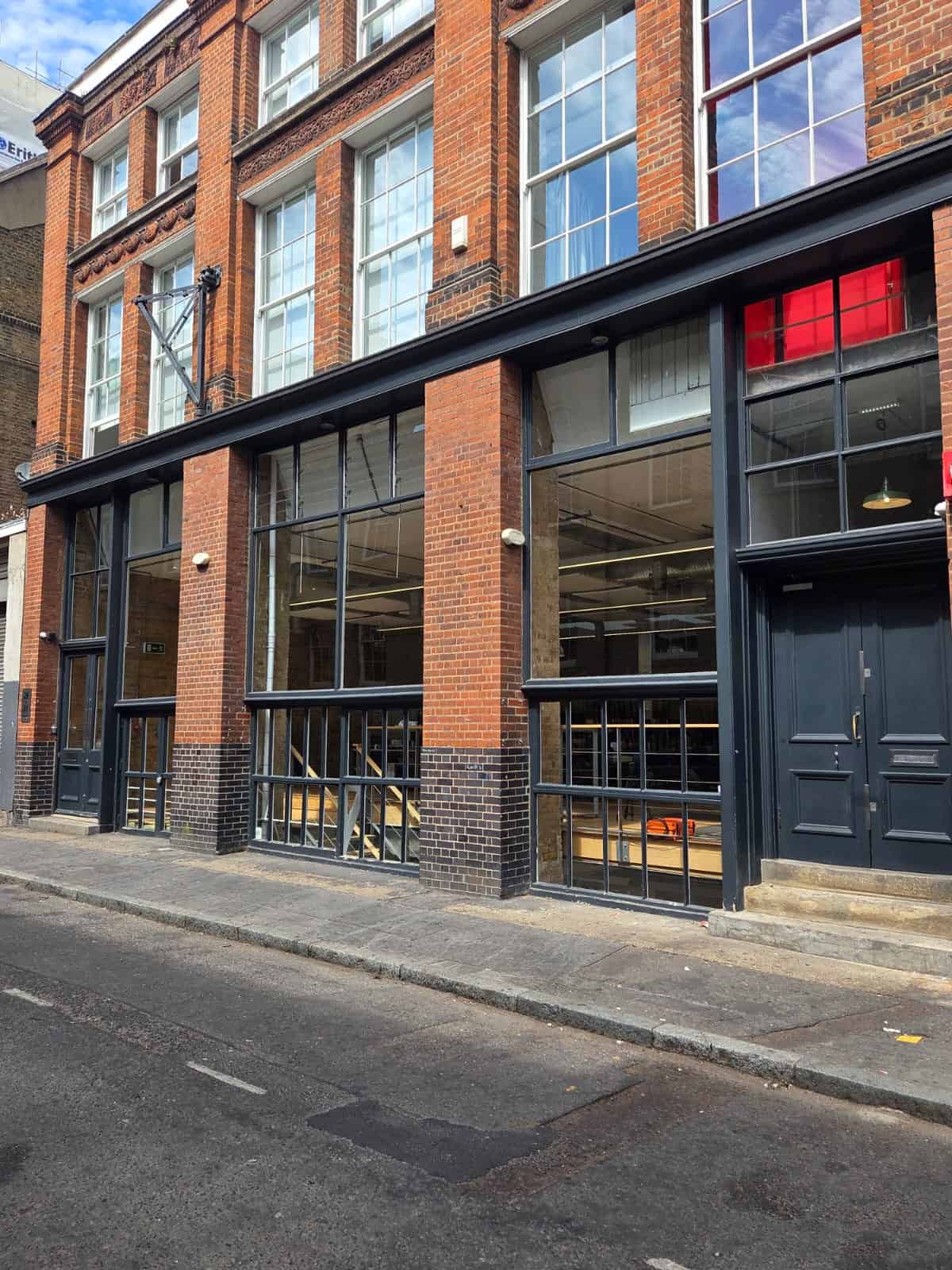
Tidraw secured a new two-floor office in Old Street with just ten days before go-live. ACCL ran a full Ekahau Wi-Fi survey, tested the inherited Cat6 cabling for reuse, and pre-built the network off-site to keep installation fast once access opened. A temporary 5G line covered a delayed internet connection so the office was ready for Monday morning.
The result
ACCL delivered a complete Wi-Fi-first office network within an exceptionally demanding programme. The completed project provided Tidraw with:
- Reliable Wi-Fi coverage across both floors
- Seven professionally positioned Wi-Fi 7 access points
- A centrally managed Ubiquiti network
- Reuse of serviceable parts of the existing Cat6 installation
- New containment for essential network cabling
- A temporary 5G connectivity solution
- Reduced disruption to the building’s wooden flooring
- Fully operational for the Monday go-live
Services delivered
Overview
When Tidraw contacted ACCL, the company had secured a new two-floor office in Old Street, London, and planned to move in within two weeks. The timescale was extremely tight: before staff could occupy the building, Tidraw needed to understand whether the existing network infrastructure could be reused and what additional work would be necessary to provide reliable connectivity throughout the new office.
ACCL arranged an immediate site visit to assess the existing installation and develop a practical solution that could be delivered before the planned Monday-morning go-live.
The challenge
The previous tenant had left behind a Cat6 structured cabling system and a data cabinet. Across the two floors, 138 data outlets were identified on the existing patch panels. Although this initially appeared to provide Tidraw with a substantial network infrastructure, there were no reliable records confirming the condition, location or performance of the outlets.
With so little time available, replacing everything immediately would have introduced unnecessary cost and considerable programme risk. ACCL therefore recommended testing the existing Cat6 installation to establish which parts of the network could be safely reused. Testing revealed that only 43 of the 138 existing outlets were suitable for reuse. The remainder could not be relied upon to support Tidraw’s new office network.
Tidraw initially asked ACCL to recable both floors to provide network services for:
- 24 workstations
- Four meeting rooms
- Wireless access points
- Network equipment
- Shared office technology
However, the construction of the building presented another challenge. Installing new data cabling to every desk would have required sections of the wooden flooring to be lifted: expensive, disruptive and difficult to complete within the remaining ten-day programme.
Developing a Wi-Fi-first strategy
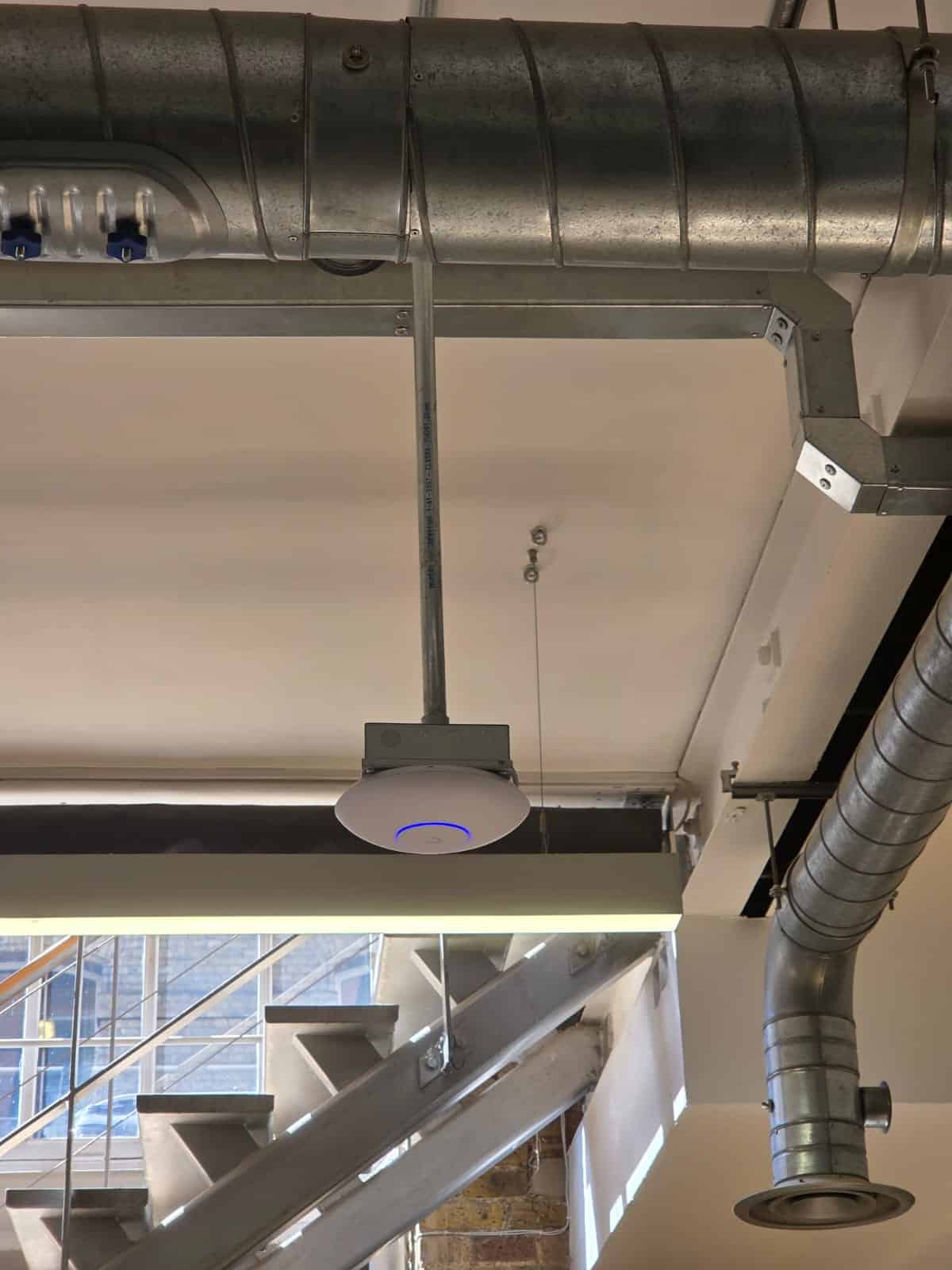
Most Tidraw employees worked from laptops and did not require a permanent wired network connection at their desks. After discussing how the new office would be used, ACCL recommended adopting a Wi-Fi-first network strategy, avoiding the cost and disruption of lifting the wooden floors while still providing the fast, dependable connectivity needed by Tidraw’s employees and meeting rooms.
Rather than estimating the number and position of wireless access points, ACCL completed a full Ekahau Wi-Fi survey across both floors. The survey modelled coverage, capacity and access-point placement based on the building layout and Tidraw’s anticipated usage, and identified that seven wireless access points would be required to provide reliable service throughout the office.
The 43 serviceable Cat6 outlets were then incorporated into the new design wherever practical, allowing Tidraw to obtain value from the usable parts of the inherited infrastructure.
Designing the cable routes
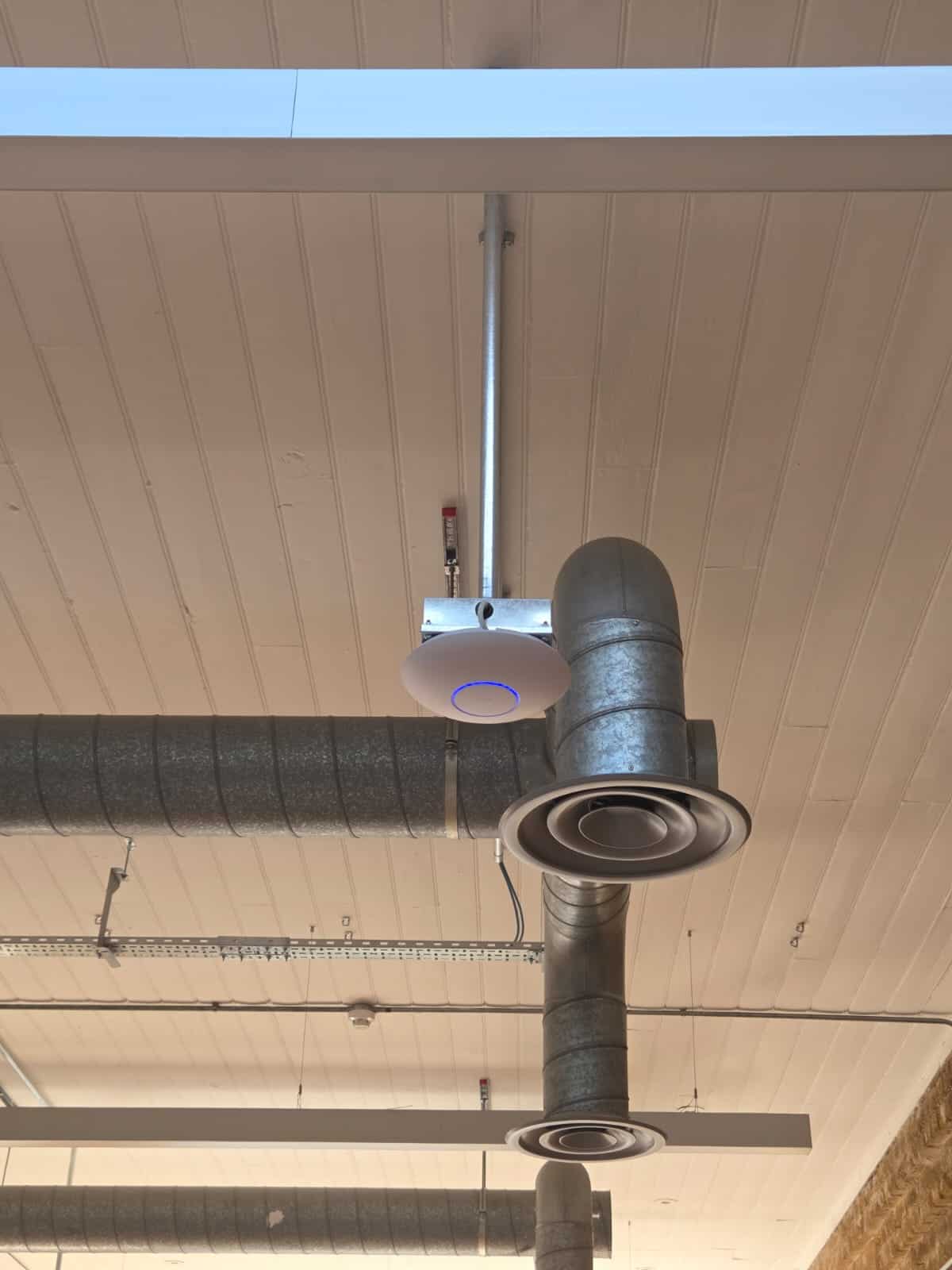
Although the office would operate primarily over Wi-Fi, new cabling was still required to connect the wireless access points and other essential network equipment. Because of the building’s construction, ACCL designed a new surface containment system to carry and protect these cables without disturbing the wooden floors.
Once the routes had been agreed, ACCL produced the material requirements and placed the necessary orders immediately. The containment design allowed the new infrastructure to be installed neatly while keeping disruption to the office finishes to a minimum.
Need a Wi-Fi-first network like Tidraw’s?
ACCL surveyed, tested and designed Tidraw’s entire office network around a ten-day deadline. Talk to us about a similar project.
Supplying and building the network
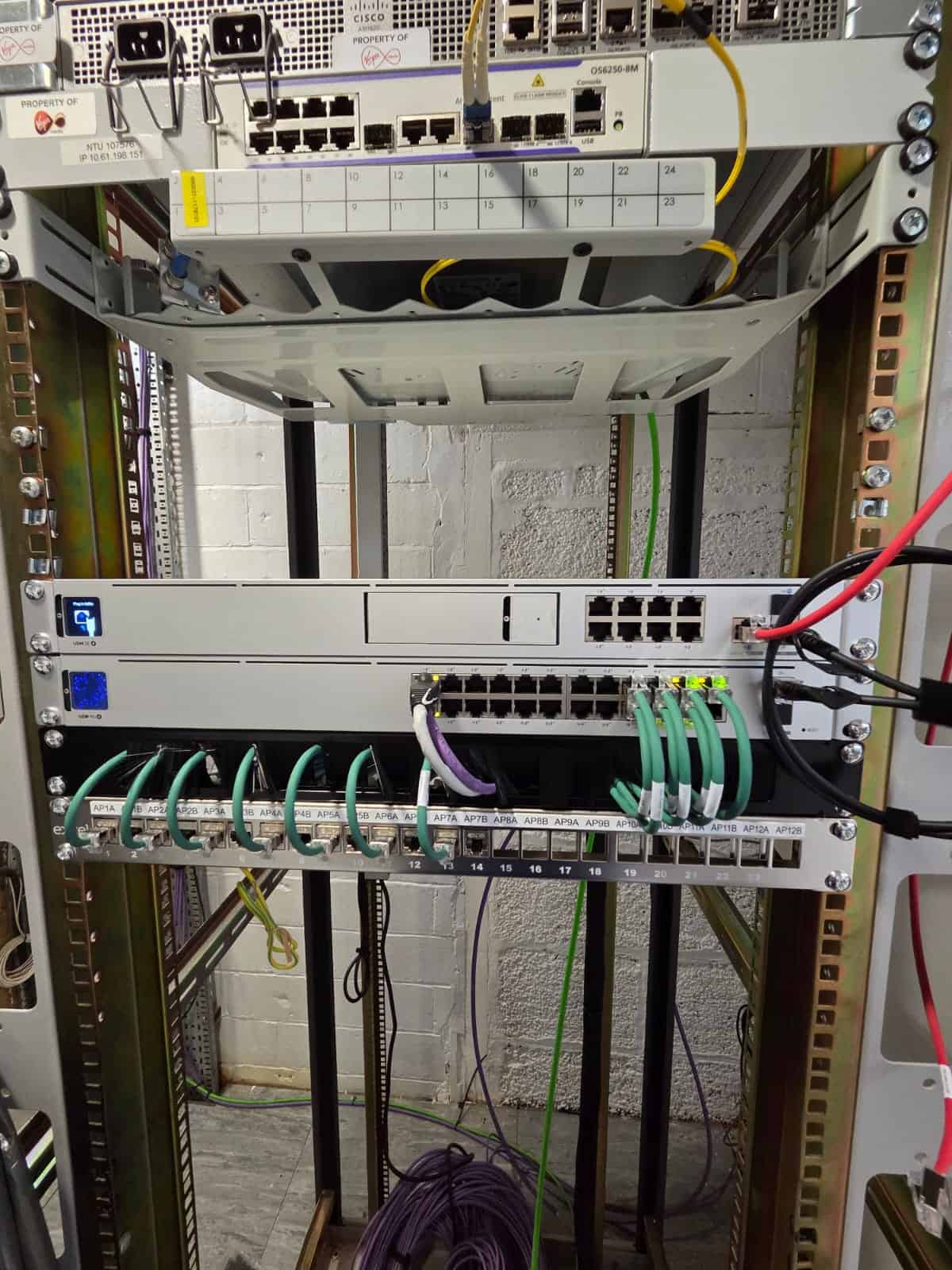
Tidraw subsequently asked ACCL to supply the wireless access points, switches and core network equipment, as well as build and configure the network. ACCL recommended a Ubiquiti solution comprising:
To protect the programme, the equipment was delivered to the ACCL office rather than directly to site. Our technical team assembled, configured and tested the network in our lab before the planned installation date. This off-site preparation proved critical: it allowed much of the network build to take place while access to the new office was still restricted, and significantly reduced the amount of configuration required on site.
An unexpected internet connectivity problem
With only seven days remaining, Tidraw was informed that Virgin Media would not be able to install the planned internet service before the office went live. Without an internet connection, the new network would have been operational internally but unable to provide employees with access to cloud applications, communications platforms and other essential services.
Tidraw contacted ACCL to see whether an alternative could be arranged. ACCL introduced the client to a specialist supplier capable of providing a temporary 5G connectivity solution. This restored the programme and provided Tidraw with a practical route to getting the office online while waiting for the permanent Virgin Media service.
The final obstacle
The landlord’s main contractor then experienced delays, preventing ACCL from starting work on site as planned. By the time access became available, only four days remained before Tidraw’s Monday-morning go-live, and two of those days were over the weekend.
The ACCL team rallied around the project and committed the additional resources and working hours needed to complete the installation. Because the network had already been built and tested in our lab, the team could concentrate on installing the containment, running the new cables, mounting the access points, connecting the equipment and completing the final commissioning work.
Despite the restricted access, building constraints, failed legacy cabling and delayed internet service, the new network was completed and operational in time for Tidraw’s employees to begin work on Monday morning.
Technologies used
ACCL’s role
This project required considerably more than the installation of cables and wireless access points. ACCL provided Tidraw with a complete network relocation service, including:
- Initial site assessment
- Testing of 138 inherited Cat6 data outlets
- Identification of 43 serviceable network connections
- Network strategy and technical recommendations
- Ekahau Wi-Fi surveying
- Wireless network design
- Containment and cable-route design
- Equipment procurement
- Off-site network configuration and testing
- On-site installation and commissioning
- Coordination of temporary 5G connectivity
- Out-of-hours and weekend working
Solving the problem, not just the original specification
Tidraw’s original requirement was to recable the desks and meeting rooms. However, once ACCL understood the building, the programme and how Tidraw’s employees worked, it became clear that a conventional desk-cabling solution would have been expensive and difficult to deliver on time.
By testing before replacing, designing around the building constraints and configuring the network off site, ACCL developed a faster and more cost-effective solution. The project demonstrates the value of involving an experienced network infrastructure specialist at the earliest possible stage of an office relocation. When deadlines are fixed and unexpected problems arise, practical design decisions, technical preparation and a committed installation team can make the difference between a delayed move and a successful first day in the new office.
Explore related ACCL services
Related guidance
Foreword by Wayne

“Tidraw is a good example of what happens when a programme goes wrong in more than one direction at once. A landlord’s contractor delay, a legacy cabling system that couldn’t be trusted, and an ISP that missed its own install date. None of that is unusual on its own. What made the difference here was refusing to let any of it become Tidraw’s problem. We built and tested the entire network in our own lab before we’d even set foot on site, so when we finally got four days instead of ten, there was nothing left to figure out, only work to do. That’s the standard we hold every project to, deadline or not.”Wayne Connors, Managing Director, ACCL
“We used ACCL for a full WiFi and network install at our Old Street office and are very pleased with the result. They supplied and installed seven Ubiquiti WiFi access points, a UniFi Dream Machine, a 24 port Layer 3 Ubiquiti switch, and ran new Cat6A Leviton cabling with two ports to every AP. The whole job was neat, well planned and done to a very high standard. The coverage across the office is excellent and it looks pretty cool too! Would happily recommend them to anyone needing cabling or network infrastructure done properly.”Siobhan Codd, Tidraw
Frequently asked questions
How quickly did ACCL deliver the Tidraw office network?
Within an exceptionally tight programme of around ten days. Despite delays that left only four days of site access, two of them over a weekend, the network was completed and operational in time for Tidraw’s Monday-morning go-live.
Why did ACCL recommend a Wi-Fi-first strategy for Tidraw?
Most Tidraw staff worked from laptops, and cabling every desk would have meant lifting the building’s wooden floors, which would have been costly, disruptive and slow. An Ekahau Wi-Fi survey showed that seven Wi-Fi 7 access points would provide reliable coverage across both floors.
How much of the existing cabling was reused?
ACCL tested the 138 inherited Cat6 outlets and found 43 were serviceable. These were incorporated into the new design wherever practical, giving Tidraw value from the usable parts of the inherited infrastructure.
How did ACCL keep the project on schedule despite delays?
The network was assembled, configured and tested off-site in ACCL’s lab before installation, so once site access became available the team could focus on containment, cabling, mounting access points and commissioning. A temporary 5G solution covered the delayed Virgin Media line.
Why couldn’t Tidraw simply reuse all 138 existing outlets?
There were no reliable records confirming the condition, location or performance of the outlets left by the previous tenant. ACCL tested every one before relying on it, and only 43 proved suitable for reuse.
What equipment did ACCL supply for the network?
Seven Wi-Fi 7 wireless access points, a Ubiquiti Dream Machine, a 24-port Layer 3 network switch, and the associated mounting and connectivity equipment, all assembled and tested in ACCL’s own lab before installation.
What caused Tidraw’s internet connection to be delayed?
Virgin Media was unable to install the planned internet service before the office went live. ACCL introduced Tidraw to a specialist supplier who provided a temporary 5G connectivity solution to bridge the gap.
Why did access to Tidraw’s site get delayed?
The landlord’s main contractor experienced delays of their own, which pushed back when ACCL could start on-site work. By the time access became available, only four days remained before Tidraw’s Monday-morning go-live, two of them over a weekend.
Did Tidraw’s original brief change during the project?
Yes. Tidraw originally asked ACCL to recable the desks and meeting rooms directly. Once ACCL surveyed the building and understood how staff worked, a Wi-Fi-first approach replaced the original desk-cabling plan as the faster, more cost-effective solution.



Relocating your office on a tight deadline?
Talk to the team that delivered a complete Wi-Fi-first office network in ten days.
Book a free site survey 0333 900 0101