
DHL East Midlands Airport: fibre infrastructure and parcel handling upgrade
Auditing, consolidating and expanding the network infrastructure behind a live distribution warehouse, including approximately 50 km of OS2 fibre and connectivity for 10 upgraded parcel handling tracks.

ACCL became involved during the planning phase of the expansion of DHL’s East Midlands Airport distribution warehouse. Beginning with a detailed audit of the existing communications infrastructure, the project progressed through fibre consolidation and migration to a new data centre before supporting the upgrade of 10 parcel handling tracks and their associated X-ray systems.
The result
ACCL’s phased infrastructure programme at East Midlands Airport delivered:
- Existing infrastructure documented before migration began
- Cabinet patching schedules and equipment asset registers produced
- Approximately 50 km of OS2 single-mode fibre installed
- Fibre infrastructure migrated to a new data centre
- Connectivity delivered for 10 upgraded parcel handling tracks
- Work coordinated around a live, operational distribution facility
Services delivered
Overview
When DHL began planning the expansion of its distribution warehouse at East Midlands Airport, ACCL was asked to assist with consolidating the existing communications infrastructure so that new systems could be integrated into the facility. The scale of the warehouse meant its network was distributed across 13 strategically positioned 42U data cabinets, connected to Primary and Secondary Communications Rooms and interconnected to form a fibre ring around the facility.
Rather than beginning immediately with new cabling, ACCL’s first responsibility was to understand and document the infrastructure already supporting the operational warehouse. That initial discovery work became the foundation for a phased 14-month infrastructure programme involving network documentation, fibre replacement, migration to a new data centre and connectivity for DHL’s upgraded parcel handling systems.
The challenge
This was not simply a new-build fibre installation. ACCL was working with an established communications infrastructure supporting a live distribution environment, so before any existing connections could be altered, the project team needed an accurate understanding of what was installed, where it was connected and which equipment was operating within each cabinet.
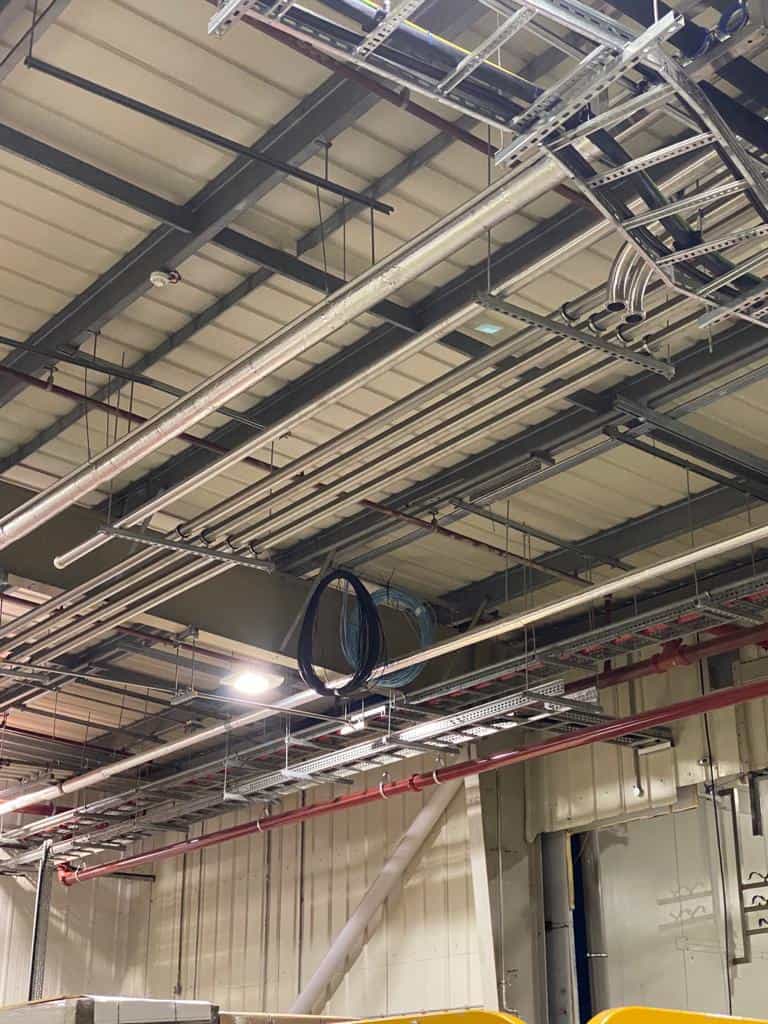
The physical scale of the warehouse added another consideration. Thirteen distributed cabinets, Primary and Secondary Communications Rooms and extensive fibre routes had to be incorporated into the migration strategy. The facility also included airside and Customs-controlled areas, where work and access had to be scheduled well in advance.
The challenge was therefore as much about documentation, coordination and controlled migration as it was about installing the new fibre itself.
Documenting the existing infrastructure before migration
Before developing the replacement fibre architecture, ACCL documented each of the 13 communications cabinets. The survey and documentation process included cabinet identification, patching schedules, an active network equipment asset register, a UPS asset register, existing fibre connections, cabinet-to-cabinet links, connections to the Primary and Secondary Communications Rooms and the existing physical fibre routes.
Once this information had been collated, the fibre cable routes could be plotted, giving the project team a structured record of the infrastructure that needed to be considered before the next phase commenced.
Project context
Logistics & distribution · East Midlands Airport
Structured cabling for warehouse & industrial environments →Planning a live warehouse or logistics network upgrade?
ACCL provides structured cabling and fibre infrastructure for warehouses, distribution facilities and other operational environments where existing systems need to remain available during infrastructure changes.
Migrating the fibre infrastructure to the new data centre
With the existing network documented and the fibre routes plotted, ACCL moved into the next stage of the project. The existing fibres were replaced and new fibre infrastructure was routed back to the new data centre, which was then connected back to both the Primary and Secondary Communications Rooms.
This was a significant part of the overall consolidation programme, bringing the new data centre into the existing distributed communications architecture while providing the infrastructure required for the next stage of DHL’s expansion.
Supporting 10 upgraded parcel handling tracks
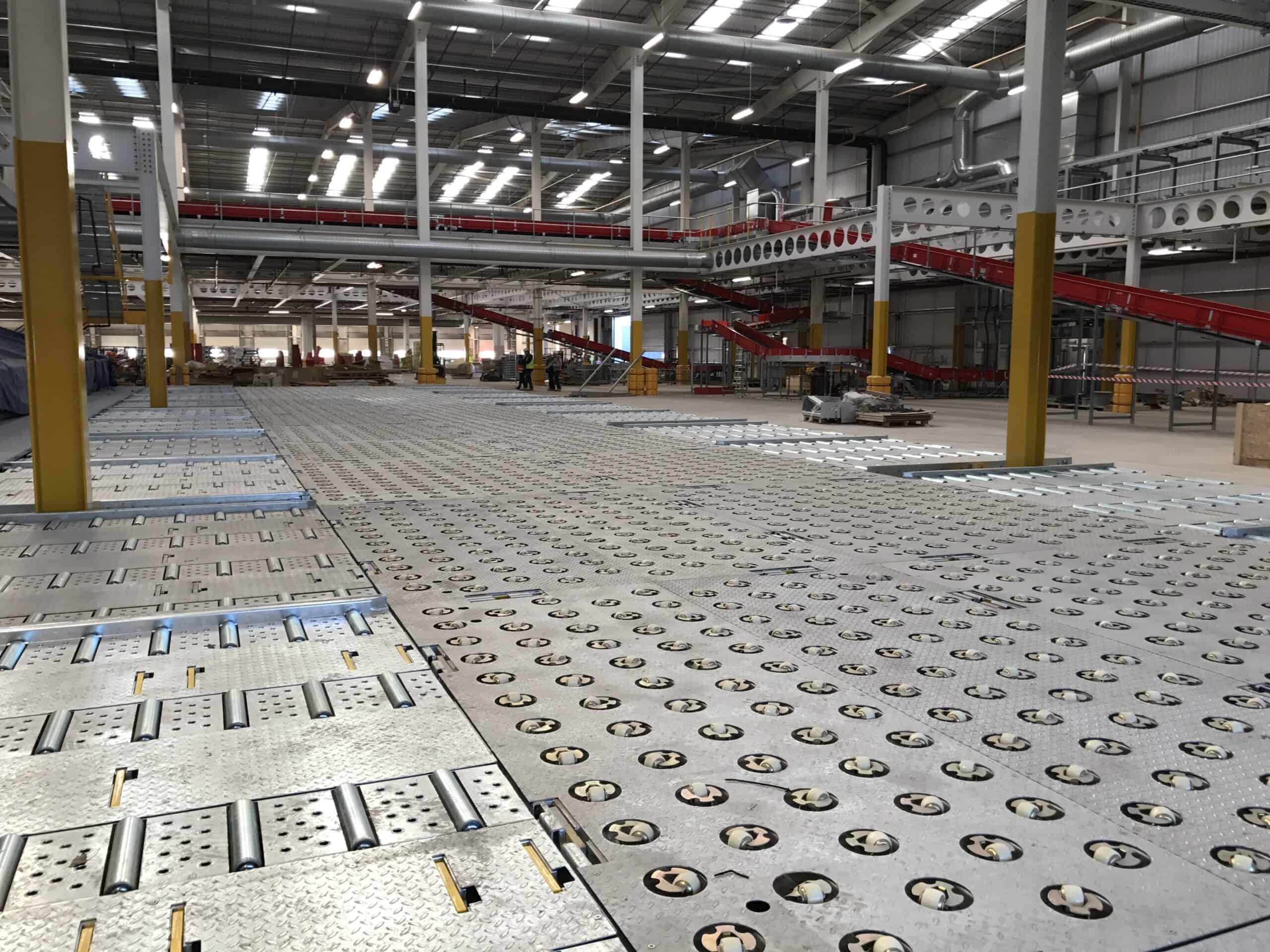
The next phase centred on the upgrade of the parcel handling systems. There were 10 parcel handling tracks, each connected back to the existing distributed communications cabinets, with approximately 50 data points installed per track – around 500 data connections across the 10 tracks based on the project figures. The infrastructure also supported the project’s 10 X-ray machines.
This phase demonstrates why the distributed cabinet architecture mattered. Rather than running every connection directly across the full warehouse floor plate, the operational systems could connect back to communications cabinets positioned around the facility.
Approximately 50 km of OS2 fibre
Across the overall project, ACCL installed approximately 50 kilometres of OS2 single-mode fibre, providing the backbone connecting infrastructure across the large distribution environment and forming a major element of the consolidation and expansion programme.
The quantity of fibre also illustrates the physical scale of the project. The installation was not limited to a single communications room or warehouse zone, but extended across the distributed cabinet architecture, communications rooms, new data centre and associated operational infrastructure.
Working around an operational airport distribution facility
The complete programme lasted approximately 14 months. The majority of ACCL’s work was undertaken during normal working hours, requiring installation activities to be coordinated around the operational warehouse. Additional planning was required where work entered airside and Customs-controlled areas, meaning access had to be scheduled well in advance.
This combination of live operations, controlled areas and a large distributed network made project management as important a part of ACCL’s role as the physical cabling installation itself.
Technologies used
ACCL’s role
ACCL’s involvement extended from the initial infrastructure assessment through to the physical installation supporting the expanded distribution operation:
- Documenting the 13 existing communications cabinets
- Producing patching schedules and equipment asset registers
- Identifying and plotting existing fibre routes
- Replacing fibre infrastructure across the facility
- Connecting the new data centre into the existing communications rooms
- Providing connectivity for 10 upgraded parcel handling tracks
- Coordinating work around airside and Customs-controlled access
Explore related ACCL services
Related guidance
Foreword by Wayne

“What stands out for me about the DHL East Midlands Airport project is that our work started with understanding what was already there. With 13 communications cabinets distributed around a live warehouse, together with Primary and Secondary Communications Rooms, we needed an accurate picture of the existing infrastructure before we started changing it. We documented the cabinets, produced the patching schedules and asset registers and plotted the fibre routes, which gave us the information needed to plan the next stages properly. From there, the project developed into a major 14-month programme that included replacing the fibre infrastructure, connecting the new data centre and providing connectivity for 10 parcel handling tracks. Installing approximately 50 kilometres of OS2 fibre gives some indication of the scale, but the project was equally about planning and coordination – we were working in a live distribution facility, and access to airside and Customs-controlled areas had to be arranged in advance. For me, it is a good example of why ACCL gets involved at the planning stage of major infrastructure projects rather than simply arriving when somebody is ready to install cables.”Wayne Connors, Managing Director, ACCL
Frequently asked questions
What work did ACCL undertake for DHL at East Midlands Airport?
ACCL’s work included auditing and documenting the existing communications infrastructure, producing patching schedules and equipment asset registers, plotting fibre routes, replacing fibre infrastructure, connecting a new data centre and providing connectivity for upgraded parcel handling systems.
How many communications cabinets were involved?
The warehouse infrastructure incorporated 13 strategically positioned 42U communications cabinets.
Why were communications cabinets distributed around the warehouse?
The physical floor plate required communications infrastructure to be distributed around the facility rather than concentrated at a single location.
How were the communications cabinets interconnected?
The cabinets had connectivity back towards the Primary and Secondary Communications Rooms and were also interconnected to form a fibre ring.
What type of fibre did ACCL install?
ACCL installed OS2 single-mode fibre.
How much fibre was installed?
Approximately 50 kilometres of OS2 fibre was installed across the project.
How many parcel handling tracks were upgraded?
The project involved 10 parcel handling tracks.
How many data connections were installed for the parcel handling systems?
Approximately 50 data points were installed to each of the 10 tracks, representing around 500 connections based on the project figures.
Did the project include X-ray systems?
Yes. The parcel handling upgrade incorporated 10 X-ray machines.
How long did the project take?
The overall project duration was approximately 14 months.
Did DHL remain operational during the project?
Yes. The work was undertaken within an operational distribution facility, with the majority of ACCL’s installation activities carried out during normal working hours.
Were there additional security or access restrictions?
Yes. Work within airside and Customs-controlled areas needed to be scheduled well in advance.

Fibre infrastructure for complex operational environments
From existing network audits and communications room consolidation to large-scale OS2 fibre installations, ACCL provides infrastructure services for organisations where network changes need to be carefully planned around ongoing operations.
Book a free site survey 0333 900 0101Related logistics and manufacturing projects include DHL Aviation at Heathrow Airport and Edible Oils in Erith.