
Sun Chemical, Orpington: fire-survival OS2 fibre network for site-wide fire suppression
ACCL designed and installed an external fire-survival OS2 fibre optic ring connecting eight water cannons protecting chemical storage within Sun Chemical’s logistics area to the site’s central fire control centre.
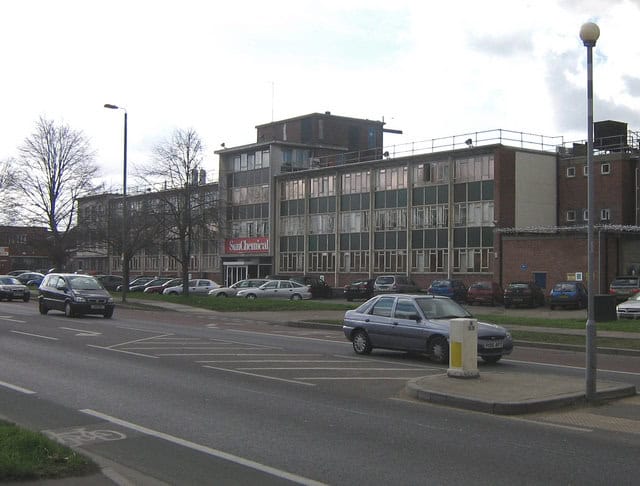
Historical photograph of the Sun Chemical plant, Cray Avenue, Orpington. Photo: Ian Capper, via Geograph, CC licence.
Sun Chemical’s plant stood directly across Cray Avenue from ACCL’s former Orpington offices and became a long-standing local client. ACCL installed Cat6 office cabling over many years, with the largest individual project being a specialist external fibre ring supporting a new site-wide fire suppression system.
The result
- Specialist communications infrastructure for a safety-related application
- External cable routes around an operational industrial plant
- Ring topology connecting all eight suppression locations
- Fibre specification selected around the fire-suppression requirement
- Project developed from ACCL’s long-term infrastructure relationship with the Orpington facility
Services Delivered
Overview
ACCL’s relationship with Sun Chemical developed over many years. The plant was situated directly across Cray Avenue from ACCL’s Orpington offices, and ACCL regularly worked within the facility installing and expanding Cat6 structured cabling supporting the office areas.
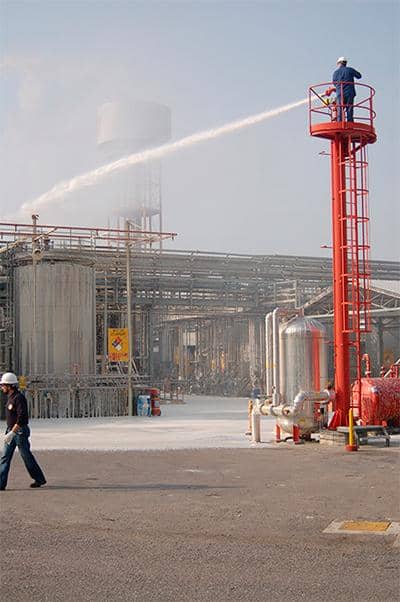
The most significant individual project was very different from conventional office cabling. Sun Chemical was introducing a site-wide fire suppression system to protect chemical storage within the logistics area. The system incorporated eight water cannons, with communications infrastructure required between the cannon positions and the site’s central fire control centre. ACCL designed the supporting network as an external fibre optic ring and specified fire-survival-grade OS2 single-mode fibre.
The project is a strong example of infrastructure design being driven by what the network is supporting rather than by a generic cabling specification.
The challenge
The requirement was to provide fibre connectivity between the central fire control centre and eight water cannon positions distributed around the chemical storage and logistics area. This created a different design problem from an office network. The communications infrastructure formed part of a site safety system, the cable routes were external, and the equipment was distributed around an established industrial plant.
ACCL therefore had to consider three connected factors: the application the network was supporting, the external route the fibre would follow, and the fire-survival cable requirement that followed from both.
- Fibre connectivity between eight distributed cannon positions and the fire control centre
- External cable routes around an established, operational industrial site
- A fire-survival cable specification driven by the application, not a generic standard
The surviving project information confirms the use of fire-survival-grade OS2 fibre and a ring architecture. It does not establish a precise fire rating, survival duration, active-network protocol, automatic failover method or control-system logic, so those details are deliberately not claimed.
Project context
Sun Chemical’s St Mary Cray operation was an established industrial site on Cray Avenue in Orpington. The specialist suppression-system project developed from ACCL’s longer relationship supporting communications infrastructure at the plant and demonstrates how fibre optic installation can be designed around a specific operational and safety requirement.
Fibre optic installation →Planning fibre infrastructure for an industrial or operational site?
Where fibre supports plant equipment, monitoring, safety or other operational systems, the cable specification and route should be considered in the context of the system it serves.

Designing the site-wide fibre ring
ACCL designed the suppression communications infrastructure as a fibre optic ring linking all eight water cannon positions with the central fire control centre. The documented topology ran from the fire control centre through each of the eight cannon positions in sequence and back to the fire control centre, closing the ring.
This meant the individual cannon positions were treated as components of one site-wide communications infrastructure rather than as unrelated point-to-point cable runs. The resulting ring formed the fibre backbone required by the new suppression system.
Why OS2 fibre was used
The project record identifies the installed fibre as OS2 single-mode. OS2 is widely used for backbone and external fibre infrastructure. At Sun Chemical, however, the most important confirmed design decision was not simply the fibre category. ACCL selected a fire-survival-grade OS2 cable because the communications infrastructure supported the plant’s fire suppression system.
That distinction matters. The fibre was not serving a routine office data requirement. It formed part of the communications path supporting equipment intended to protect chemical storage within the logistics area. The surviving project information does not establish the cable manufacturer, CPR classification or a guaranteed survival duration. Those details should only be added if original product schedules, quotations or project records are recovered.
External fibre routes around the plant
The fibre ring was installed using external routes around the Sun Chemical facility. For an established industrial site, external fibre installation has to be coordinated with the physical plant environment, existing services, access routes and the equipment being connected.
The historical project record does not identify the exact containment system, jointing method, duct arrangement, termination hardware or any associated civil-engineering works. Those details should only be introduced if the original drawings, quotations or photographs are recovered. What can be stated confidently is that ACCL installed the suppression-system fibre externally around the site and linked all eight cannon positions to the fire control centre through the ring architecture.
From Cat6 office cabling to specialist fibre
The Sun Chemical relationship demonstrates how infrastructure requirements can develop over a long-term client relationship. ACCL had already installed Cat6 structured cabling within the office areas over a number of years. The fire suppression project required a different approach because the network supported equipment protecting chemical storage within the logistics area.
The correct infrastructure decision therefore depended on understanding the application first and selecting the cabling around that requirement. The surviving project information supports a clear statement: the fibre network provided communications infrastructure for a site-wide fire suppression system, and the project outcome was site-wide safety compliance. It is also reasonable engineering context to explain why cable fire performance was important when the fibre itself supported a fire-suppression application. The evidence does not establish a guaranteed network survival time during a fire, a specific regulatory certification, a defined automatic redundancy protocol or the precise control logic of the water cannons, so this case study distinguishes carefully between confirmed project history and broader engineering context.
Technologies Used
ACCL’s role
ACCL’s confirmed role included long-term Cat6 office cabling support at the Orpington plant, design of the fibre optic ring for the fire suppression project, installation of external fibre routes around the facility, deployment of fire-survival-grade OS2 single-mode fibre, and fibre infrastructure connecting eight water cannon positions to the fire control centre. The project shows ACCL moving from conventional office structured cabling into specialist industrial fibre infrastructure for the same client.
- Long-term Cat6 office cabling support at the Orpington plant
- Design of the fibre optic ring for the fire suppression project
- Installation of external fibre routes around the facility
- Deployment of fire-survival-grade OS2 single-mode fibre
- Fibre infrastructure connecting eight water cannon positions
- Connectivity between the suppression network and the fire control centre
Explore related ACCL services
Foreword by Wayne

“Sun Chemical was quite literally across the road from our Orpington office, and we worked at the plant for many years. We had installed Cat6 cabling throughout the office areas, but the fire suppression project was very different because the network formed part of a critical site safety system. With eight water cannons protecting the chemical storage area, we designed the network as an external fibre ring and specified fire-survival-grade OS2 fibre. The project is a good example of why you cannot look at cabling in isolation. You have to understand the environment, what the network is supporting and what is expected of that infrastructure if something goes wrong.”Wayne Connors, Managing Director, ACCL
What did ACCL install at Sun Chemical in Orpington?
ACCL supported the plant over many years with Cat6 structured cabling. The largest individual project was an external fire-survival OS2 fibre optic ring supporting the site’s fire suppression system.
What did the fire suppression fibre network support?
The fibre network connected eight water cannons protecting chemical storage within the logistics area with the site’s central fire control centre.
How many water cannons were connected?
Eight water cannon locations formed part of the fire suppression project.
What type of fibre did ACCL install?
ACCL installed fire-survival-grade OS2 single-mode fibre.
Why was fire-survival fibre selected?
The fibre formed part of the communications infrastructure supporting the fire suppression system, so cable fire performance was an important design consideration.
Was the fibre installed internally or externally?
The fibre ring followed external routes around the Sun Chemical plant.
What network topology was used?
ACCL designed the fibre infrastructure as a site-wide ring linking the eight cannon positions with the fire control centre.
Did ACCL also install office cabling at Sun Chemical?
Yes. Over its long relationship with Sun Chemical, ACCL installed Cat6 structured cabling supporting office areas at the Orpington facility.
What was the main project outcome?
The fibre infrastructure supported the new fire suppression system and its objective of site-wide safety compliance.
Does the ring prove that the system had automatic failover?
No. The surviving project information confirms the physical fibre ring, but it does not document the active-network configuration or control protocol. The case study therefore does not claim automatic failover.
What fire rating did the OS2 cable have?
The surviving project information identifies it as fire-survival-grade OS2 fibre but does not provide the precise cable classification. That should be added only if the original product or project records are recovered.
Was the fibre manufacturer recorded?
Not in the current source material. The manufacturer should not be added to the published case study without supporting project evidence.
Why is this project different from conventional office fibre?
The fibre supported a site-wide fire suppression system in an operational industrial environment. The application, external routes and fire-survival requirement therefore shaped the cabling design.
Industrial fibre infrastructure designed around the application
For industrial sites planning fibre infrastructure for plant, monitoring, safety or operational technology, ACCL can survey the environment and develop the passive network around the actual system requirement.
Book a free site survey 0333 900 0101