60+ Google reviews
Rated Excellent by clients.

Wireless Network Installation & Support London
Survey-led Wi-Fi for banks and financial institutions, with low latency, trading floor roaming and airtight segmentation.
Rated Excellent by clients.
An RF survey lays out trading floors and branches.
Each area installed, tested and returned to service.
Heatmaps, as-built drawings and controller backups.
Bank and financial-sector Wi-Fi
ACCL surveys, designs and installs Wi-Fi for bank branches, trading floors and financial offices across London, Surrey and Kent. Each area gets its own coverage and capacity plan, with staff, guest and operational traffic kept separate from the start.
Wireless design and governance for larger and multi-site organisations.
Explore corporate wireless →Predictive and physical surveys before any equipment is specified.
Explore Wi-Fi surveys →Access points, cabling, configuration, testing and handover.
Explore Wi-Fi installation →How the design changes for each sector.
Explore sector Wi-Fi →Recent projects
Trading floors and financial offices.

A new 62-position trading floor with around 300 home-run Leviton Cat6a outlets for a long-standing City banking client.
Read the case study
22,000 Leviton Cat6 outlets and a diversely routed fibre backbone, one of ACCL’s largest structured cabling projects.
Read the case study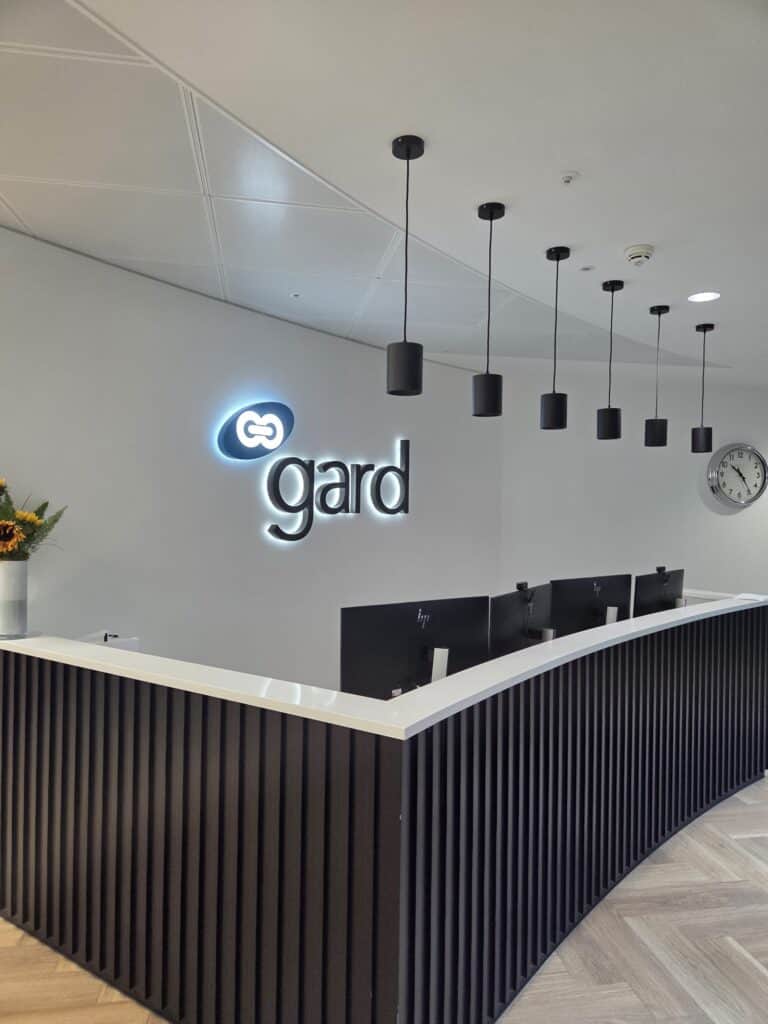
22 Excel Cat6A links to 11 Wi-Fi access point locations, completed over a single weekend.
Read the case study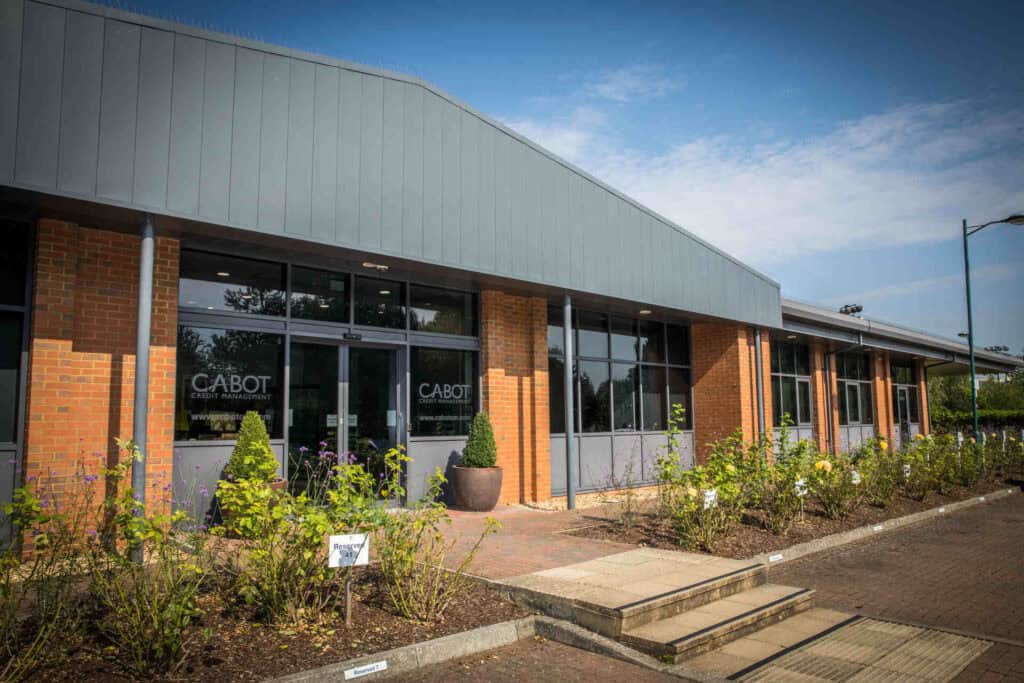
A unified Avigilon CCTV and access control system covering 43 cameras and 32 doors.
Read the case studyDelivered for financial firms
Wi-Fi installation guide
Financial workplaces need predictable roaming and clear separation between operational, payment, guest and building traffic. ACCL maps those requirements with IT, Facilities and Risk teams before equipment positions or change windows are fixed.
The design accounts for dealing rooms, advisor pods, cash desks, executive suites and visitor routes instead of treating the site as an ordinary office. Channel width, transmit power and minimum data rates are tuned by zone so dense seating and meeting-room peaks do not share one generic radio profile.
Documentation is planned with the installation. Heatmaps, as-built drawings, patching matrices, Power over Ethernet budgets and controller backups give the internal team a record of what was delivered.
The business is backed by 60+ Google reviews.
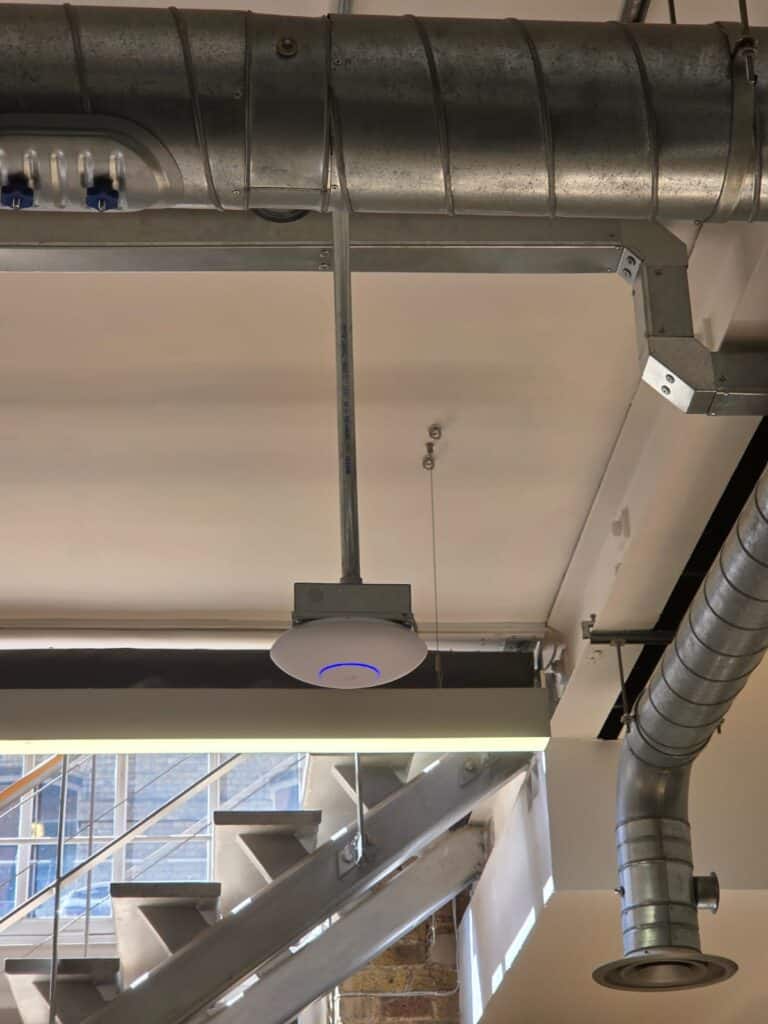
Glass, steel and open atria can change signal strength and reflection across a banking floor. On-site measurements show how those materials affect real devices, allowing access points to be positioned from evidence rather than a symmetrical ceiling grid.
Roaming slows when clients cling to a distant access point. ACCL sets minimum data rates and can enable 802.11k/v, plus 802.11r where supported, to help compatible devices move between cells.
The wired network can also restrict wireless performance. A 100 Mb/s link, insufficient PoE, long patching or a hot cabinet can cap a modern access point even when its radio signal is strong. Risers, cabinets, pathways and uplinks are checked before the final design.
One shared VLAN adds noise and exposure between unlike users. Separate SSIDs and VLANs keep Staff and Trader devices, Guest access, Payments and PoS, and IoT or Facilities equipment in distinct policy groups.
Discovery records the trading schedule, branch activity, cash services, meeting demand, building rules and maintenance windows. That information determines where work can take place and which services must remain available during each phase.
An RF survey measures attenuation and interference around open-plan floors, glass partitions and lift lobbies. New or refurbished floors can be modelled from drawings, then validated after installation.
Access point models and positions are selected for trader density, meeting-room concurrency and branch layouts. The densest zones can use 20 MHz channels where that produces better airtime reuse, while power and minimum data rates are adjusted to the local cell size.
The wired review covers switch capacity, PoE delivery and inter-cabinet links. Fibre or multi-gig copper can be used where the surveyed load and distance require it, with diverse routes considered where practical.
The design is future-proof: it anticipates denser layouts and 6 GHz/tri-band APs as device estates evolve.
Trading floors use tuned cell sizes and dedicated SSIDs so voice, tablets and other approved devices can roam through dense seating. The profile is designed around the number of concurrent clients rather than the floor area alone.
Branches and cash areas keep staff and PoS traffic separate from customer Wi-Fi. Meeting rooms and executive suites receive capacity for video calls, screen sharing and peaks created by several occupied rooms.
Back-of-house devices such as building management equipment use an IoT or Facilities segment. This reduces broadcast traffic on user networks and restricts access to control systems.
Guest access can use a walled garden or branded portal with policy controls, QoS and rate limits. Corporate devices can use 802.1X and RADIUS when those controls form part of the agreed network design.
Installation is phased so the existing network can stay live while each new area is installed, tested and returned to service. Noisy work is planned for evenings or weekends around trading hours.
Method statements, rollback plans and maintenance windows record how a change will be introduced. Escorted access, inductions, tool inventories and secure cabinet practices can be included where the building requires them.
New penetrations are reinstated to maintain fire stopping. LSZH materials are used where required by the site specification.
Certification packs, outlet schedules and change records support the site’s internal review. They describe the delivered work without adding an unverified compliance label.
The finished system can include each access point (AP) required for trading floors, branches, meeting suites and executive areas, with discreet units where appearance matters. Clean, certified cabling runs to every AP, with labelled outlets and ventilated cabinets. Each new link is tested and affected cabinets are left organised.
Controller policies cover the SSIDs, VLANs, 802.1X, RADIUS, QoS, guest portal and monitoring included in the design. Validation uses realistic client loads in the areas covered by the project.
The handover contains the agreed heatmaps, configurations, naming convention, as-built records, patching matrices, PoE budgets, controller backups and administrator run-book.
Before you book
Yes. ACCL phases each area so it can be installed, tested and handed back before staff return, with noisy tasks placed in agreed evening or weekend windows.
No. Access and aggregation links are sized from the access point model and expected demand, with multi-gig capacity used in the zones that need it.
No. Guest traffic uses its own SSID and VLAN with policy controls, separate from Staff, Trader, Payments and Facilities networks.
No. Existing links are tested and retained when they meet the speed, stability and PoE requirements. Cabling is added or replaced where the results show it is necessary.
The agreed pack can include heatmaps, as-built drawings, patching matrices, PoE budgets, controller backups and a naming convention for the delivered system.
A bank Wi-Fi survey is free of charge and the itemised quote arrives before any work starts. A fixed-price proposal follows within 48 hours of receiving your bank floor plans. How long the work takes depends on the size of the site and branch opening hours and trading-floor windows, so the phasing is agreed with the IT and security teams at survey.

The team behind your Wi-Fi project
Wayne Connors founded ACCL in 1997 and has led our commercial cabling projects ever since. We’re a member of the London Chamber of Commerce and Industry.
Free Wi-Fi site survey
One of our own engineers surveys your site at no cost and with no obligation.
Excellent · 60+ Google reviews · Founded 1997 · £10m liability cover
Expert Insights

The common mistakes behind poor business Wi-Fi, and how to avoid them.
Read guide
Why a site survey gives you the data to design Wi-Fi around how your building really behaves.
Read guide
What Wi-Fi 6E and Wi-Fi 7 deliver, how they differ and how to prepare.
Read guideBrowse practical guidance, industry updates and planning tools for commercial network infrastructure projects.
Active Communication Company Ltd trades as ACCL, ACCL Data Cabling London and ACCL Data Cabling Kent · Commercial data cabling and network infrastructure specialists