Eleven sector pages
Each sector has its own page, risks and design approach.

Wireless Network Installation & Support London
Wi-Fi designed around your sector's real operating requirements, from schools and offices to healthcare, retail, hospitality and large venues.
Each sector has its own page, risks and design approach.
Coverage, capacity and roaming measured on site first.
Wired backhaul planned with the wireless, not after it.
Design, survey outputs and configuration summary.
Industry-specific Wi-Fi
Schools, hospitals, warehouses, hotels and stadiums all use wireless differently, so ACCL designs each installation around the site’s density, building fabric, security rules and the systems that must stay online. Pick your sector to see the typical risks, the design approach and what a good outcome looks like, or call 0333 900 0101 and an engineer will point you to the right page. Looking for the cabling behind the Wi-Fi? See data cabling for education, universities and other sectors.
Industry-specific Wi-Fi
Pick the environment closest to yours. Each page sets out the typical risks, the design approach and what a good outcome looks like.
Dense classrooms and galleries, filtered guest access and discreet installation in older buildings.
Reliable roaming, hybrid-work capacity and tightly segmented networks for sensitive data.
Wards, theatres and clinics with safe network separation and infection-control-aware installation.
High device counts, guest onboarding and tills, scanners and signage that must stay online at peak.
Aisles, bays, terminals and temporary compounds where coverage and roaming are hardest to get right.
Tell us about your site and we will point you to the right design approach.
Book a Free Site SurveyRecent projects
Wi-Fi and cabling across different sectors.

Structured cabling for the new hospital, from early cost planning and design to an 18-month Cat6 installation with Bovis Lend Lease.
Read the case study
A move from about 70 HP access points to around 130 Cisco Meraki APs across St Mary’s Stadium and Staplewood.
Read the case study
Network auditing, infrastructure consolidation, 50 km of OS2 fibre and connectivity for 10 parcel handling tracks.
Read the case study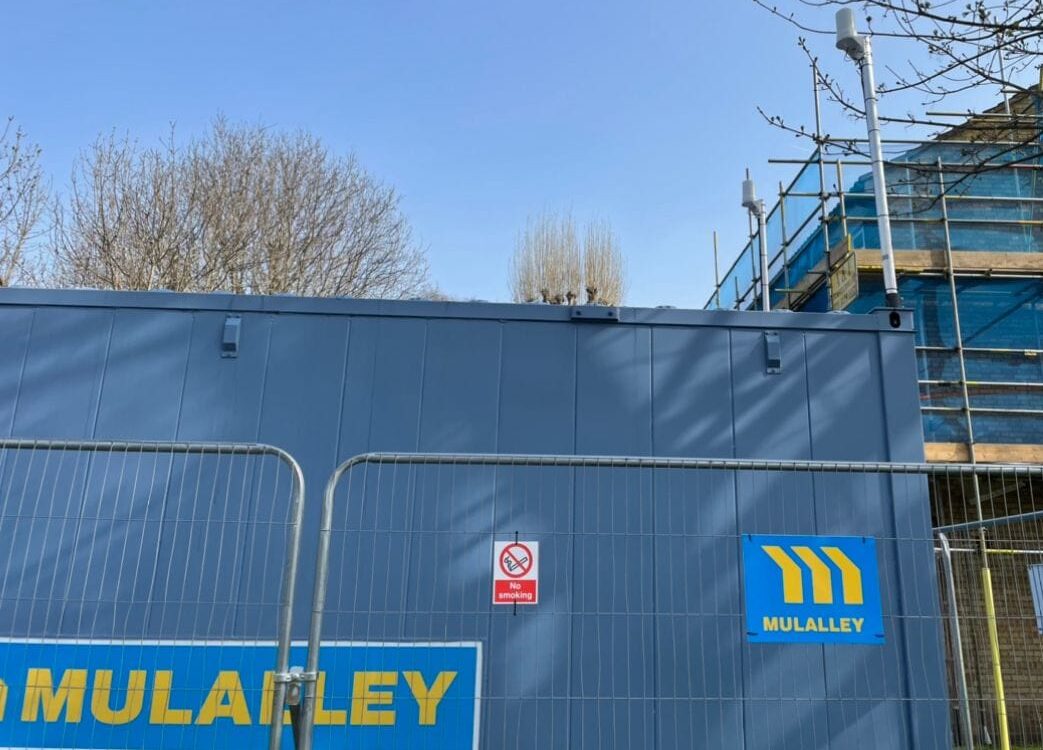
A single repeatable 5G build kept 36 temporary construction sites online from day one, with no dependence on fixed-line broadband.
Read the case studyDelivered across sectors
Wi-Fi installation guide
Industry-specific Wi-Fi means designing wireless around how an environment operates: user density, building materials, roaming behaviour, security rules and the business-critical applications that must stay online. ACCL delivers survey-led Wi-Fi installation for organisations across London, Kent and Surrey, planned for predictable coverage, capacity at peak usage and secure separation of staff, guests and IoT devices.
ACCL is also a structured cabling specialist, so the wireless and the wired network behind it are planned together. The sector pages below set out the risks, design approach and typical outcome for each environment, from data cabling for colleges to warehouse wireless network design. The same team installs data cabling for London hospitals and public sector data cabling.
ACCL’s projects include Wi-Fi for a stadium, cabling for a new hospital and fibre for a parcel hub. ACCL’s work is reviewed in 60+ Google reviews.
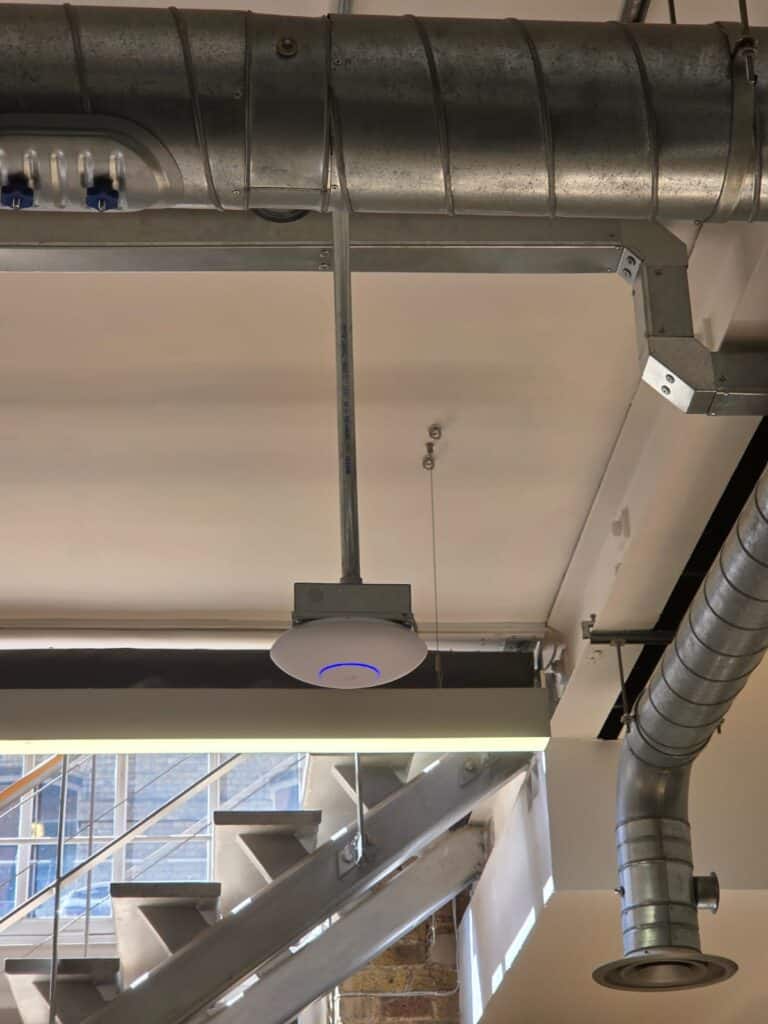
Usage patterns differ. A school needs many devices moving between classrooms, a warehouse needs reliable roaming for scanners and vehicles, and a stadium needs extreme density on event days.
Physical conditions differ too. High-bay racking, thick walls, glass atriums, heritage buildings, metal structures and outdoor concourses all behave differently for radio frequency (RF), so one access point layout cannot be copied from site to site.
Risk and compliance differ. Safeguarding, patient privacy, PCI and secure finance networks, and public-facing guest Wi-Fi all call for clear separation and controls. Some sites can schedule outages. Clinical, logistics and transport sites need phased cutovers and resilient design.
Where a building is split by a yard or a road, a point-to-point wireless link can join the two sides. Point-to-point wireless solutions in London suit split sites, temporary compounds and buildings where a cable route is not possible.
ACCL does not guess. The work is surveyed, designed, validated and documented, so the wireless performs in the real world and not only on paper.
Discovery and requirements come first. ACCL maps the business outcomes (coverage, capacity, roaming, application performance, guest access and security) and identifies constraints such as working hours, access control, heritage restrictions and health and safety requirements.
The right kind of Wi-Fi site survey follows: predictive planning, on-site validation, or a troubleshooting survey where required. It finds black spots and interference sources and settles the best access point placement.
The design covers both coverage and capacity, with secure segmentation such as separate networks for staff, guests, payments and IoT, plus suitable authentication and encryption. Installation then follows with minimal disruption. ACCL coordinates cabling and backhaul, PoE budgets, cabinet work and access requirements, validates performance after installation and completes the cutover in phases where necessary.
Many sites already have Wi-Fi that needs improving rather than replacing. Poor placement, channel planning, power settings, interference and weak wired backhaul cause most faults, and ACCL can survey, optimise and upgrade in phases.
You receive a documented handover pack. If you want it, ongoing support keeps firmware, configuration and performance healthy as the environment changes.
Before you book
If the Wi-Fi is business-critical or the environment is complex, yes. A survey is the fastest way to avoid guesswork, reduce rework and achieve predictable coverage and capacity. For upgrades and troubleshooting, an on-site validation survey is usually essential.
Often, yes. Many performance issues come from poor placement, channel planning, power settings, interference or insufficient wired backhaul. ACCL can survey, optimise and upgrade in phases where a full replacement is not required.
ACCL can recommend and install suitable enterprise-grade wireless equipment based on your requirements and budget, or work with your preferred vendor and existing estate where appropriate.
Yes. Wireless performance depends on a solid wired backbone, so ACCL can provide structured cabling, PoE switching support and cabinet tidying and patching as part of the project where needed.
ACCL delivers Wi-Fi installation and support across London, Kent, Surrey and surrounding areas, including wireless networking in Kent. If you operate a multi-site estate, ACCL can scope a phased rollout plan.
Yes, in most cases. Usage patterns, building materials, compliance requirements and downtime tolerance vary significantly by sector, which affects survey scope, access point placement and security configuration.
Yes. ACCL can plan consistent design and documentation standards across a multi-site estate while adapting the detail to each site’s sector requirements.
A documented Wi-Fi design, survey outputs where applicable, a secure network configuration summary, as-built cabling documentation and practical recommendations for future changes.
A sector Wi-Fi survey is free of charge and the itemised quote arrives before any work starts. A fixed-price proposal follows within 48 hours of receiving your sector floor plans. How long the work takes depends on the size of the site and your sector’s working windows, so the phasing is agreed with your team at survey.

The team behind your Wi-Fi project
Wayne Connors founded ACCL in 1997 and has led our commercial cabling projects ever since. We’re a member of the London Chamber of Commerce and Industry.
Free Wi-Fi site survey
One of our own engineers surveys your site at no cost and with no obligation.
Excellent · 60+ Google reviews · Founded 1997 · £10m liability cover
Expert Insights

The common mistakes behind poor business Wi-Fi, and how to avoid them.
Read guide
Why a site survey gives you the data to design Wi-Fi around how your building really behaves.
Read guide
What Wi-Fi 6E and Wi-Fi 7 deliver, how they differ and how to prepare.
Read guideBrowse practical guidance, industry updates and planning tools for commercial network infrastructure projects.
Active Communication Company Ltd trades as ACCL, ACCL Data Cabling London and ACCL Data Cabling Kent · Commercial data cabling and network infrastructure specialists