The Winter Club
Network, Wi-Fi and CCTV for a seasonal Canary Wharf venue.

Wireless Network Installation & Support London
Survey-led hospitality Wi-Fi across London, Surrey and Kent, with stable coverage in rooms, suites and meeting spaces.
Network, Wi-Fi and CCTV for a seasonal Canary Wharf venue.
Backhaul planned for breakfast, check-in and conference breaks.
Guest traffic apart from PMS, PoS and staff systems.
Heatmaps, channel plans and controller backups.
Recent venue work: The Winter Club, Canary Wharf
Hotel and hospitality Wi-Fi
ACCL surveys, designs and installs Wi-Fi for hotels and hospitality venues across London, Surrey and Kent. Coverage and capacity are planned around bedrooms, public areas, conference rooms and staff systems, with separate access for guests and operations.
Wireless design and governance for larger and multi-site organisations.
Explore corporate wireless →Predictive and physical surveys before any equipment is specified.
Explore Wi-Fi surveys →Access points, cabling, configuration, testing and handover.
Explore Wi-Fi installation →How the design changes for each sector.
Explore sector Wi-Fi →Recent projects
Hospitality venues and historic sites.
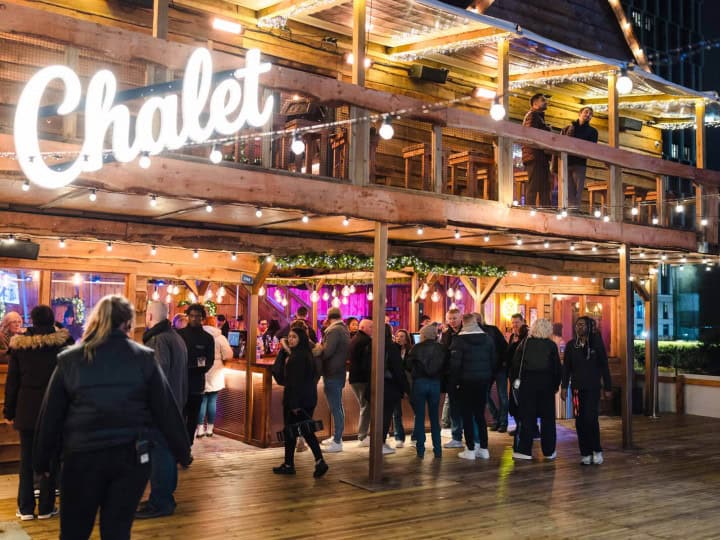
Network, Wi-Fi and CCTV infrastructure for a fast-track seasonal hospitality and entertainment venue.
Read the case study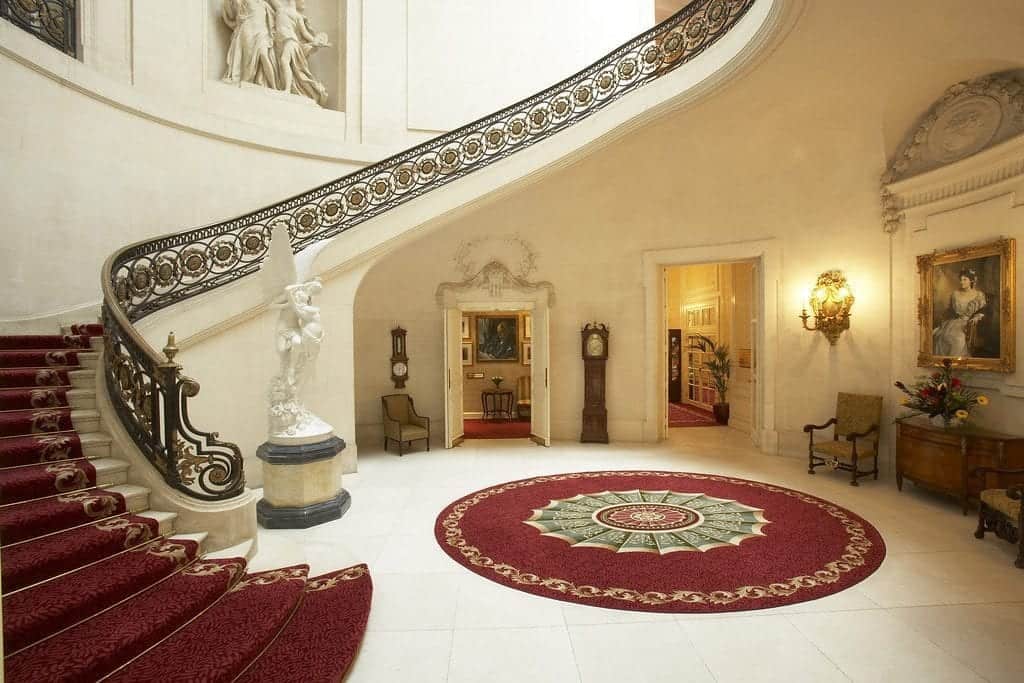
A new underground fibre backbone bringing resilient voice and data connectivity to a Grade I listed historic estate.
Read the case study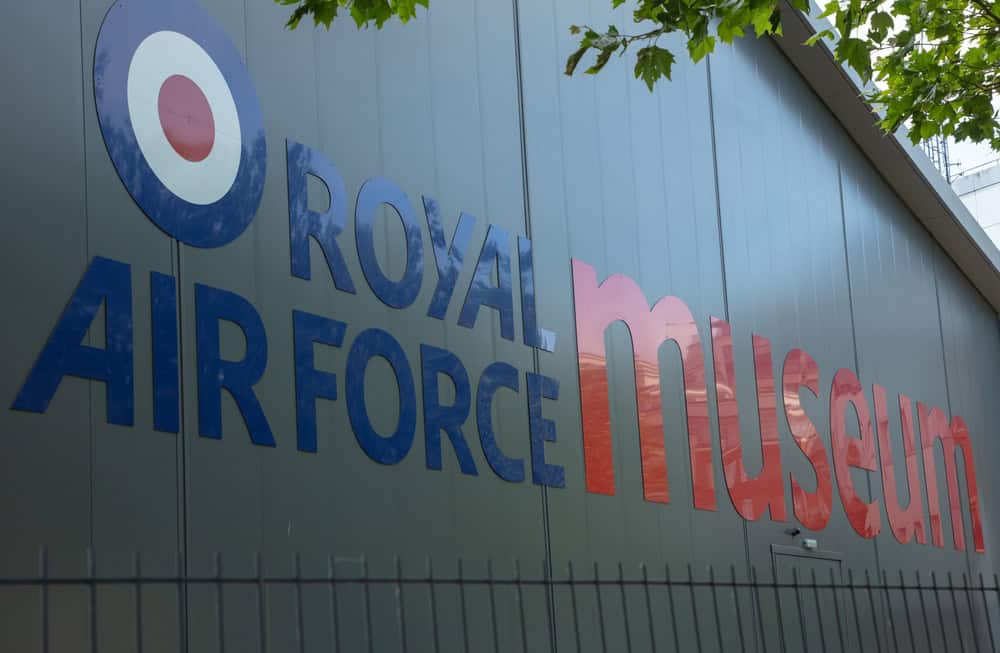
The structured cabling and fibre platform behind a major technology-led exhibition redevelopment.
Read the case study
New structured and fibre optic cabling across a historic walled garden without compromising its listed buildings.
Read the case studyWi-Fi installation guide
Hotel wireless must serve quiet bedrooms, busy arrival periods, conference breaks and staff operations without mixing every device onto one network. ACCL maps the property’s rooms, lifts, event spaces, kitchens, offices and guest touchpoints before deciding where access points and uplinks belong.
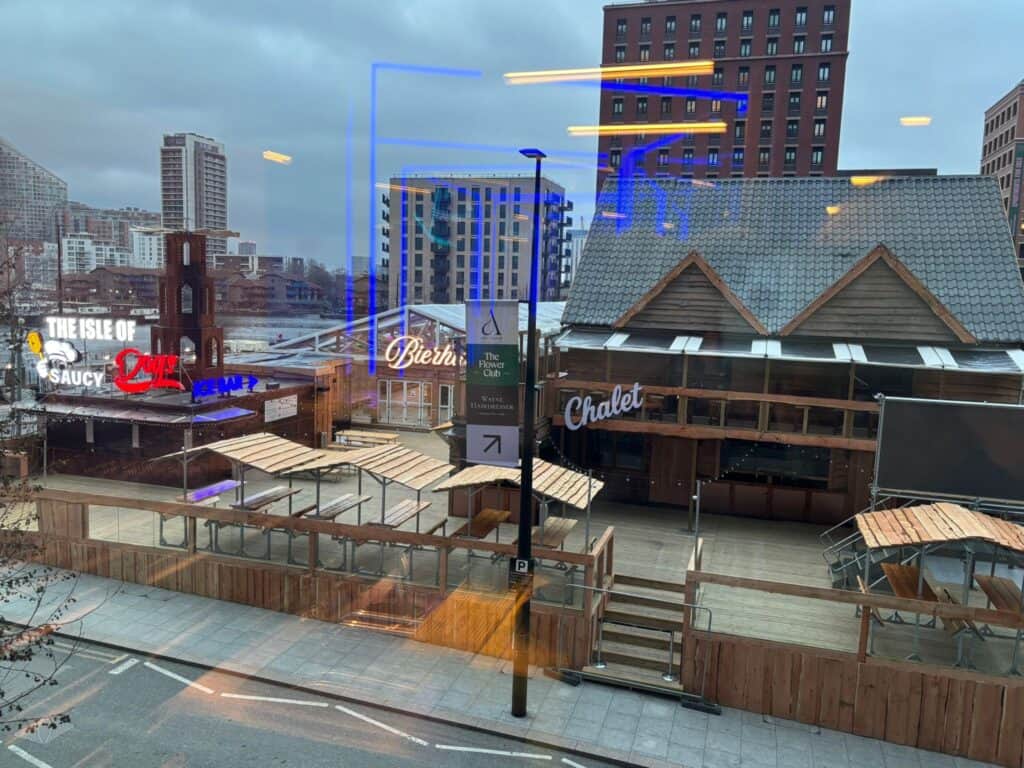
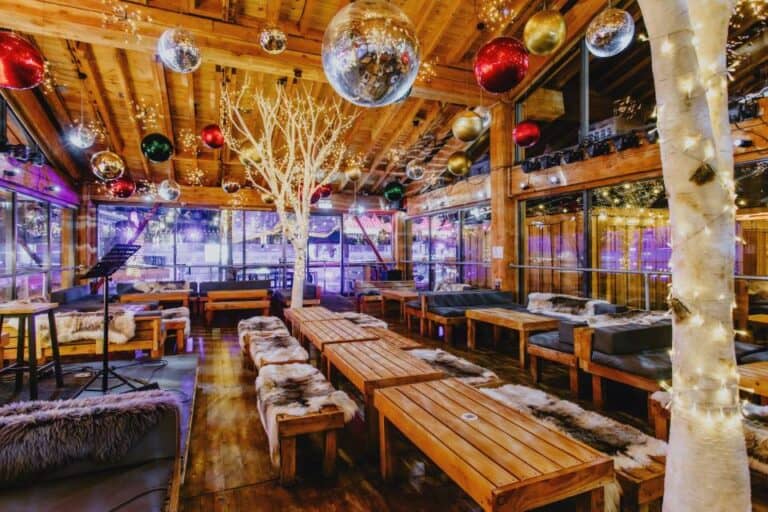
The Winter Club at Canary Wharf used ACCL for network, Wi-Fi and CCTV infrastructure at a seasonal venue. That work is relevant to hospitality sites where public access, event activity and operating systems share the same location.
Handover records are produced for the people who will run the property. Heatmaps, access point information, channel plans, patching records and controller backups show how the installed network is arranged.
Public feedback includes 60+ Google reviews.
Older walls, lift shafts, dense firebreaks and bedroom doors can absorb or redirect radio signals. Survey readings show how those materials affect corridors and rooms, so access points are placed for usable in-room SNR without unnecessary signal spilling between cells.
Demand also changes through the day. Breakfast, check-in, evening arrivals and conference breaks can place many clients on the network at once. Ballrooms and subdivided meeting suites need profiles based on their worst-case audience rather than their normal empty-room state.
A 100 Mb/s cable run, insufficient PoE or a congested uplink can limit an access point below its radio capability. Cabinets, risers and containment are therefore checked alongside the wireless measurements.
Guest, Staff, PMS, PoS, CCTV and IoT traffic should not share one unrestricted VLAN. Separate SSIDs, VLANs and policies keep property systems away from public access and reduce broadcast noise.
Discovery starts with Operations and IT, covering the PMS and PoS platforms, lobby and lift journeys, room types, function layouts, kitchens, offices and staff areas. Occupancy forecasts and event calendars set the available change windows.
An on-site RF survey measures attenuation, interference and roaming paths. For a refurbishment or new-build programme, ACCL can model the proposed layout in advance and validate it during installation.
Access point selection accounts for rooms per AP, corridor positions, restaurant density and high-capacity hall profiles. Channel plans, minimum data rates and band steering are tuned to limit sticky clients and share airtime fairly.
The wired plan checks cabling, patching, switch power and backhaul. PoE budgets and uplinks are sized for busy periods such as breakfast service, check-in and conference breaks rather than a quiet average.
The design is future-ready: it leaves room for tri-band/6 GHz APs and denser layouts as the guest device mix evolves.
Bedrooms and suites need stable coverage through walls and doors while guests move between lifts, corridors and rooms. The survey determines whether corridor access points or positions closer to rooms suit the building fabric.
Bars, restaurants and terraces create rapid device turnover and dense social use. Guest traffic is kept apart from PoS and kitchen systems so public demand does not share the same policy group as orders and staff operations.
Meeting rooms and ballrooms use profiles for their maximum planned occupancy. Temporary SSIDs, bandwidth settings and event-specific profiles can be prepared for subdivided spaces and changed between functions.
Back-of-house networks separate staff devices, printing, stock systems and office traffic from guests. Signage, sensors and IPTV can use an IoT segment with its own access rules.
The installed system can combine access points for corridors, rooms, suites, bars, restaurants, conferences and ballrooms. Clean, certified cabling runs to every AP, with tidy patching, labelled outlets and ventilated cabinets. New links are tested before handover.
Controller policies can provide a captive portal, vouchers or pass-through guest access, staff authentication through 802.1X, bandwidth shaping and QoS for voice and video. Walled-garden and rate-limit settings are matched to the property’s agreed guest journey.
Monitoring can cover access point health and alert conditions. The handover can include heatmaps, an AP inventory, channel plans, outlet schedules, patching matrices, PoE budgets, as-built drawings, controller backups and securely stored administrator details.
Installation is sequenced around occupancy and the events calendar so front-of-house routes remain usable. Noisy tasks are placed in evening or overnight windows, with quieter work completed during agreed low-impact periods.
New cable routes maintain fire stopping and compartmentation. LSZH materials are used where the site specification requires them, and access is managed through the venue’s method statements, inductions and protocols.
Room blocks and event profiles can be documented as a playbook for the operations team. Clear labels and a venue naming scheme make later support calls more precise.
Before you book
Yes. Survey and installation windows are agreed against occupancy forecasts and event dates, with disruptive work scheduled overnight where required.
No. The answer depends on walls, doors, corridor geometry and measured signal loss. The RF survey establishes whether corridor or in-room positions provide the right coverage.
A portal should be configured with suitable caching and rate limits for the expected guest demand. ACCL matches the portal, walled garden and authentication flow to the property’s agreed requirements.
Yes. Existing pathways are checked and reused when suitable, with targeted containment and cabling added where the survey shows the backhaul needs it.
The agreed handover can include heatmaps, as-built drawings, patching matrices, controller backups and a run-through for the IT or operations team.
A hotel Wi-Fi survey is free of charge and the itemised quote arrives before any work starts. A fixed-price proposal follows within 48 hours of receiving your hotel floor plans. How long the work takes depends on the size of the site and occupancy and service times, so the phasing is agreed with the general manager at survey.

The team behind your Wi-Fi project
Wayne Connors founded ACCL in 1997 and has led our commercial cabling projects ever since. We’re a member of the London Chamber of Commerce and Industry.
Free Wi-Fi site survey
One of our own engineers surveys your site at no cost and with no obligation.
Excellent · 60+ Google reviews · Founded 1997 · £10m liability cover
Expert Insights

Why Wi-Fi black spots appear in offices and what causes them.
Read guide
The common mistakes behind poor business Wi-Fi, and how to avoid them.
Read guide
Why a site survey gives you the data to design Wi-Fi around how your building really behaves.
Read guideBrowse practical guidance, industry updates and planning tools for commercial network infrastructure projects.
Active Communication Company Ltd trades as ACCL, ACCL Data Cabling London and ACCL Data Cabling Kent · Commercial data cabling and network infrastructure specialists