
Southampton FC: HP to Cisco Meraki Wi-Fi infrastructure upgrade
A six-week close-season programme expanding Southampton FC’s wireless estate from approximately 70 to around 130 access points across St Mary’s Stadium and Staplewood.

Southampton FC asked ACCL to support a major expansion of its Wi-Fi infrastructure across St Mary’s Stadium and the Staplewood training campus, replacing existing HP access points where positions could be reused and installing new Cat6A cabling for additional Cisco Meraki access points.
The result
The completed programme provided Southampton FC with:
- Wireless estate expanded from approximately 70 to around 130 access points
- Existing HP access point positions reused where suitable
- New Cat6A cabling for additional Cisco Meraki access-point locations
- Coverage across both St Mary’s Stadium and Staplewood Campus
- Delivery coordinated within an approximately six-week close-season window
- Upgrade built on ACCL’s existing fibre backbone and structured cabling at the Club
Services delivered
Overview
Southampton Football Club IT Manager Matthew Reynolds asked ACCL to support a major improvement to the Club’s Wi-Fi infrastructure across St Mary’s Stadium and the Staplewood Campus training ground.
This is the latest phase in a long-term relationship between ACCL and the Club, dating back to an initial fibre project in 2011. ACCL was already familiar with the Club’s physical network, having previously supported the HP network environment, communications-room infrastructure and the installation of a 10 Gigabit blown-fibre ring around St Mary’s Stadium, detailed in ACCL’s wider Southampton FC infrastructure case study. That existing knowledge of the network provided useful context for the next stage of the Club’s technology development.
The existing wireless estate comprised approximately 70 HP access points. The new deployment expanded that to approximately 130 Cisco Meraki wireless access points, involving much more than a simple like-for-like replacement of existing hardware.
The challenge
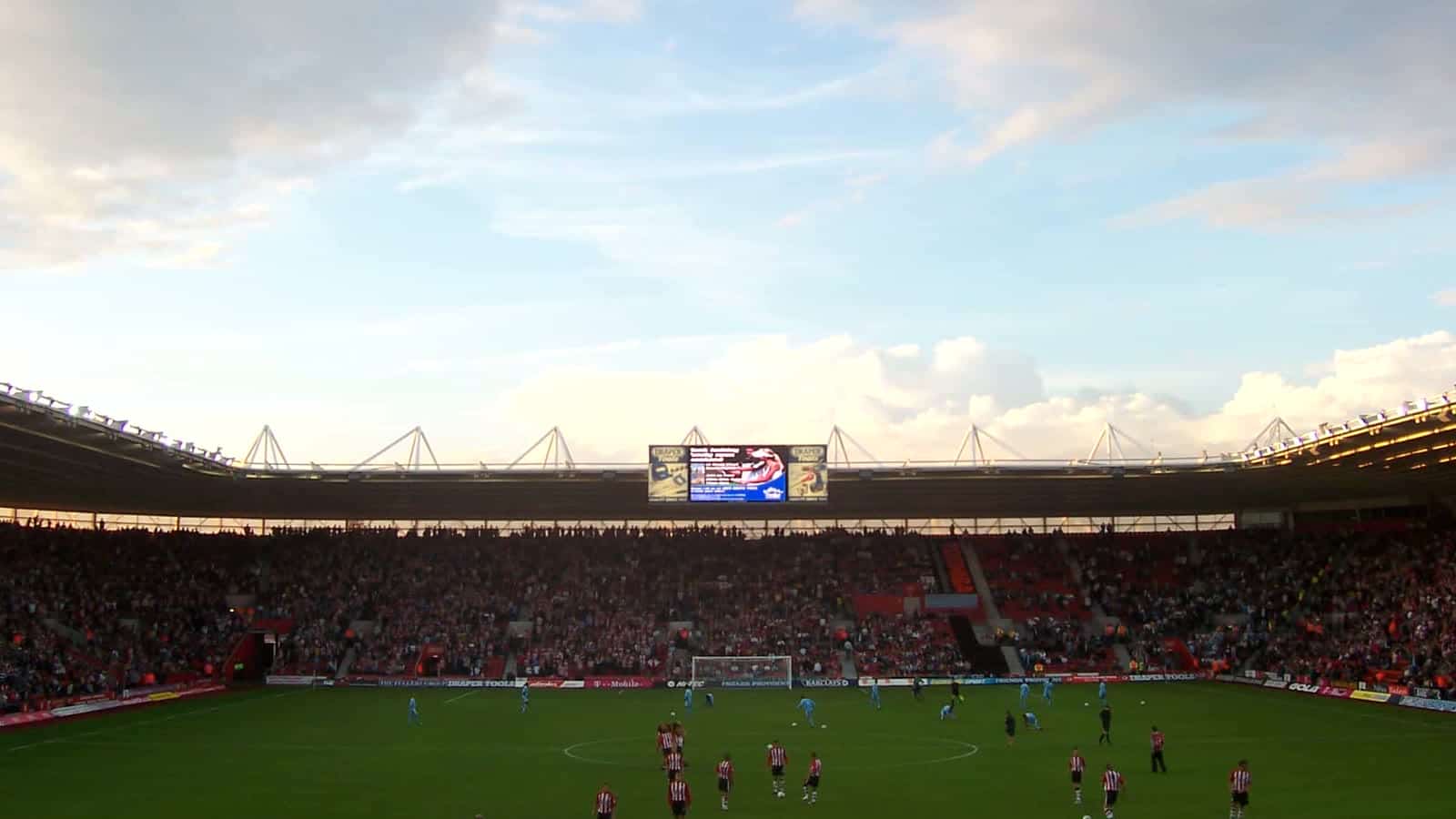
A football stadium is a demanding wireless environment, containing very different operational spaces including office accommodation, hospitality areas, corporate spaces, public concourses, media and broadcast areas, security and operational areas, back-of-house spaces and high-density spectator environments. Staplewood introduces another set of requirements associated with a large professional training campus.
At the same time, the installation programme had to fit into approximately six weeks during the Club’s close-season period. Professional sports venues remain active outside matchdays, so the limited window made planning and coordination particularly important.
Reusing infrastructure where it made sense
Not every access point required completely new cabling. Where an existing HP access point position remained suitable for the new deployment and the underlying infrastructure could be reused, ACCL undertook a direct replacement approach, avoiding unnecessary cabling work.
Where the new wireless design required an access point in a different position, ACCL installed new Cat6A structured cabling to support that location. The resulting programme combined reuse of appropriate infrastructure with targeted installation of new cabling.
Project context
Commercial Wi-Fi infrastructure · Southampton
Explore commercial Wi-Fi infrastructure →Planning a commercial Wi-Fi upgrade?
ACCL supports commercial Wi-Fi projects with the physical infrastructure required behind the access points, including Cat6A cabling, fibre backbones, communications-room infrastructure and access-point installation.
Expanding from approximately 70 to 130 access points
The scale of the change was significant. The existing wireless estate contained approximately 70 HP access points; the replacement and expansion programme increased the estate to approximately 130 Cisco Meraki APs, almost doubling the number of wireless access points distributed across the two environments.
Some of this growth came from additional wireless locations rather than simple replacement. Those additional locations required cabling routes to be considered, installed and coordinated within the wider programme.
Working within the close-season programme
The installation was scheduled into an approximately six-week close-season window. Infrastructure projects still have to be coordinated around staff, maintenance, events, contractors and other redevelopment activities taking place during the period, so existing AP replacements, new cabling routes and installation activity needed to be carefully sequenced.
The importance of the underlying network
The wireless upgrade did not exist in isolation. ACCL had previously supported the Club’s wider infrastructure, including HP network infrastructure, communications-room upgrades, structured cabling and a 10 Gigabit blown-fibre stadium ring. That physical backbone provided the connectivity upon which the wireless environment depended.
A well-designed fibre and structured cabling network can continue supporting new active technologies long after the original installation is complete, and this project illustrates that relationship between successive generations of infrastructure.
Technologies used
ACCL’s role
ACCL supported the physical deployment of the new wireless infrastructure. Our role included:
- Working with Southampton FC’s IT team
- Replacing existing APs at suitable reused positions
- Installing additional AP locations
- Installing new Cat6A cabling where required
- Coordinating work across St Mary’s and Staplewood
- Integrating the AP installation with existing network infrastructure
- Working within the approximately six-week close-season programme
From physical network to wireless platform
The project demonstrates that Wi-Fi modernisation frequently depends upon investment made much earlier in the physical network. Southampton FC’s existing fibre backbone, communications rooms and structured cabling provided the foundation from which the new wireless environment could be expanded, with the migration from HP to Cisco Meraki representing another stage in that longer infrastructure lifecycle.
Foreword by Wayne

Wayne Connors, Managing Director, ACCL“Delivering a high-density stadium Wi-Fi upgrade within a six-week close-season window required precise planning, close coordination with the Club and a flexible approach on site.
We already knew the underlying Southampton FC network well, because ACCL had previously worked on the stadium’s communications infrastructure and installed the 10 Gigabit blown-fibre ring. For the wireless upgrade, some existing HP access point locations could be reused, while the increase to approximately 130 Cisco Meraki APs meant that additional positions needed new Cat6A infrastructure.
It is a good demonstration of how the investment made in the underlying network continues to support future technology. Wi-Fi may be wireless at the point of use, but every access point still depends upon the physical network behind it.”
Frequently asked questions
What Wi-Fi work did ACCL carry out for Southampton FC?
ACCL supported the physical migration and expansion of Southampton FC’s wireless infrastructure across St Mary’s Stadium and Staplewood Campus.
How many access points were in the existing network?
The existing HP wireless estate comprised approximately 70 access points.
How many access points were installed in the new environment?
The new Cisco Meraki deployment comprised approximately 130 access points.
Which wireless platform replaced the HP equipment?
The new access points were from Cisco Meraki.
Were all of the existing AP locations reused?
No. Some suitable existing positions were reused while other areas required additional access-point locations.
What cabling was used for new AP positions?
New wireless access-point positions were supported using Cat6A structured cabling.
Did the project cover both the stadium and training ground?
Yes. The work included St Mary’s Stadium and Staplewood Campus.
How long did the project take?
The main implementation programme ran for approximately six weeks during the close season.
Why does Wi-Fi require structured cabling?
Enterprise wireless access points need a physical network connection and commonly receive both data and electrical power over Ethernet cabling.
Had ACCL worked on Southampton FC’s network before?
Yes. This project is part of a long-term relationship dating back to 2011, during which ACCL previously supported the Club’s network infrastructure, including communications-room work and installation of a 10 Gigabit blown-fibre ring around St Mary’s Stadium.
Why was existing cabling reused where appropriate?
Reusing suitable existing network infrastructure avoids unnecessary replacement work while allowing new cabling to be concentrated where the wireless estate is expanding.
What does the project demonstrate?
It demonstrates the close relationship between enterprise Wi-Fi and the fibre, switching, communications-room and structured cabling infrastructure supporting it.
Commercial Wi-Fi infrastructure starts with the wired network
For organisations planning a Wi-Fi refresh, the condition and capacity of the existing cabling, switching, fibre and communications rooms should form part of the project from the beginning.
Book a free site survey 0333 900 0101Image credits
Hero image: St Mary’s Stadium 2022, Dan Kerins, via Wikimedia Commons, CC BY-SA 4.0. Sky and lighting adjusted; people defocused. Derivative licensed under CC BY-SA 4.0.
Stadium interior: St Mary’s Stadium Southampton, Dankerins, via Wikimedia Commons, CC BY 2.5. Cropped and colour-adjusted from the original.