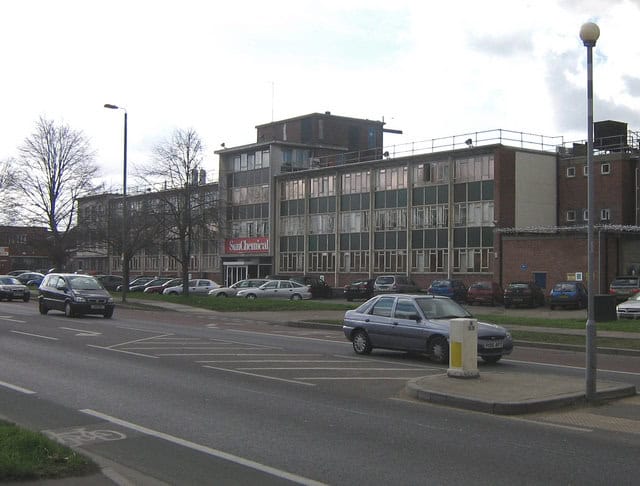
Smart buildings are one of the defining pieces of London’s urban development in our age. Augmented by emerging IoT technologies, smart buildings offer unprecedented opportunities to improve operating efficiency and productivity.
But the “I” in IoT is the gateway to a far more impressive world, and the biggest players in the smart buildings market have already caught a glimpse of it. The mesh of interconnected buildings, campuses, urban facilities and homes is slowly morphing into the shape of a smart city — a greener, friendlier, more productive city, in whose fashioning you and your business can play an active role.
How smart buildings are transforming our cities, and what you can do to be at the forefront of this wave of transformation, is what we are going to talk about today.
Energy Management
According to a building energy efficiency survey conducted by the UK Department for Business, Energy and Industrial Strategy, offices, retail and industrial buildings were the top non-domestic energy consumers in the UK, most of it in the form of electricity. Internal lighting accounted for more than half of the electricity use, and was the second largest end-use of energy, trailing significantly behind space heating.
Both internal lighting and space heating (which, together, account for nearly half of the total energy consumed by non-domestic buildings in the UK) are highly susceptible to waste and mismanagement.
Using smart lighting and HVAC installations, advanced building energy management systems can meaningfully reduce energy use, with the scale of savings depending on the building type, baseline, measures installed and commissioning quality.
These installations save money primarily by turning off or reducing lighting and HVAC parameters, depending on occupancy, time of day, ambient conditions and usage statistics. Modern smart lighting systems are not simply on-off switches hooked to presence sensors; their functioning takes into account ambient lighting conditions and usage statistics as well.
Not only do these systems reduce operating costs, but they contribute to reducing each building’s carbon footprint, and improve the efficiency and lifetime of the city’s electrical networks. They also improve the efficiency of many modern business practices, such as remote working.
Integrated Security Systems
Modern smart building deployments treat security systems not only as an essential asset for data and staff protection, but also as a useful source of access data, and as an opportunity to improve daily operations.
This trend initially took the form of what we now call IT-integrated security, where the security infrastructure was digitised and integrated with the rest of a company’s IT infrastructure, in order to accommodate its traffic demands and facilitates management. But additional opportunities were identified — and smart building designers were quick to capitalise on them.
Security endpoints, such as security cameras and motion detectors, can be integrated with access control modules and serve as sources of valuable data regarding access events and patterns.
This trend has also opened the way for a more inclusive approach to security, allowing for the easier and safer expansion of business premises, especially for multi-site operations partially housed outside traditional business areas.

Integrated Security Systems
Modern smart building deployments treat security systems not only as an essential asset for data and staff protection, but also as a useful source of access data, and as an opportunity to improve daily operations.
This trend initially took the form of what we now call IT-integrated security, where the security infrastructure was digitised and integrated with the rest of a company’s IT infrastructure, in order to accommodate its traffic demands and facilitates management. But additional opportunities were identified — and smart building designers were quick to capitalise on them.
Security endpoints, such as security cameras and motion detectors, can be integrated with access control modules and serve as sources of valuable data regarding access events and patterns.
This trend has also opened the way for a more inclusive approach to security, allowing for the easier and safer expansion of business premises, especially for multi-site operations partially housed outside traditional business areas.
Enabling the Smart Building Transformation
Smart building technologies have a great deal of potential, but leveraging them in a sustainable manner, over long periods of time, in interconnected systems seems like a daunting responsibility. When set against timeframes typical for facility development, which routinely deals in decades rather than years, many of these technologies are intimidatingly new.
We are still discovering many of the challenges that they introduce. For solutions, we depend more on engineering creativity than on well-known practices.
The main challenges that smart buildings introduce are:
- Scaling bandwidth and latency over a wide set of networking technologies and long periods of time
- Deploying high-speed, private network infrastructure in new ambient conditions
- Securely interconnecting equipment deployed over long distances
Infrastructure scaling is the most far-reaching of these challenges. Even with the increased use of wireless endpoints, wired networks still form the backbone and carry the bulk of the endpoint traffic in modern office buildings.
The wired infrastructure, then, is where most of the scaling effort will be focused. However, cabling is the longest-lived section of a company network.
The norm today is in the region of 15-20 years, and these numbers are expected to go up. Four or five generations of endpoint equipment, if not more, are routinely outlasted by the cabling which enables that equipment to communicate.
With more than 20 years of experience in offering cabling solutions to London commercial buildings, ACCL is at the forefront of innovation in this field. Take a look at our data cabling services and get in touch for your FREE, no-obligations on-site survey.
Structured cabling can provide a documented, interoperable foundation that helps smart-building systems scale and change over time. It is one part of the wider design alongside fibre, wireless, fieldbus, single-pair Ethernet and other operational-technology networks selected for the project. Structured cabling breaks down the network infrastructure into function-specific sections.
Each section has a specific role, such as providing connectivity to user devices or smart sensors, or securely connecting the building’s core network to the ISP’s network.
Each section is designed according to a set of industry-sanctioned best practices. These practices are not arbitrary, but based on the experience and expectation of network engineers, device manufacturers, facility managers, and health and safety experts. They are also designed specifically in order to facilitate scaling, both horizontally and vertically.
Scaling structured cabling networks is a concerted effort focused more on network sections than individual endpoints. Fortunately, smart buildings offer a wealth of data that can be leveraged in order to plan the long-term development of your network.
The kind of data that you can use includes:
- Traffic statistics for each section of the network, broken down by origin (user equipment, sensors, HVAC equipment, etc.) and ingress/egress routes (wireless endpoints, office switches, etc.)
- Usage statistics, broken down by application
- Cross-network traffic statistics (i.e. how much traffic needs to be routed internally through the core network)
Diverse deployment conditions are another challenge that smart buildings bring — or, more accurately, make even more acute.
Network cabling, like any electrical equipment, needs to be shielded from moisture, extreme temperatures, dust and other unwanted ambient conditions. Office buildings fit the bill for electrical equipment-friendly equipment.
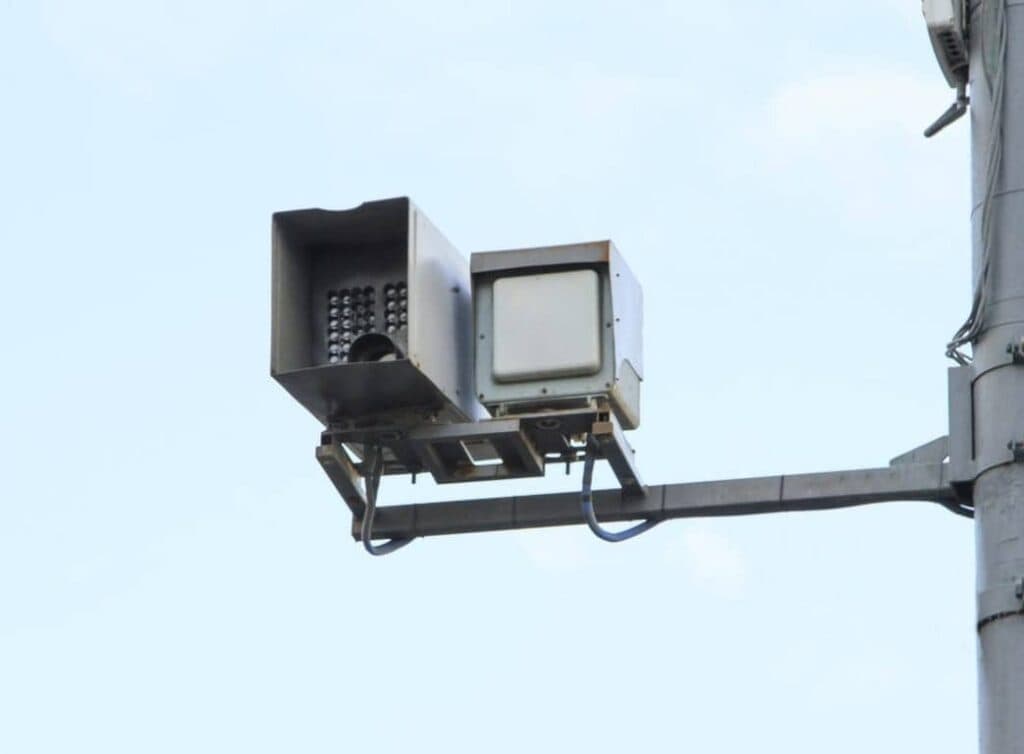
Traditionally, only a few types of IP-enabled gear, such as some security cameras, needed to be deployed under adverse conditions.

Conclusions and Recommendations
Smart buildings are only the first step towards smart cities. From London and Amsterdam to New York and Sydney, we are living the earliest days of a major shift in how we live and work in our cities.
Smart building technologies, interconnected across buildings and campuses, offer unique development opportunities that benefit not only your own business, but the entire society, and not only during work hours, but 24/7.
Being at the forefront of this transformation offers not only a head start in capitalizing on the early opportunities — useful, but not essential, because this is not a zero-sum game — but also makes for a solid foundation for long-term development.
Integrating smart building solutions into your business’ infrastructure is challenging, but not out of reach, even for small businesses. A solid integration strategy, based on structured cabling, tight integration, and metric-based audit and development, can position your business at the forefront of this urban revolution.
Services related to this post: Smart building integration services
Related posts: Interconnecting multiple offices What are smart buildings? Modern Cabling in building a new home

For practical rollout considerations, see our guide to AI in the office for IT and facilities teams.


Written by
Wayne founded ACCL in 1997 and has led more than 28 years of project delivery, helping organisations design, install and modernise the network infrastructure behind reliable connectivity, office moves and refurbishments. His experience spans copper cabling, fibre backbones, data centre infrastructure, Wi-Fi, CCTV and access control. About ACCL