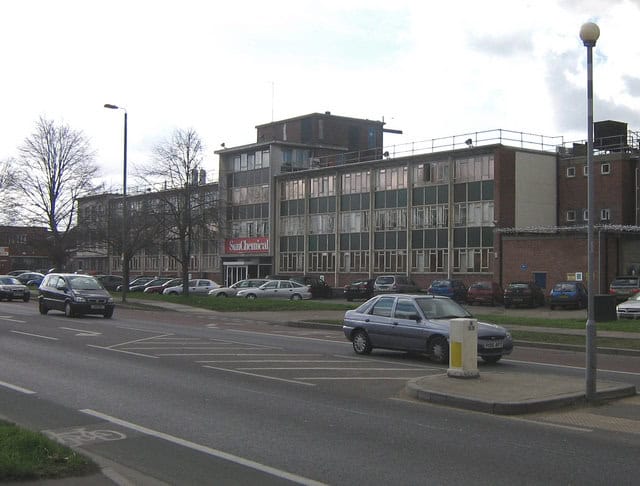
Have you ever walked through the office after hours and noticed entire floors lit up, with no one in sight? Or argued with co-workers over the thermostat all day? These aren’t just minor annoyances; they’re symptoms of a building that isn’t working as efficiently as it could be. What if your building could think for itself to solve these problems and save you money in the process?
What makes a building smart?
It’s not about having one smart thermostat; it’s about creating a connected “nervous system” for the entire structure. Think of it like a human body. A network of IoT sensors for commercial buildings acts as the nerves, feeling everything from room temperature and occupancy to light levels. This information is sent to an intelligent building management system, the brain, which analyses the data and directs the building’s “muscles” (the lights, AC, and security) to respond perfectly.
This entire system is built on three core components working in unison:
- Sensors (The Nerves): To gather information about the environment.
- A Central Hub (The Brain): To analyse that information and make smart decisions.
- Automated Systems (The Muscles): To carry out the decisions automatically.

More Than Money: How Smart Buildings Improve Employee Well-Being and Productivity
While saving money is a powerful motivator, the true advantage of a smart building lies in its focus on people. The same sensors that dim lights in an empty room can also help end the daily office battle over the thermostat. By understanding which areas are in use, the system can create personalised comfort zones, ensuring that a space isn’t just occupied, but is also pleasant to work in. A comfortable team is a productive team, and this focus on how do smart buildings improve occupant experience is a core benefit.
These smart office building features go beyond just temperature. Have you ever felt that afternoon slump in a crowded meeting room? That groggy, unfocused feeling is often caused by rising carbon dioxide (CO2) levels from people breathing in an enclosed space. A smart building monitors air quality in real-time. When it detects that CO2 is climbing, it automatically adjusts the ventilation to bring in more fresh air, helping everyone stay alert and focused without anyone even noticing.
Ultimately, data analytics in smart buildings isn’t just about efficiency, it’s about creating an environment designed for peak human performance. This proactive approach to well-being doesn’t stop with people, however. Just as it cares for its occupants, a smart building uses its intelligence to look after its own crucial equipment, preventing problems before they can ever disrupt the workday.
Preventing Disaster: The Power of Predictive Maintenance
That same intelligence also acts like a ‘check engine’ light for the building itself. Instead of waiting for a critical system to fail, a smart building constantly monitors the health of its equipment, from the heating system to the elevators. This is the core of predictive maintenance in buildings: the ability to spot small issues before they become big, expensive emergencies and disrupt your business.
Think about what happens when an air conditioning unit breaks down during a summer heatwave. You’re left with costly emergency repairs and an office full of unhappy, unproductive people. An intelligent building management system avoids this chaos. It can detect that a fan motor is vibrating more than usual and send an alert to maintenance weeks in advance, allowing for a cheap, scheduled fix instead of a disruptive failure.
This proactive approach, driven by building automation, doesn’t just save money; it protects your business from unexpected downtime. By ensuring everything runs smoothly, the system creates a reliable and efficient environment for everyone. This focus on using resources wisely, whether it’s energy, money, or maintenance time, raises an important question: does being a “smart building” also mean it’s a “green building”?

How Can My Business Get Started with Smart Technology?
Jumping into a full-scale smart building project isn’t necessary, and for most businesses, it isn’t the best approach. The high cost of implementing smart building technology all at once can be a major barrier. A smarter plan is to think in phases. Developing how to create a smart building strategy that works for you means identifying one or two high-impact areas first, proving their value, and then expanding from there. This allows you to manage costs and see a return on your investment much faster.
For many businesses, the quickest wins come from tackling lighting and heating, which are often the biggest energy drains. By using IoT sensors for commercial buildings to automatically turn off lights in empty rooms or adjust the thermostat after hours, you can generate significant savings almost immediately. This initial success not only cuts your utility bills but can also help fund the next phase of your smart building journey, making the entire process more sustainable for your budget.
So, where do you begin? The most effective first step is often an energy audit. This analysis acts as a roadmap, pinpointing exactly where your building wastes the most energy and money. Once you know whether the problem is your overnight lighting or your outdated heating system, you have a clear, data-backed target for your first smart upgrade, ensuring your investment makes an immediate difference.
The Future-Ready Office is a Smart One
What once seemed like complex future tech, the smart building is now an active partner in business success. Its core benefits, driving down costs, enhancing employee comfort, and providing proactive control, fundamentally change how we view the modern workspace.
This perspective transforms how you see your own environment. Small inefficiencies, like empty, lit rooms or the constant hum of the AC, are no longer just annoyances, they are clear opportunities for improvement. Recognising this is the first step toward harnessing the technology’s practical power.
The future of smart building technology isn’t about adding gadgets; it’s about creating an environment that actively helps a business thrive. A smart building is the next logical step toward a more efficient, resilient, and human-centric workplace.
For a deeper look at how this applies to commercial buildings specifically, see ACCL’s AI Network Intelligence hub.


Written by
Wayne founded ACCL in 1997 and has led more than 28 years of project delivery, helping organisations design, install and modernise the network infrastructure behind reliable connectivity, office moves and refurbishments. His experience spans copper cabling, fibre backbones, data centre infrastructure, Wi-Fi, CCTV and access control. About ACCL