Access Control Systems in 2025: 10 Key Trends Reshaping Business Security
The landscape of access control has undergone a dramatic transformation. No longer confined to simple door locks and traditional key systems, modern access control has evolved into sophisticated, intelligent ecosystems that seamlessly blend security with convenience, compliance, and operational efficiency.
Businesses need to maintain secure environments while accommodating flexible working, varied stakeholder access and changing regulatory requirements. Modern access-control systems increasingly combine credentials, monitoring and building-system integrations, but the appropriate design remains dependent on the site, risks, users and operational needs.
This guide explores ten access-control trends and explains how organisations can assess them when planning a secure, efficient and adaptable system.
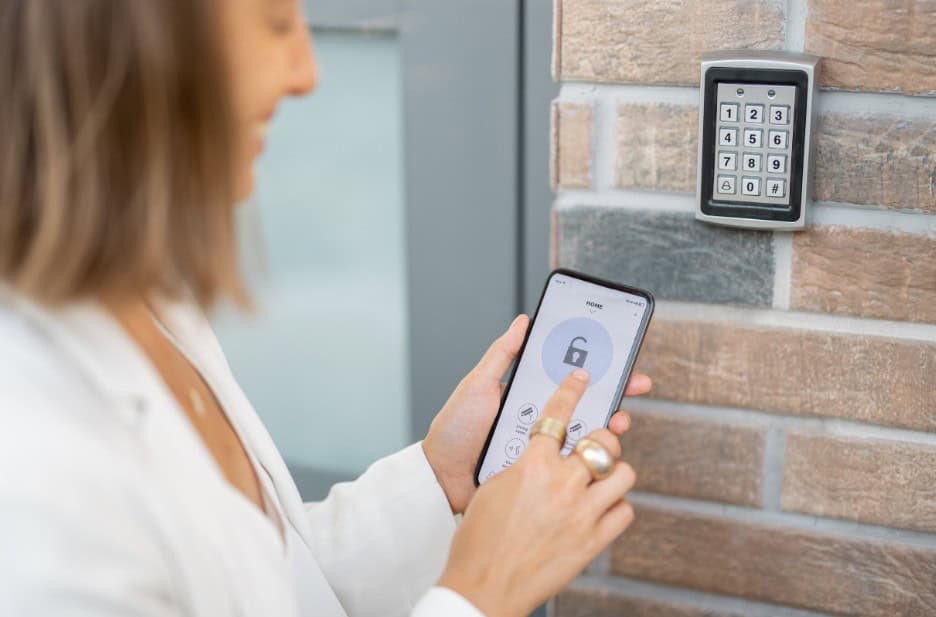
Cloud-Based Management: Scalability Meets Accessibility
The shift from on-premises to cloud-based access control represents one of the most significant architectural changes in the industry. Cloud platforms offer unparalleled scalability, enabling businesses to manage access across multiple sites from a single interface while reducing infrastructure costs and complexity.
Cloud-based systems provide real-time visibility into access events across all locations, enabling rapid response to security incidents and streamlined compliance reporting. The subscription-based model eliminates large capital expenditures while ensuring access to the latest features and security updates.
For businesses with distributed operations, cloud access control enables centralised policy management with local execution, ensuring consistent security standards while accommodating site-specific requirements. Remote management capabilities have become particularly valuable, allowing security teams to respond to incidents and manage access rights without physical presence.
Biometric Authentication: From Novelty to Necessity
Biometric technology has transitioned from high-security government facilities to mainstream business applications. Current biometric solutions offer multiple modalities including fingerprint recognition, facial recognition, iris scanning, and even voice recognition, providing businesses with flexible options to match their specific security requirements.
Recent advances in biometric technology have addressed previous concerns about accuracy, speed, and user acceptance. Biometric accuracy and response time vary by modality, product, configuration, user population and operating conditions. Evaluation should use the selected product’s documented false-acceptance, false-rejection and response-time results under conditions comparable to the proposed site. The integration of artificial intelligence has further enhanced performance, enabling systems to adapt to changes in user appearance and environmental conditions.
Beyond security benefits, biometric systems eliminate the administrative burden of credential management. Users cannot forget, lose, or share their biometric identifiers, reducing help desk calls and administrative overhead while ensuring that access rights remain strictly personal.
Integrated Security Ecosystems: Beyond Access Control
Modern access control systems function as central components within comprehensive security ecosystems. Integration with video surveillance, intrusion detection, fire safety systems, and building management creates synergistic relationships that enhance overall security effectiveness.
These integrated approaches enable automated responses to security events. When an access card is used outside normal hours, the system can automatically activate recording, adjust lighting, and notify security personnel. Similarly, integration with fire safety systems ensures that access control doesn’t impede emergency evacuation while maintaining security during non-emergency situations.
The holistic view provided by integrated systems enables more informed decision-making and faster incident response. Security teams can correlate events across multiple systems, identifying patterns and potential threats that might be missed when systems operate in isolation.
Artificial Intelligence: Intelligent Security Analysis
Artificial intelligence has transformed access control from reactive to proactive security management. AI algorithms analyse access patterns, identifying anomalies that might indicate security threats or policy violations. Machine learning capabilities enable systems to continuously improve their threat detection accuracy while reducing false positives.
AI-powered analytics can detect sophisticated threats such as credential sharing, tailgating, and unusual access patterns that might indicate compromised credentials. These systems learn normal behaviour patterns for individuals and groups, flagging deviations that require investigation.
The integration of AI with video analytics creates powerful capabilities for identity verification and behavioural analysis. These systems can detect when multiple people enter on a single credential or when someone attempts to circumvent access controls, providing an additional layer of security beyond traditional authentication methods.

Sustainability and ESG Integration: Responsible Security
Environmental, Social, and Governance considerations are increasingly influencing access control decisions. Organisations are prioritising solutions that support sustainability goals while maintaining security effectiveness.
Digital credentials eliminate the need for plastic cards, reducing environmental impact while providing superior security. Cloud-based platforms reduce the carbon footprint associated with on-site maintenance and enable remote diagnostics and updates. Energy-efficient hardware and power management features further support environmental objectives.
These sustainable approaches often provide operational benefits including reduced administrative overhead, lower material costs, and improved user satisfaction. The alignment of security objectives with ESG goals creates win-win scenarios that support both operational and corporate responsibility objectives.
Compliance and Data Protection: Security with Accountability
Regulatory compliance has become a critical consideration in access control system design. Modern systems must support detailed audit trails, secure data handling, and privacy protection while maintaining operational efficiency.
GDPR compliance requires careful attention to data collection, storage, and processing practices. Access control systems must implement privacy-by-design principles, ensuring that personal data is protected throughout the system lifecycle. This includes encryption of stored data, secure transmission protocols, and user consent management.
Compliance support extends beyond data protection to include industry-specific requirements such as healthcare privacy regulations, financial services security standards, and government facility access controls. Modern systems provide configurable reporting and audit capabilities that streamline compliance verification and reduce administrative burden.
Industry-Specific Customisation: Tailored Solutions
The recognition that access control requirements vary significantly across industries has led to the development of specialised solutions that address specific operational needs and regulatory requirements.
Healthcare facilities require systems that support infection control protocols, patient privacy protection, and emergency access procedures. Educational institutions need solutions that accommodate varying access levels for students, staff, and visitors while supporting safety protocols. Manufacturing facilities require systems that integrate with safety equipment and support shift-based access patterns.
These industry-specific solutions go beyond basic access control to address workflow integration, regulatory compliance, and operational efficiency. The customisation extends to user interfaces, reporting capabilities, and integration with industry-specific systems and protocols.
Continuous Support and Monitoring: Always-On Security
The complexity of modern access control systems requires continuous monitoring and professional support to ensure optimal performance and security. 24/7 monitoring services provide immediate response to system faults, security breaches, and operational issues.
Remote diagnostic capabilities enable many issues to be resolved without on-site visits, reducing downtime and maintenance costs. Predictive maintenance features identify potential problems before they impact operations, enabling proactive resolution and system optimisation.
Comprehensive support services include regular system updates, security patches, and feature enhancements that keep systems current with emerging threats and evolving requirements. This ongoing support ensures that access control systems continue to provide effective security throughout their operational lifecycle.
Conclusion: Embracing the Future of Access Control
The access control landscape of 2025 represents a convergence of security, convenience, and intelligence that was unimaginable just a few years ago. Organisations that embrace these trends will benefit from enhanced security, improved operational efficiency, and better compliance management.
The key to successful implementation lies in understanding that access control is no longer a standalone security measure but rather a central component of comprehensive security ecosystems. The integration of mobile credentials, biometric authentication, cloud management, and artificial intelligence creates powerful platforms that adapt to changing needs while maintaining the highest security standards.
As these technologies continue to evolve, businesses must partner with experienced security professionals who understand both the technological capabilities and the practical implementation challenges. The future of access control is not just about keeping unauthorised people out—it’s about creating intelligent, adaptive systems that enhance every aspect of facility security and operations.
The organisations that recognise and act on these trends will not only improve their security posture but also gain competitive advantages through enhanced operational efficiency, improved user experiences, and better compliance management. The future of access control is here, and it’s more powerful, intelligent, and accessible than ever before.



Written by
Wayne founded ACCL in 1997 and has led more than 28 years of project delivery, helping organisations design, install and modernise the network infrastructure behind reliable connectivity, office moves and refurbishments. His experience spans copper cabling, fibre backbones, data centre infrastructure, Wi-Fi, CCTV and access control. About ACCL