Wards to ambulance bays
Entrances, wards, pharmacies, theatres and car parks.

CCTV Installation Services
Hospital CCTV that protects patients, staff and medicines across wards, entrances and pharmacy areas without adding clinical pressure.
Entrances, wards, pharmacies, theatres and car parks.
Storage sized so busy departments still keep 30 days.
Named accounts and logged exports reduce GDPR risk.
CCTV, access control for a head office and two clinics.
Recent healthcare work: Babylon Health, head office and clinics and Queen Mary’s Hospital, Roehampton
Hospital and healthcare CCTV
ACCL installs CCTV for hospitals and healthcare providers that captures clear footage without disrupting care. Storage is sized so busy departments keep their retention, and Digital, Estates and Security teams get named access and logged exports.
Survey-led commercial CCTV across London, Surrey and Kent.
Explore CCTV →Cabling and wireless that underpin clinical systems.
Explore healthcare cabling →Door and turnstile events linked to video.
Explore access control →Low-light detection for perimeters and car parks.
Explore thermal CCTV →Recent projects
CCTV in healthcare.

76 Hikvision CCTV cameras, 42 Paxton-controlled doors and structured cabling across a London head office and two healthcare clinics.
Read the case study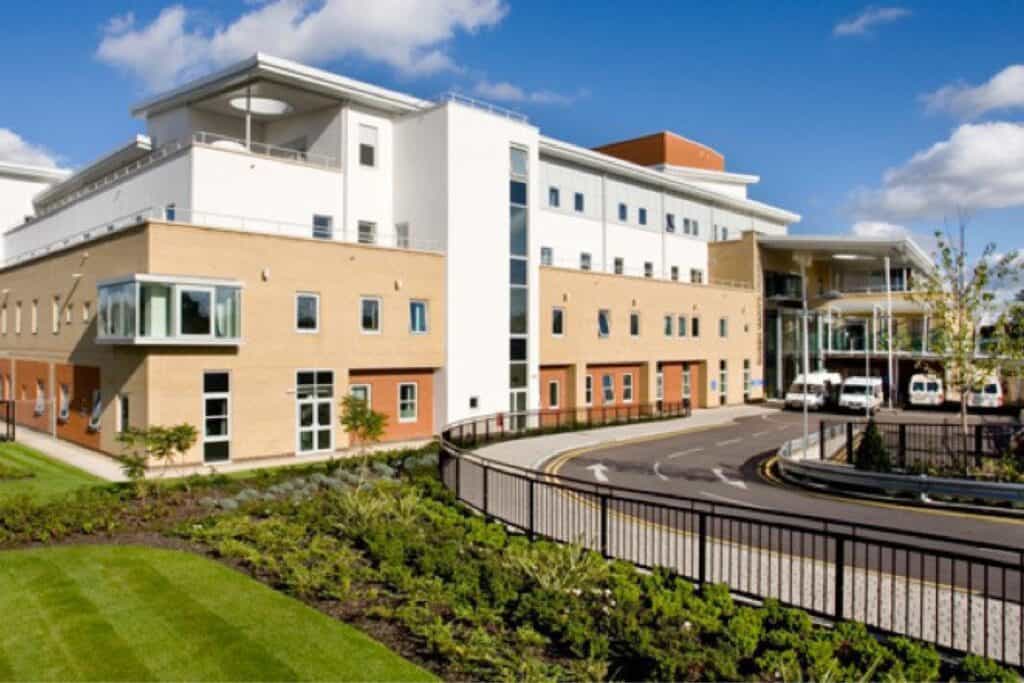
An 18-month Cat6 installation giving connectivity for hospital IT, BMS, CCTV, access control, Wi-Fi and nurse call.
Read the case studyCCTV guide
Hospital CCTV covers entrances, wards, pharmacies, theatres, maternity and car parks, plus the storage and governance behind them.
Healthcare security is about more than deterrence: it’s patient safety, safeguarding, controlled access and evidential footage when it matters. From emergency entrances and wards to pharmacies, theatres, maternity and car parks, hospital CCTV must capture clear, actionable images and support GDPR-compliant access and retention, without disrupting clinical care. ACCL designs and installs healthcare-ready CCTV across London, Surrey and Kent. We engineer coverage around clinical pathways, size storage that truly holds policy retention, and commission Video Management System workflows your Digital, Estates and Security teams can operate with confidence.
Hospital CCTV usually underperforms for five reasons, and each one can be fixed at survey stage.
High, wide views can’t deliver identification at entrances, pharmacy counters or nurse stations. We frame to target distances for recognition and identification where needed.
Bright atria, glass and corridor daylight can wash out faces. We specify Wide Dynamic Range sensors and lenses and angles that hold facial detail.
Busy wards and Emergency Departments drive bitrates higher than flat estimates, which can shorten your actual retention window below a target 30 days. We model codec, resolution, frame rate and motion and apply sensible continuous and motion rules to meet policy.
Shared logins and unmanaged exports create GDPR risk. We implement role-based access, MFA and audit logs.
Over-long patch leads and heat cause intermittent camera drops that look like “VMS issues.” We stabilise racks first for day-one reliability (see Data Cabinet Tidy).
For a broad overview of options and costs, visit our main CCTV Installations page.
Cameras follow clinical pathways, with each view framed for the detail that area needs.
Wide Dynamic Range turrets and domes positioned and zoomed for face capture at thresholds and reception; overlapping views maintain continuity from doors to triage.
Carefully framed corridor-mode streams preserve pixels along long runs; nurse stations and medicine rooms receive closer framing for incident reconstruction while respecting privacy.
Higher detail at hatches and access doors; bookmarks and tags speed controlled-drug incident investigations.
Discreet coverage at access points and staff routes; placement avoids clinical obstruction and respects IPC requirements.
Sensitive design with privacy masking, tightly controlled access and clear retention policies agreed with governance.
Low-light cameras sized for plates and faces; ANPR where vehicle logging supports site security. Thermal options assist detection in low light where appropriate (see Thermal Imaging CCTV Installation).
Reliable cameras depend on the cabling, power and storage behind them, so ACCL designs that layer first.
The video management system (VMS) controls who sees footage and records every view and export.
Privacy is built into the setup, so masking, retention and named access support clinical governance.
ACCL works to infection prevention and control (IPC) and Estates rules from day one.
We align with IPC and Estates from day one: dust suppression, sealed work zones, materials selection and daily reinstatement. Noisy works are planned for evenings or overnight; daytime tasks are low-impact and zoned. Penetrations are fire-stopped to maintain compartmentation and LSZH materials are used where required. Access is escorted as needed; RAMS and permits are standard. If your broader digital roadmap is evolving, see how cabling and wireless underpin care in Digital Transformation in Hospitals.
Hospital CCTV can link to access control, alarm platforms and remote buildings.
Door and turnstile events link to video for faster triage (see Commercial Access Control Installation).
Cameras can sit within a unified platform for single-pane operations (compare IP Security System Installation).
Engineered links connect outbuildings and car parks reliably; where needed we design the wired layer first (start at Structured Data Cabling).
Each team gains usable evidence, faster investigations and lower risk.
We’ve delivered this for real healthcare providers, including Babylon Health, across three sites.
Start with a free survey of your site.
If entrances glare out faces, pharmacy counters lack detail or retention won’t last the month, it’s time to fix the foundations. Book a no-obligation hospital CCTV survey and we’ll map risks, model coverage and deliver a phased, governance-ready upgrade plan that respects clinical workflows.
Before you book
No. Identification comes from framing and lensing at the right distance. We reserve higher resolution for choke points and sensitive counters.
Often. We test and retain what’s sound, upgrading only where it drives quality, reliability or compliance.
Noisy works are out-of-hours; daytime works are zoned and IPC-controlled. Each area is reinstated before staff return.
We’ll align to your policy (for example, 30, 60 or 90 days) and enforce it in the VMS so retention doesn’t silently drift.
Yes, with appropriate roles, multi-factor authentication and logging. We align remote access to governance and data policies.
We specify low-light and IR and ANPR as needed and validate throughput and latency to remote cabinets or buildings.
Yes. The same approach scales to GP surgeries, dental practices and clinics: identification at entrances and reception, named access to footage and retention set to policy. For Babylon Health, ACCL installed 76 Hikvision cameras across a London head office and two clinics.
Cost depends on the number of cameras, cabling, storage and integration. The site survey is free, and you receive an itemised quote before any work starts. A fixed-price proposal follows within 48 hours of receiving your site plans.

The team behind your CCTV project
Wayne Connors founded ACCL in 1997 and has led our commercial cabling projects ever since. We’re a member of the London Chamber of Commerce and Industry.
Free CCTV site survey
One of our own engineers surveys your site at no cost and with no obligation.
Excellent · 60+ Google reviews · Founded 1997 · £10m liability cover
Expert Insights

It is perfectly reasonable to have CCTV installed at your workplace.
Read guide
The integration of audio capabilities in CCTV systems presents both opportunities and challenges in the workplace for employers and employees, we explore your rights and
Read guide
Transforming a conventional CCTV system into a cloud-based environment is more than a technical exercise.
Read guideBrowse practical guidance, industry updates and planning tools for commercial network infrastructure projects.
Active Communication Company Ltd trades as ACCL, ACCL Data Cabling London and ACCL Data Cabling Kent · Commercial data cabling and network infrastructure specialists