Night-possession working
Major pulls are done in possessions, and bypass links keep systems live.

Structured Data Cabling
Structured data cabling for railway stations, signalling centres and depots across London, Surrey and Kent, delivered in night possessions with live bypass links.
Major pulls are done in possessions, and bypass links keep systems live.
Cat6A S/FTP resists EMI from traction and PA equipment.
Powder-coated tray and fixings suit listed stations.
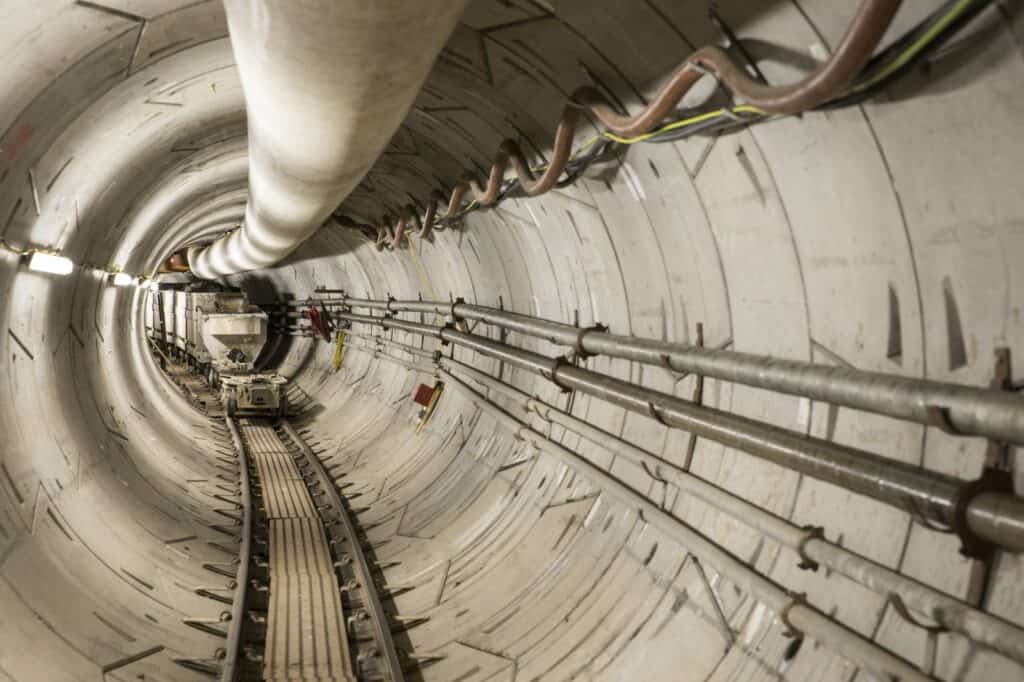
ACCL installed ruggedised fibre monitoring a Victorian rail tunnel.
Recent rail work: King’s Cross Gasworks Tunnel, London
Railway station data cabling
ACCL installs the copper and fibre behind ticket gates, passenger information displays, CCTV and signalling-related systems. Stations get a documented, resilient backbone, installed in possession hours so passengers and trains keep moving.
The full range of sectors and services ACCL covers.
Explore →Single-mode rings and links between concourses, platforms and control rooms.
Explore →Camera systems carried on the same structured network.
Explore →Cabling ready for private 5G and other new systems.
Explore →Recent projects
Recent rail and tunnel projects.
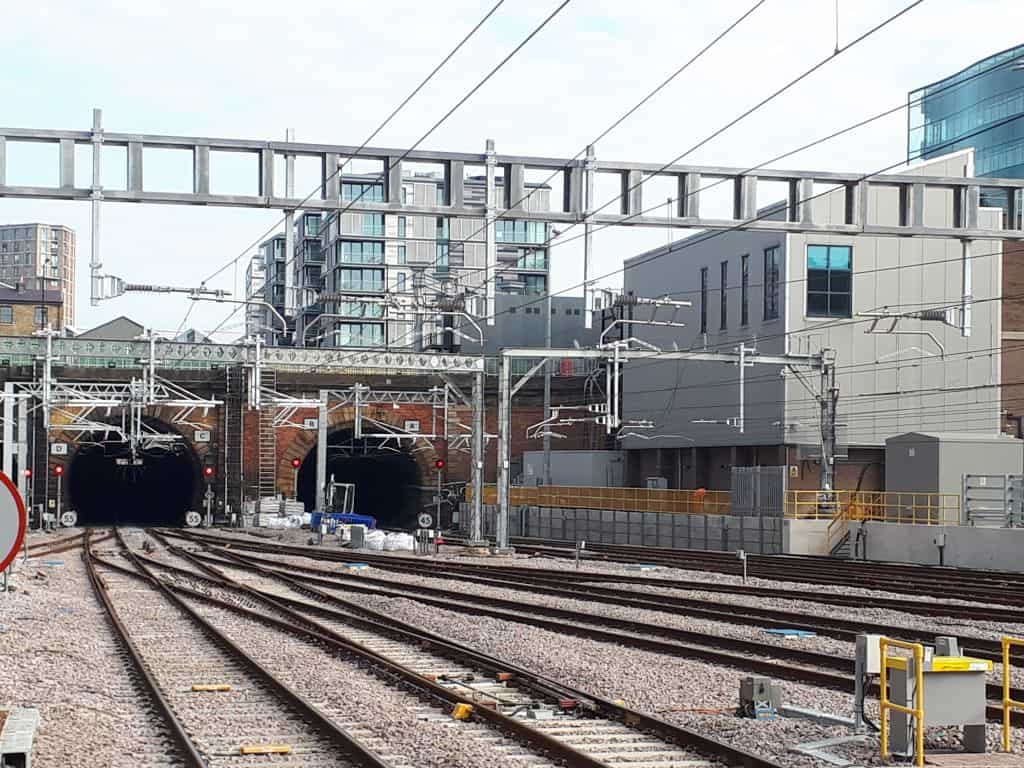
A ruggedised fibre backbone delivering millimetre-precision structural monitoring inside a reawakened Victorian rail tunnel.
Read the case study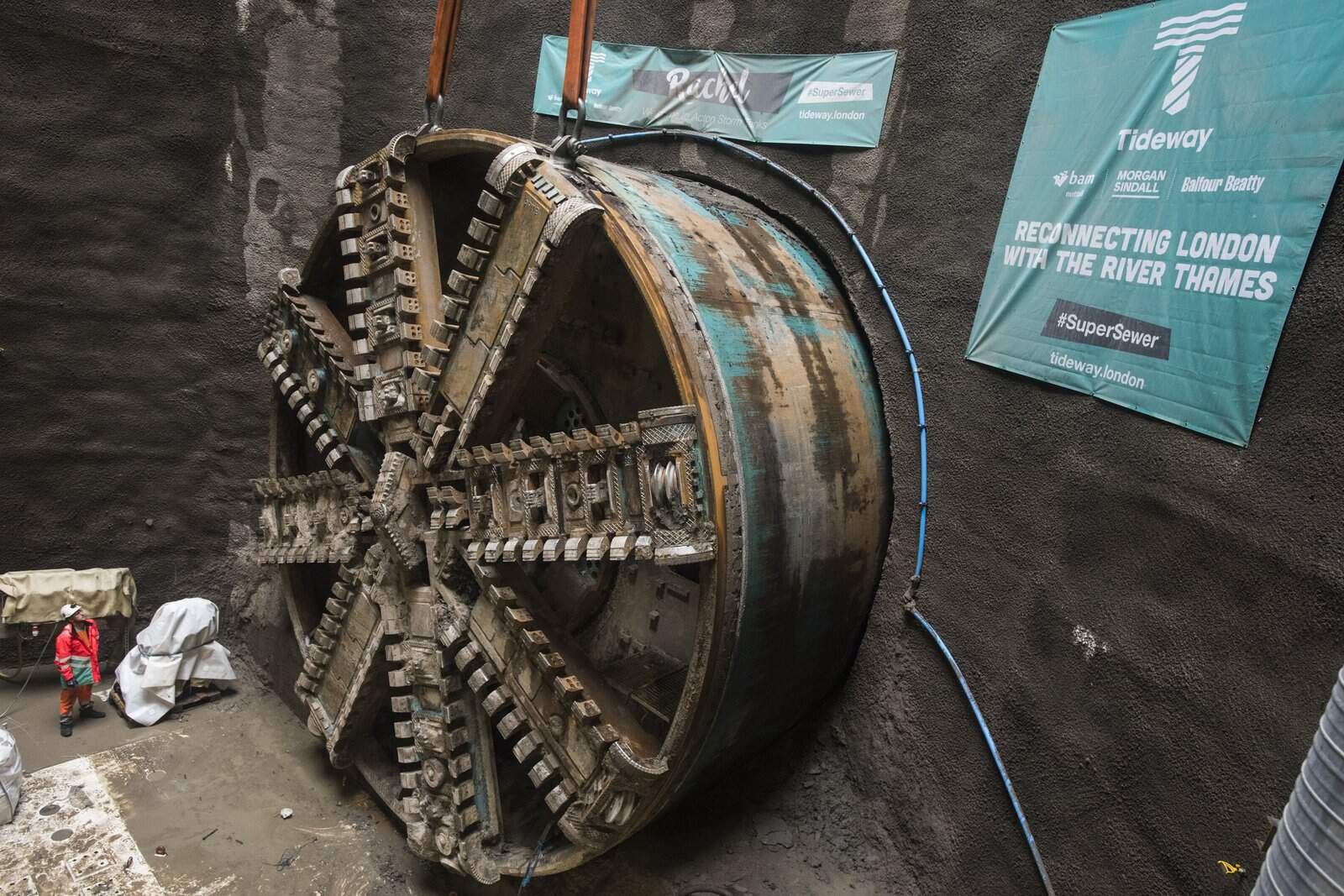
Ruggedised fibre optic connectivity for six tunnel boring machines on London’s “Super Sewer” programme.
Read the case study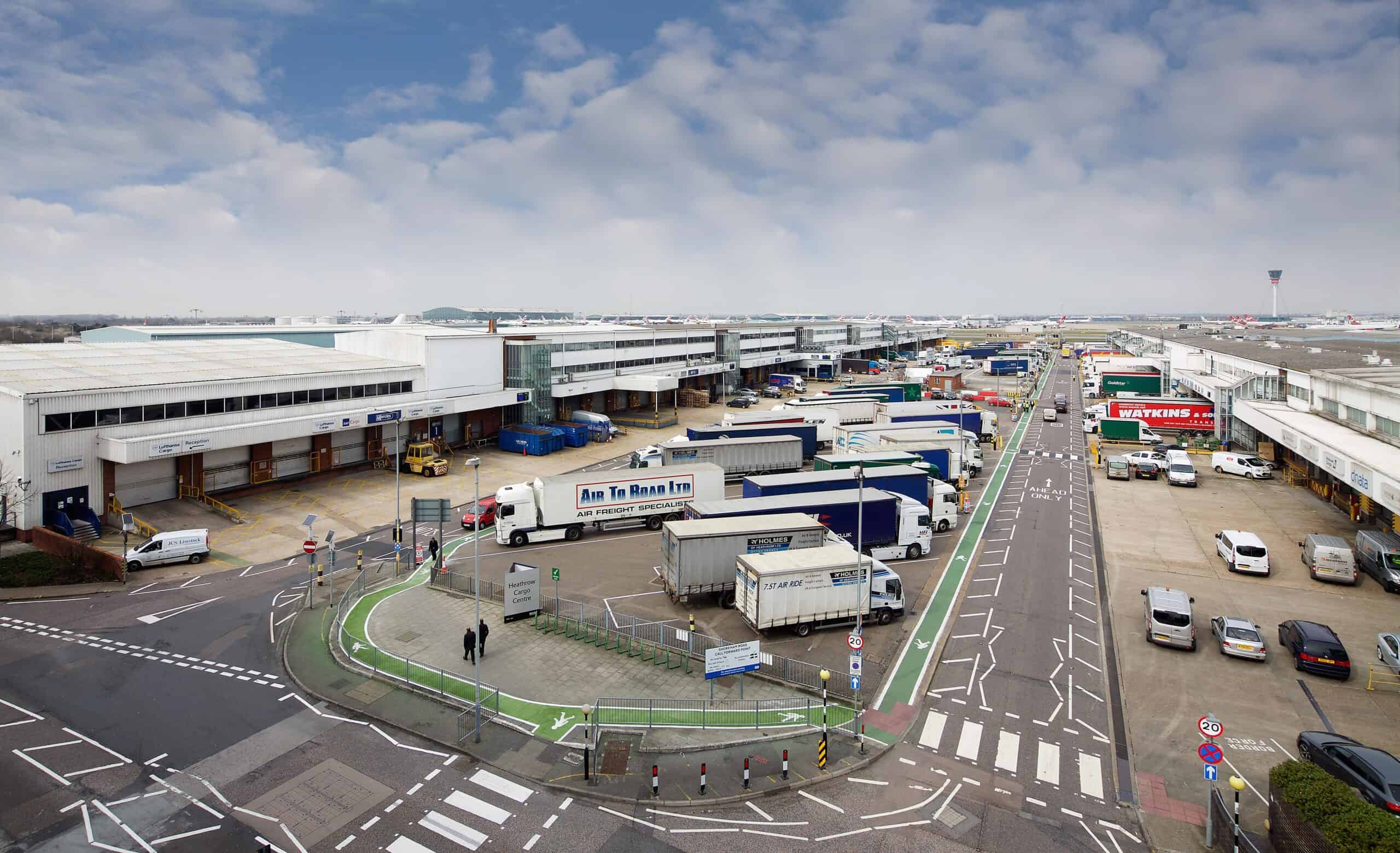
ACCL installed 260 Excel Cat6 outlets and approximately 3 km of fibre to support a new automated parcel conveyor system at DHL Aviation’s Building 559, Heathrow Airport.
Read the case study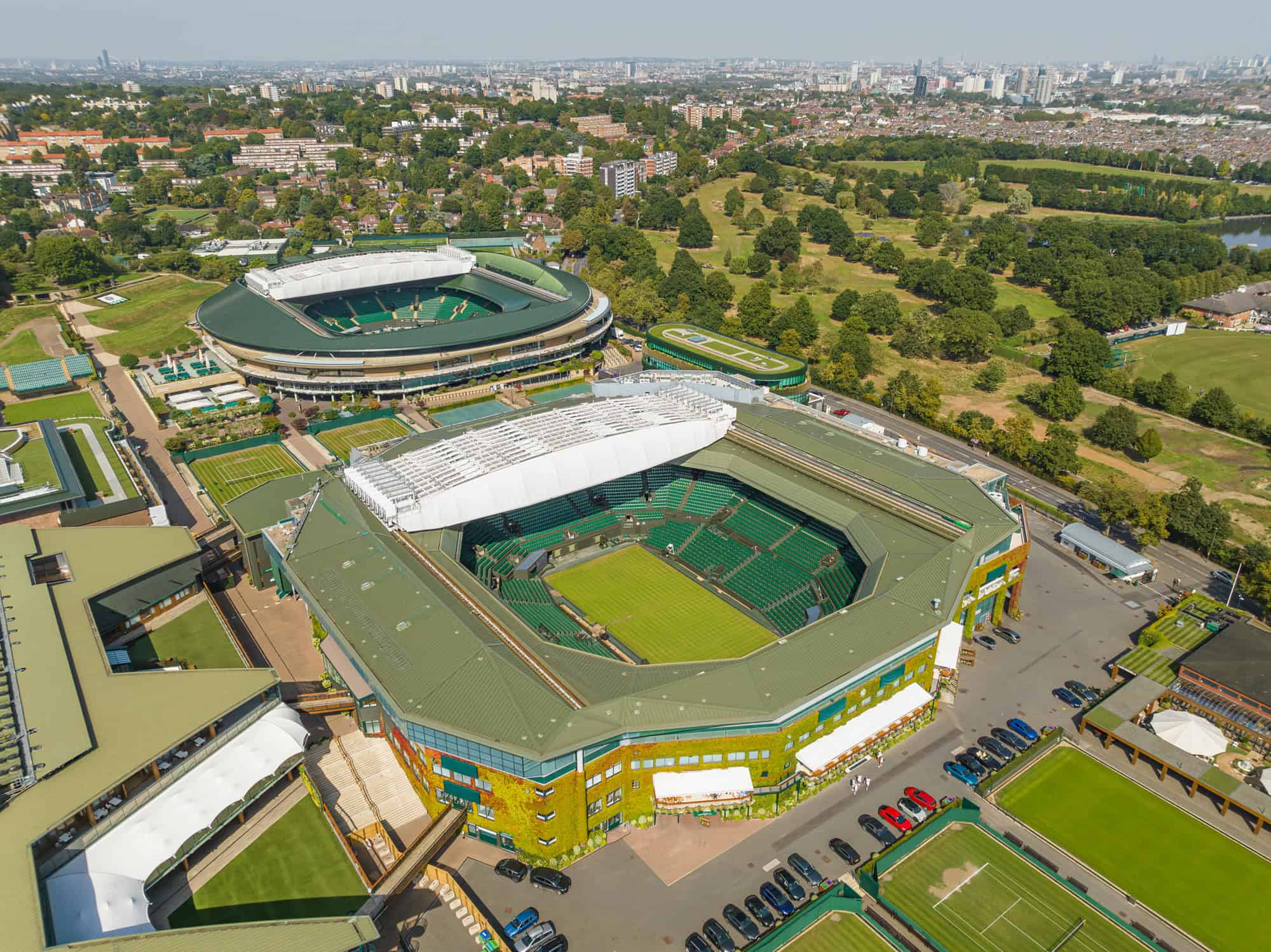
ACCL was appointed by Trinity Fire & Security to replace Wimbledon’s existing 2006 fibre infrastructure with a new 3km 8-core OM4 fire survival fibre optic network linking 13 stations across the estate.
Read the case studyCabling guide
Every part of a railway journey relies on fast, reliable connectivity, from ticket gates and passenger information displays to CCTV analytics and signalling. Delay one packet and ticket barriers queue up, lose a frame and platform-edge detection fails, drop a VLAN and trains wait outside the station throat.
Many stations still rely on copper and fibre laid when GSM-R was new. Cat 5e runs have been spliced through decades of refurbishment, patch racks sit unlabelled behind advertising boards, and backbone fibres have uncertain loss budgets. ACCL’s rail-grade structured cabling solutions give stations and control rooms a resilient backbone that keeps trains, passengers and revenue moving.
Better cabling removes the faults that slow passengers and extend disruption. The six most common are:
Legacy copper throttles smart-card authorisation and creates bottlenecks.
4K streams from PTZ cameras overrun old fibre links, which degrades image quality when evidence is needed.
Congested backbones stall “Next Train” boards and prompt crowd frustration.
Engineers lose minutes tracing ports, which extends disruption during equipment failures.
High-voltage traction feeds and PA amplifiers induce noise on unshielded data pairs.
IP help points, Wi-Fi nodes and retail POS overwhelm Cat 5e pairs and call for costly power circuits.
Left alone, these weaknesses can lead to ORR penalty notices, reduce public satisfaction and affect safety.
Rail-ready cabling pairs shielded copper with redundant fibre and clear labelling. The main elements are:
Foil-wrapped pairs resist EMI from traction equipment and sustain 10 Gbps at 90 metres for ticket gates, PIDS and retail POS.
Redundant 40/100 Gbps backbones in diverse conduits link concourses, interlocking rooms, platforms and station management suites.
These suit sub-surface stations and enclosed concourses.
90-watt headroom powers PTZ cameras, 8K advertising screens, smart lighting and help points without new mains feeds.
Distinct colour sets for operations, retail, guest Wi-Fi and security traffic help engineers identify circuits during incidents.
These protect terminations in platform canopies and tunnel portals exposed to moisture, brake dust and vibration.
QR-tagged panels feed BIM models, so control-room staff and remote NOC teams can diagnose faults without a site visit.

A railway project follows six steps, from stakeholder meetings to live fail-over drills.
Station managers, TOC and FOC IT teams, Network Rail project engineers and British Transport Police set throughput, resilience and possession constraints.
Engineers map containment during possession hours, inspecting risers, cable routes and UTX ducts without affecting passenger flow.
Shielded Cat 6A, OS2 fibre and IP67 hardware are specified to EN 50173-3, with spare cores for ETCS, DAS and future private 5G deployments.
Works run during Rules of the Route possessions, night shifts or blockade periods. Temporary bypass links maintain gate lines, PIDS and PA during cut-overs, and safe-work packs, SSOWPs and PICOP briefings are in place.
Outdated wall boxes are replaced with seismic-rated 45U racks, with intelligent PDUs, blanking panels and brush entries to improve airflow in cramped comms rooms.
Fluke DSX-8000 certifies the copper, OTDR sweeps verify the fibre losses, and simulated link failures show that automatic re-routing keeps PIDS, CCTV and ticket gates live.
Each system carries a 25-year warranty covering components and labour.
Safety and compliance are built into the plan before the first possession. ACCL is ISO 9001, ISO 14001 and SafeContractor accredited, which covers quality, environmental and health-and-safety processes. The other safeguards are:
Intumescent pillows restore compartmentation, which is essential in sub-surface and heritage stations.
CAR 2012 surveys and confined-space RAMS cover tunnel cross-passages and cable routes.
Scrap copper is recycled and reels are returned, supporting operator sustainability targets.
Station managers and train operators gain faster gates, clearer video and quicker fault-finding. The benefits are:
Faster smart-card validation shortens queues and supports on-time departures.
4K CCTV stays live, which helps crowd management and rapid BTP intervention.
PIDS boards refresh instantly, which reduces platform scrambles and the safety risk that comes with them.
QR-tagged racks and etched labels cut the time engineers spend tracing faults.
PoE-powered retail POS stays online, protecting concessionaire income at peak footfall.
Spare bandwidth and dark fibre cores support contactless ticketing, private 5G and autonomous service robots without disruptive works.
ACCL applied the same approach to a real rail infrastructure project: see the King’s Cross Gasworks Tunnel case study. The structured data cabling hub lists every sector and service ACCL covers.
Before you book
Yes. Major pulls happen during night possessions, and micro-pulls above suspended ceilings can run after the last train without public access. Bypass links keep critical systems online.
No. Shielded Cat 6A is recommended near high-EMI zones such as transformers, PA amplifiers and traction rooms, while admin offices may use F/UTP to balance budgets.
Not immediately. If current switches are 1 Gbps-capable they can stay in the short term, and ACCL sizes the cabling for future 10 Gbps uplifts and provides staged switch-upgrade roadmaps.
Surface traywork is powder-coated to match ironwork, and fixings align with existing grout lines to respect listed-building requirements.
ACCL gives a 25-year system warranty covering components and labour, transferable if franchises transition or Network Rail takes direct control.
A station survey is free of charge and the itemised quote arrives before any work starts. A fixed-price proposal follows within 48 hours of receiving your station floor plans. How long the work takes depends on the size of the site and the night possessions available, so the phasing is agreed with station and signalling managers at survey.

The team behind your cabling project
Wayne Connors founded ACCL in 1997 and has led our commercial cabling projects ever since. We’re a member of the London Chamber of Commerce and Industry.
Free cabling site survey
One of our own engineers surveys your site at no cost and with no obligation.
Excellent · 60+ Google reviews · Founded 1997 · £10m liability cover
Expert Insights

From the outside, fibre can sound mysterious or overly technical.
Read guide
Cabling fire safety can prove to be complicated, especially if you don’t have the necessary experience.
Read guide
Every digital initiative in a modern workplace from hybrid meetings and cloud apps to IP security, access control and smart‑building systems rests on the same foundation: your physical…
Read guideBrowse practical guidance, industry updates and planning tools for commercial network infrastructure projects.
Active Communication Company Ltd trades as ACCL, ACCL Data Cabling London and ACCL Data Cabling Kent · Commercial data cabling and network infrastructure specialists