Fibre Optic Cabling
Over the last 20 years, the telecommunications industry has rapidly evolved and fibre lines are quickly taking over. This is because fibre optic cables are better for building a network that requires high speeds, heavy bandwidth connections and long distances. Fibre optic cables also come with less interference than their copper counterparts and are taking centre stage in today’s network-building environment.
In this article, we take a look at what a fibre optic cable is and unpack everything you need to know about these tiny light-carrying cables.
How do Fibre Optic Cables Work?
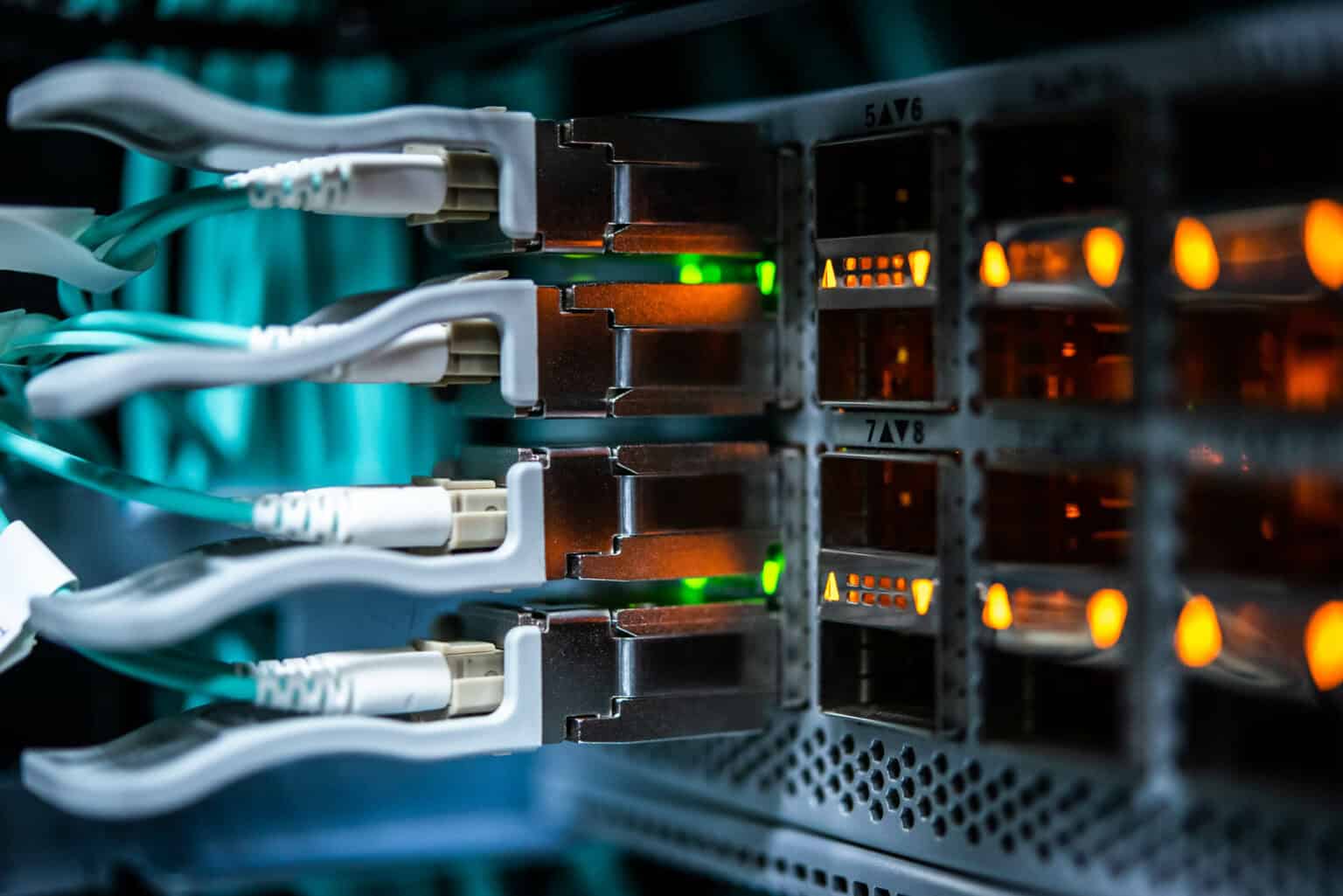
So, how do fibre optic cables actually work? Fibre cables, also known as optical fibres, work by transmitting light, which makes them very different to traditional copper or aluminium cables, which work by conducting electricity. Fibre cables are made of long strands of thin glass or plastic (oftentimes comparable to a single strand of human hair). Light is shone through these strands, and they transmit data by sending binary code as pulses of light. Transponders at both ends of the cable convert this data into light and then convert light back into data.
What Are Fibre Optic Cables Made Of?
Glass or plastic is used in this technology as these materials exhibit what is known as total internal reflection. This is something that copper or aluminium is unable to exhibit. Essentially, this means that the signal within a fibre cable is able to travel further than that of its copper or aluminium counterparts.
What is the transmission speed of fibre optic cables?
Now that we have taken a closer look at “how do fibre optic cables work?” it’s time to take a look at their speed. Fibre optic cables, renowned for their exceptional data transmission capabilities, can achieve remarkable speeds when compared to traditional copper cables. The transmission speed of fibre optic cables is predominantly governed by the principles of light propagation within the glass or plastic core. These cables can transmit data at speeds close to the speed of light, which amounts to approximately 299,792 kilometres per second in a vacuum. In practical applications, the data rates of fibre optic cables commonly range from several megabits per second (Mbps) for slower connections to multiple terabits per second (Tbps) for high-capacity, long-distance communication networks. The impressive transmission speed of fibre optic cables has revolutionised modern telecommunications, enabling the rapid exchange of vast amounts of data across the globe with minimal signal degradation and latency.
This is just one benefit of these cables, but let’s investigate further.
What are the Advantages of Fibre Optic Cables?
When planning a new network cable installation for a home or office, fibre optic cables are the best bet as they have significant advantages over any other cable competitors.
Below, we take a look at 7 advantages of fibre optic cables and how they can help better your connectivity.
Fibre Optic Cables for Greater Bandwidth
Today, with more and more homes and businesses requiring data transmission, it is becoming important to have greater bandwidth availability in place. Fibre optic cables have better bandwidth than traditional metal cables as information or data can be transmitted per unit time of fibre over other transmission media.
If your home or business network is currently stuck with low bandwidth or you are having difficulty meeting some of your data transmission requirements or having difficulties accessing cloud applications or even struggling with pixelated images, fibre optic cables are the upgrade you have been searching for.
Fibre Cables for Faster Speed
We live in the technological age, and we have become accustomed to receiving information at the click of a button. With this in mind, nothing is more frustrating than having to wait for a document or video to upload or download. This kind of waiting period can significantly impact meetings or business costs; therefore, it is vital that you have a fast internet connection to help your business run smoothly in today’s fast-paced environment. Networks run on fibre optic cables have greater bandwidth, which means they are faster than even the highest-speed copper internet connections. This is great for home use and businesses, helping you or your employees upload and download documentation or data through a faster connection – saving you both time and money.
Fibre Optic Cables for Longer Transmission Distances
Fibre optic cables can help you achieve higher bandwidths with longer transmission distances as they are a low power loss medium. In fact, these advanced, hair-thin cables are able to reach over 10 kilometres in distance in stark comparison to the maximum 100-metre distance that can be reached through copper cables.
Fibre Cables Offer Better Flexibility
Copper cables of the past have been known to be unreliable in many aspects, and this can greatly affect businesses. This kind of downtime can greatly hurt productivity or bring it to a halt completely.
In comparison to copper cables, fibre optic cables are much lighter and thinner, meaning they are able to withstand greater pressure than copper cables, resulting in less breakage or damage. Essentially, fibre cables are more flexible and able to bend with ease, allowing them to resist corrosion, which often attacks and breaks copper cables.
Another benefit that comes with these sturdy cables is that they don’t conduct electrical currents, meaning they are resistant to interference, radio signals and lightning. As copper cables are designed to conduct electricity, they are incredibly vulnerable to lightning and even deliberate signal interference or scrambling.
As stated previously, fibre cables have greater resistance to corrosion, but they are also not susceptible to bad weather conditions, which are renowned for stopping data transmission through copper cables.
Fibre Cables for Improved Latency
Latency refers to a time delay between the cause and effect of a physical change in a system. Fibre optic cables that run fibre networks eliminate a variety of latency problems that users are faced with on cable internet. This is particularly relevant when it comes to uploading or downloading high-definition videos or content.
This will benefit your business by lowering any latency. This is especially important when it comes to VoIP users and the downloading and uploading of massive files without disruption – improving collaboration in an office environment.
Fibre Cables for Stronger Security
Fibre optic cables are renowned for keeping data secure as it doesn’t radiate signals, making these cables incredibly difficult to tap without informing the user. Fibre also have greater physical security as they are installed in a single and central location, as opposed to copper systems where equipment is installed and distributed throughout various locations.
The superior capabilities of fibre optic cables make them integral to modern network infrastructures, such as Passive Optical Networks (PONs), which offer simplified and efficient data distribution. To learn more about PONs and their revolutionary approach to network design, read our detailed article here.
In summary, fibre optic cables come with significant advantages, having greater bandwidth allowing for a higher speed, while ensuring security and ease of use.
Now that we have taken a closer look at what fibre cables are, what they are made of and the advantages that come with this technology, let’s take a look at the different types of fibre optic cables available.
In Summary
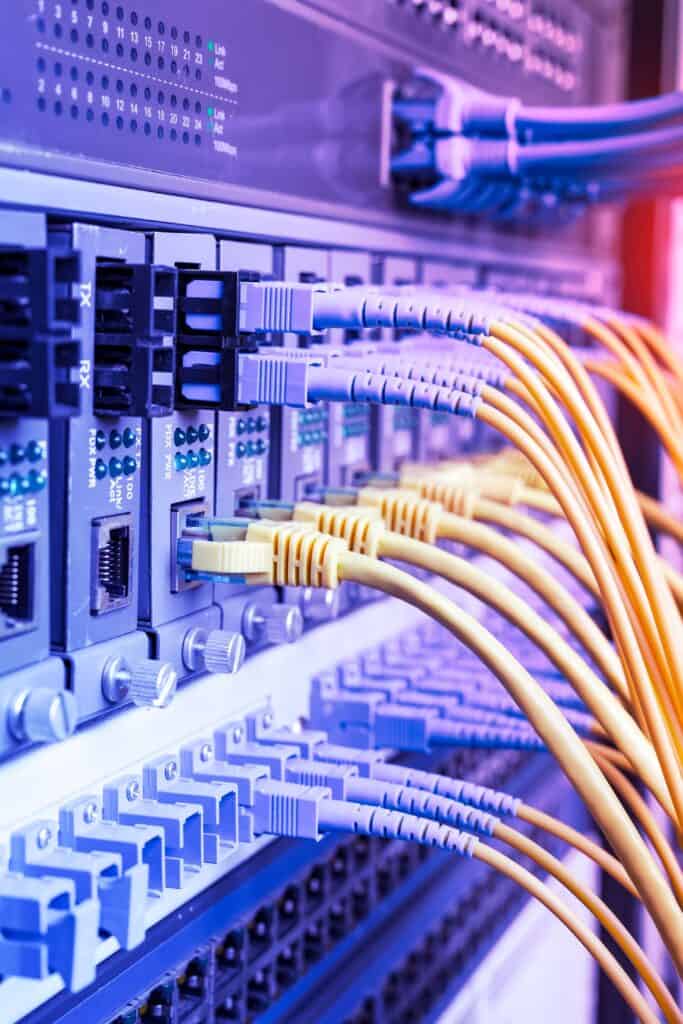
Fibre Optic cables play a vital role in the progression of connectivity and industry as these tiny and durable cables are expertly designed for greater bandwidth, distance and longevity – leading the way in the technological age.
For further information related to fibre optic cable technologies, contact our expert team today.



Written by
Wayne founded ACCL in 1997 and has led more than 28 years of project delivery, helping organisations design, install and modernise the network infrastructure behind reliable connectivity, office moves and refurbishments. His experience spans copper cabling, fibre backbones, data centre infrastructure, Wi-Fi, CCTV and access control. About ACCL