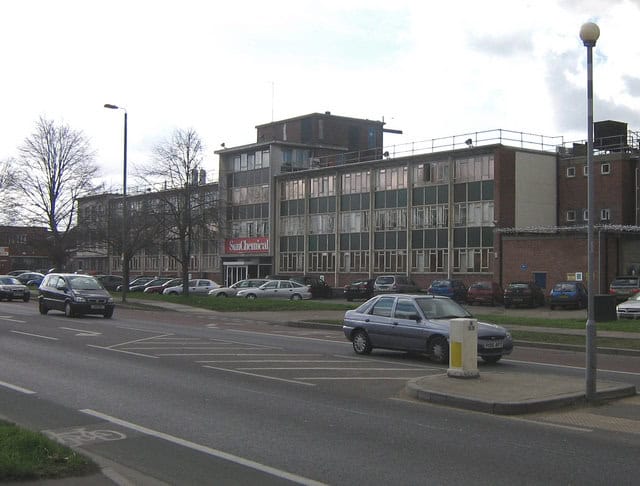
Multi-tenant office buildings occupy a unique niche in the property market, especially in thriving business hubs where every square foot is precious. These buildings host diverse organisations, each with distinct connectivity demands and operational routines. In an era of rapid digital transformation, tenants are looking not just for desks and meeting rooms but also for high-performance networks that support modern workflows. This shift has positioned data cabling as a critical component of any multi-tenant building’s infrastructure. Yet cabling for multi-tenant sites presents significant challenges that differ from those in single-occupant premises. At the same time, solutions are evolving to meet the needs of landlords, facilities managers, and IT professionals tasked with ensuring reliable and future-proof networks for everyone on the property.

Coordination with Building Management and Facilities Teams
Responsibility for the data cabling for multi-tenant office buildings can fall to different parties, depending on the lease structure, local regulations, and building management policies. In some cases, the landlord oversees all aspects of network infrastructure, aiming to offer tenants a turnkey solution. In other situations, tenants are allowed or required to organise their cabling projects, subject to building guidelines or approval from facilities management.
Where the landlord or managing agent takes charge, the primary goal is to design and implement a universal backbone that multiple tenants can tap into. This approach can simplify matters by establishing uniform standards, ensuring all cable runs adhere to safety and performance guidelines, and reducing the risk of messy overlapping installations. However, centralising cabling projects also demands clear planning from the outset. Facilities teams must anticipate the future demands of tenants who have not yet signed leases and the potential for expansions among existing occupants.
When individual tenants oversee their cabling, the building’s management team remains responsible for maintaining consistent quality, preventing interference or hazards, and safeguarding shared spaces like risers, server rooms, and common utility pathways. Facilities managers often set specific regulations or best practices for cable containment and termination. They may require that tenants’ chosen installers coordinate schedules to avoid service lift congestion or to prevent excessive noise during peak office hours. These coordination efforts may involve multiple stakeholders, and miscommunication can lead to accidental damage to existing services or unintentional cable clutter.

Security and Network Segregation
Multi-tenant office buildings must consider more than just physical space when it comes to cabling. Data security is also a prime concern, as different companies store and transfer sensitive information. Tenants rightly expect that their networks remain private, shielded from accidental or malicious intrusion by neighbours on the same floor or in the same building.
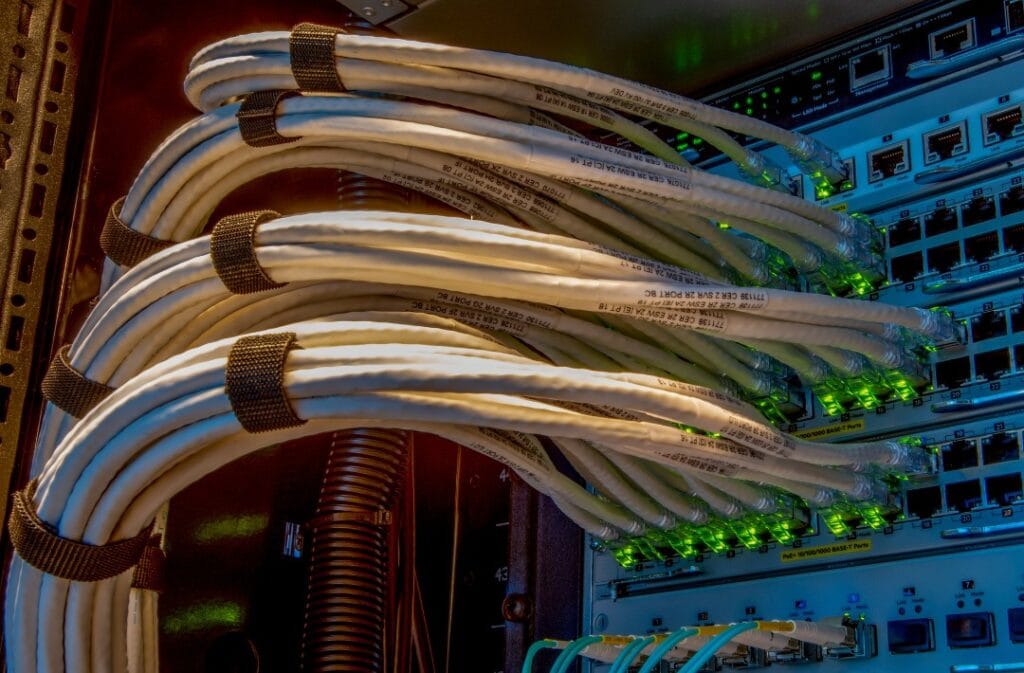
A well-planned system typically includes separate patch panels, switches, and cable runs for each tenant to ensure data segregation. When fibre is involved, some landlords offer passive optical networks where the final connection to the tenant’s suite is dedicated, securing a private link to the tenant’s ISP or data centre. Landlords or facilities managers might also impose access controls for communications rooms and risers, restricting entry to certified installers or designated IT personnel.
Shared network infrastructure can still be implemented in ways that maintain logical segregation, but a misconfiguration or unpatched vulnerability could expose data between tenants. Clear documentation of cable paths and meticulous planning of VLANs or dedicated subnets help mitigate that risk. The building’s management team and the installers must foster an environment where security considerations are integral to every design, not merely an afterthought once cables are pulled.
Balancing Flexibility and Scalability
Few environments evolve as unpredictably as a multi-tenant office building. Throughout a typical lease, a tenant might expand to an adjacent office suite or add new hires, requiring more data points. Another tenant might move out and be replaced by an organisation with entirely different connectivity expectations. Balancing flexibility with the need for robust networks can be daunting, particularly when not all expansions or relocations can be planned months in advance.
Cabling specialists often advocate for forward-thinking solutions, encouraging building managers to install extra capacity, such as additional fibre strands, spare conduit space, or multiple cable trays, even if current tenants do not need them. The initial expenditure might be higher, yet it pays off by minimising future disruptions and expensive retrofitting. This is especially true in fast-growing cities like London, where office occupants change frequently and demand for high-bandwidth connectivity increases each year. A forward-looking design makes it easier for new tenants to move in swiftly and for existing ones to upgrade without re-engineering the entire building’s infrastructure.
Many management teams strive to keep leasehold boundaries flexible as well, allowing the possibility of subdividing or merging office suites. Data cabling then needs to be arranged in a modular fashion, so that part of a floor can be separated or combined without requiring extensive rewiring. The same approach is relevant to overhead or underfloor cable management. Modular trunking systems that can be reconfigured or extended offer significant long-term benefits, provided they are installed with care and labelled thoroughly to reduce confusion down the line.
Designing for Technology Trends
Data traffic in multi-tenant buildings is climbing year after year as technology grows more advanced. Video conferencing, cloud-based applications, collaboration platforms, real-time data analytics, and artificial intelligence place ever-greater demands on bandwidth. Many businesses are also exploring remote backup and disaster recovery solutions, pushing large amounts of data between on-site servers and off-site data centres.
Tenants seeking faster internal data transfer or direct connections to cloud providers often ask for fibre optic links. Traditional copper connections like Cat6 or Cat6A remain popular, yet the rise in 10Gbps and beyond means that fibre is no longer an optional luxury for certain industries. Property managers may decide to lay fibre from the start so that any tenant demanding high performance can be accommodated without extensive new construction. However, installing fibre pre-emptively calls for decisions on the best types and quantities to serve a variety of potential tenants over the building’s lifespan.
Growing interest in smart building technologies can also affect cabling choices. Sensors that monitor temperature, energy usage, or occupancy may require network connectivity of their own. Access control systems and CCTV cameras often rely on Power over Ethernet, driving the need for cables that can handle both data and electrical power. As these building-wide services operate alongside each tenant’s private network, managers may choose to create a dedicated pathway for IoT or security systems, separate from the risers used for tenant data. This strategy allows for central oversight of key infrastructure while preserving the privacy and bandwidth of individual tenants’ networks.

Ensuring Compliance and Safety Standards
Multi-tenant office buildings must adhere to strict building regulations, health and safety laws, and, in many cases, requirements from insurers or local authorities related to fire safety. Data cabling installations can pose potential fire hazards if the cables are not fire-retardant or if they block ventilation within risers. Over time, unplanned or poorly installed cable bundles can accumulate to the point of restricting emergency access to certain areas or exposing the building to increased risk during a fire.
Compliance often includes the use of low-smoke zero-halogen (LSZH) cable jackets, ensuring that in the event of a fire, toxic fumes or smoke are minimised. Installers must apply proper firestopping measures whenever a cable passes through a fire-rated wall or floor. In a multi-tenant scenario, inconsistent practices may arise if different contractors perform work at different times under varying standards. Some building managers, therefore, insist on a unified protocol that any incoming installer must follow.
Regular inspections help keep shared spaces neat and safe. Many landlords have begun requiring any tenant who vacates the property to remove or tag abandoned cables to prevent the risers from becoming cluttered. This requirement saves future occupants from dealing with legacy infrastructure and reduces the risk of accidental interference with live systems.
The Importance of Skilled Partners
Data cabling for multi-tenant office buildings is no place for guesswork. A single oversight—such as underestimating bandwidth requirements or failing to secure cables properly—can lead to expensive rework and strain the relationships between tenants and property management. Skilled cabling specialists understand the complexities of designing and installing networks in large, multi-storey office blocks, from selecting the right cable type for each tenant’s needs to ensuring compliance with building codes.
These partners are particularly valuable when called upon early in a project, such as during a building renovation or the onset of a new tenant fit-out. Collaboration among architects, electrical contractors, building managers, and cabling experts smooths the entire process, as everyone knows each other’s requirements and can coordinate more efficiently. The best outcomes often occur when a carefully orchestrated plan is in place, detailing cable routes, containment methods, and testing protocols before a single cable is pulled.
Adaptable Network Management Strategies
Multi-tenant buildings evolve rapidly, prompting a need for modern network management techniques that can reconfigure resources on demand. Some management teams opt to integrate advanced monitoring systems that track network usage across the building, highlighting bottlenecks or underused segments. This data can help identify the need for additional cables, upgrades to higher-specification lines, or the removal of unused connections.
Software-driven network management, sometimes called Software-Defined Networking (SDN), is making its way into larger multi-tenant facilities. SDN can streamline the allocation of bandwidth or prioritise certain applications for specific tenants, though these solutions require underlying hardware compatibility and skilled staff to implement. Physical cabling still remains the foundation, but a software overlay can help quickly adapt to new demands without replacing all the underlying cables.
Neutral host networks have also emerged as a solution for multi-tenant sites. A neutral host provider operates shared wireless or wired infrastructure, allowing tenants to subscribe to whichever service they need without each one installing separate hardware. This model can reduce clutter and simplify building-wide upgrades, although it necessitates well-structured cabling from the outset to support the aggregator’s equipment.
Providing a Great Experience for Tenants
Good connectivity is often seen as a basic utility, on par with electricity and water. When tenants sign a lease, they expect the building to support their day-to-day operations without unexpected downtime or performance bottlenecks. If staff members regularly experience dropped connections or slow file transfers, frustration escalates quickly, and it reflects poorly on the building’s management.
A carefully planned and well-maintained cabling infrastructure elevates the tenant experience, fostering trust and satisfaction. Some owners position their buildings as premium tech-enabled properties, using robust connectivity as a selling point for prospective occupants. Others simply view it as a practical necessity. In both cases, a reputation for strong and reliable networking capabilities can help attract tenants who might otherwise lease elsewhere.
Tailored support also plays a role. Tenants appreciate having direct points of contact for troubleshooting, be it an in-house facilities team or an external cabling partner. Quick responses to requests for new data points, reconfigurations, or bandwidth boosts mitigate potential downtime and keep businesses running smoothly. The ability to provide advanced services, including dedicated connections or managed Wi-Fi solutions in shared common areas, can further enhance the building’s value proposition.
Staying Ahead in Competitive Markets
Across the UK, especially in major cities like London, the commercial property market is continually evolving. Buildings that fail to meet the connectivity expectations of modern businesses risk falling behind, losing out to newly constructed sites designed with data infrastructure as a top priority. This competitive environment drives property managers and developers to consider data cabling as an integral part of the building’s DNA, not merely an afterthought or tenant-specific upgrade.
Well-structured data cabling can improve the building’s net operating income by attracting high-profile tenants. It can also strengthen retention, as few businesses want the upheaval of moving if the property already satisfies their connectivity requirements. Whether the building caters to small start-ups or multinational corporations, investing in a robust cabling framework ultimately preserves and enhances its market appeal.
Cabling projects in multi-tenant environments often involve short-term complexity but yield lasting benefits. Even as tenants rotate in and out, the fundamental wiring endures, supporting each new occupant’s arrival. By tackling challenges related to shared pathways, security, flexibility, and future-proofing, stakeholders can ensure that multi-tenant office buildings remain relevant and resilient in a rapidly digitising world.

FAQ – Data Cabling for Multi-Tenant Office Buildings
Q. Do we need landlord approval to install data cabling in a multi-tenant building?
Usually yes for anything outside your own demise, such as riser access or shared containment routes. We can work with your facilities or managing agent to agree routes and method statements before work starts.
Q. How do you route cabling through shared risers without affecting other tenants?
Work is planned around the building’s existing containment and riser capacity, scheduled and clearly labelled so your cabling is identifiable and does not interfere with other tenants’ services or future access.
Q. Can cabling work be carried out outside office hours?
Yes, evening and weekend working is commonly used in occupied multi-tenant buildings to avoid disrupting other businesses and to meet landlord access restrictions.
Q. What happens when a tenant moves out or a floor is reconfigured?
A well-documented structured cabling system with clear labelling and as-built records makes it straightforward to hand over, reconfigure or extend the network for a new tenant without starting again from scratch.
See it in practice: our seven-floor London network infrastructure upgrade for The Writer and our 37-branch infrastructure programme for Chestertons and Chase Buchanan both involved exactly this kind of multi-site, multi-stakeholder coordination. See also our structured data cabling hub, our commercial sector page and office cabling service.


Written by
Wayne founded ACCL in 1997 and has led more than 28 years of project delivery, helping organisations design, install and modernise the network infrastructure behind reliable connectivity, office moves and refurbishments. His experience spans copper cabling, fibre backbones, data centre infrastructure, Wi-Fi, CCTV and access control. About ACCL