
HP Design Centre, The Gherkin: 120 Cat6A outlets for a live technology showcase
ACCL delivered HP Design Centre structured cabling at The Gherkin, reconfiguring and expanding the Cat6A outlet network with around 120 new outlets over a three-month refit while the live customer facility stayed open.
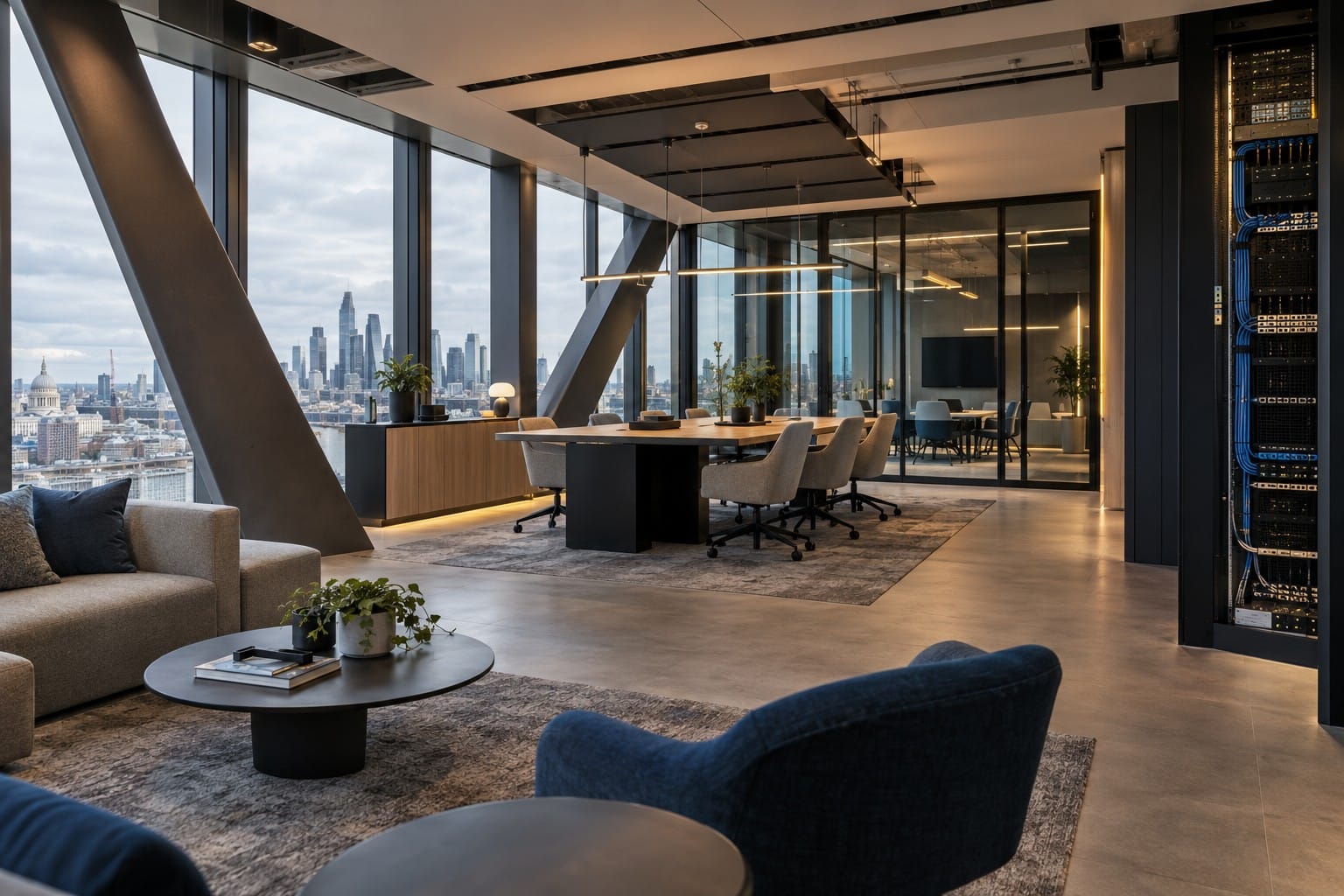
ACCL was appointed during the later phase of technology refits at HP’s Design Centre in The Gherkin, reconfiguring the existing Cat6A network and adding around 120 new outlets as new technology was introduced into the customer-facing space. The centre had to remain open throughout, so the work was planned in phases around HP’s day-to-day use of the building.
The result
ACCL delivered a substantial Cat6A upgrade inside a live, customer-facing technology centre without taking it out of service. The completed project gave HP:
- Around 120 additional Cat6A structured cabling outlets
- Existing cabling reconfigured for the new technology layout
- A phased delivery plan built around a live customer centre
- Daytime and out-of-hours working scheduled by risk
- New and modified cabling tested, labelled and documented
- A more flexible network ready for the next technology change
Services delivered
Overview
HP’s Design Centre in The Gherkin was a technology-led environment in which new workplace and enterprise solutions could be presented and demonstrated to customers. It occupies floors of one of London’s most recognisable commercial buildings, and like any customer-facing showcase, its physical layout was never static: as HP refreshed the products and demonstration areas on display, the spaces built around them changed too. During the later phase of a programme of technology refits, changes to the equipment being showcased created new demands on the underlying physical network, and existing outlet positions no longer matched the layout of the refreshed spaces.
ACCL was asked to reconfigure and upgrade the structured cabling infrastructure to support the new technology being introduced. The existing network was built on Category 6A cabling, and the programme ultimately required around 120 additional Cat6A outlets together with modifications to the existing installation, delivered over roughly three months while the Design Centre continued to operate. Because the centre stayed open to HP’s own staff and visiting customers throughout, the scope of work was defined as much by sequencing and continuity as it was by the outlet count itself.
The challenge
The principal challenge was continuity. The Design Centre existed to demonstrate technology to HP’s customers, so the network infrastructure supporting it could not simply be taken out of service while a refit took place around it.
ACCL had to work out how new Cat6A outlets could be introduced without compromising the services already in use, how the existing cabling could be reconfigured around the new technology layout, and which activities could run safely during the working day versus which needed to move into out-of-hours periods. Each phase also had to be tested, labelled and handed back ready for immediate use, so the refresh never created unnecessary disruption for HP staff or visiting customers.
Upgrading infrastructure around a live technology showcase
Technology showcase environments have a different infrastructure lifecycle from conventional offices. A normal workplace may keep broadly similar desk, meeting-room and network requirements for years; a design or demonstration centre can change far more often as new equipment and workplace technologies are introduced. For ACCL, the task was not simply to add more outlets, but to assess and adapt the existing Cat6A system so the physical network reflected the new technology layout.
Rooms like this one depended on the same Cat6A network: outlets behind the wall-mounted screen and around the table carried the room’s AV and conferencing connections, patched back through the reconfigured structured cabling serving the centre. Where existing connectivity could be retained or reconfigured, it formed part of the revised installation; where the new technology required additional connectivity, new Cat6A links were introduced. That approach let the passive infrastructure evolve with the centre rather than requiring wholesale replacement every time the showcased technology changed.
Working inside an occupied, higher-profile commercial building added its own constraints. Cable routes, containment and access to communications infrastructure had to work within an existing landlord-managed environment, so every stage of the reconfiguration was planned to fit around the building’s own operational rules as well as HP’s.
What ACCL installed
The technology refit required around 120 additional Category 6A data outlets, introduced alongside a reconfiguration of the existing Cat6A installation. ACCL’s scope covered surveying the existing infrastructure relevant to the refit, reconfiguring cabling where required, installing the new outlets, and terminating, labelling and testing every new and modified link.
Work that could be carried out without affecting the centre ran during normal working hours; changes with greater potential to interfere with live services or the customer environment were scheduled out of hours. That combination of daytime and out-of-hours delivery gave the project the flexibility to keep progressing without unnecessarily restricting HP’s use of the building.
Project context
Technology showcase & customer briefing centre · The Gherkin, City of London
Structured cabling for commercial offices →Refreshing technology in a live London office?
ACCL reconfigured a Cat6A network and added around 120 outlets inside HP’s occupied Design Centre without closing it. Talk to us about planning a phased cabling upgrade around your own live site.
Cat6A cabling and communications-room infrastructure
The physical build behind the refit was a Category 6A structured cabling installation: RJ45 data outlets run back to the Design Centre’s communications-room patching infrastructure, where new and reconfigured links were terminated onto structured patch panels. Cat6A was retained as the standard for the refresh so that every outlet, new or reconfigured, continued to support the same performance headroom as the rest of the existing network, rather than introducing a mixed-standard installation that would need separate management later.
Every new and modified link was tested and certified using calibrated testing and certification equipment before being labelled and documented, so the completed patching schedule and test results gave HP an accurate record of exactly what had changed. That documentation matters in a showcase environment that will keep evolving: the next technology refresh can be planned against a known, verified network rather than an assumed one.
Cabling for a changing customer showcase
A customer-facing technology centre depends on its network in a way a conventional office does not: every demonstration area and workstation on the floor is only as reliable as the outlet feeding it. As HP introduced new products and rearranged demonstration areas to present them, the cabling had to be repositioned and, in places, added to so that each new layout was properly served from day one rather than run on a temporary basis.
Breakout and informal meeting areas needed the same reliability as the main demonstration floor. Each seating area was served by its own Cat6A outlets, reconfigured or added as the showcase layout around it changed, so a change in one zone never left a neighbouring area running on temporary cabling.
Because the centre stayed open to visiting customers throughout, ACCL could not treat any part of the refresh as a clean-sheet installation. Existing outlets serving live demonstrations had to keep working while adjacent areas were reconfigured around them, which is why the programme was broken into phases rather than delivered as a single continuous fit-out. That phased approach let HP keep presenting its technology to customers without a visible gap in service while the underlying network caught up with the changing showcase around it.
Technologies used
ACCL’s role
ACCL was appointed to support the later phase of HP’s technology refits at the Design Centre. Our role included:
- Reviewing cabling requirements created by the technology refresh
- Reconfiguring existing Cat6A connectivity around the live environment
- Installing around 120 additional Cat6A outlets
- Planning and coordinating works around operational requirements
- Scheduling activities across normal hours and out of hours
- Termination, labelling, testing and handover of every link
Explore related ACCL services
Related guidance
Foreword by Wayne
“The HP Design Centre was an interesting project because the technology within the space kept moving forward, and the cabling had to move forward with it. Our job during this phase was to reconfigure the existing Cat6A system and install around 120 additional outlets to support the new technology being showcased, and the important point was that this was a live customer environment: HP needed the centre to stay open throughout the three-month programme. That meant planning each stage carefully and deciding what could be completed during the working day and what needed to move out of hours, then handing every area straight back into use once it was tested and certified. It’s a good example of how an existing structured cabling system can be adapted around a client’s changing technology rather than simply replaced, which is what good infrastructure support should do, especially inside a building as recognisable and closely managed as The Gherkin.”Wayne Connors, Managing Director, ACCL
Frequently asked questions
What work did ACCL carry out at the HP Design Centre in The Gherkin?
ACCL reconfigured and upgraded the existing Cat6A structured cabling during a later phase of technology refits, installing around 120 additional outlets and adapting the infrastructure to support new technology being introduced into the centre.
Where was the HP Design Centre project?
The project was inside The Gherkin at 30 St Mary Axe in the City of London.
What category of structured cabling was used?
The infrastructure was based on Category 6A structured cabling.
How many additional data outlets did ACCL install?
Around 120 additional Cat6A outlets were installed during the technology refresh.
How long did the project take?
The programme ran for approximately three months.
Did the HP Design Centre close during the cabling works?
No. A key requirement was for the centre to remain open throughout the project, so the work was delivered in phases around its day-to-day use.
Was the work completed out of hours?
The programme used a combination of normal working hours and out-of-hours working, depending on the operational impact of each activity.
Why was the existing cabling reconfigured rather than replaced outright?
The technology being showcased in the Design Centre was changing. Reconfiguring suitable existing connectivity and adding new Cat6A outlets let the passive infrastructure support the revised technology requirements without unnecessary replacement.
What does the project demonstrate about ACCL’s capabilities?
It shows ACCL’s ability to deliver structured cabling upgrades and network lifecycle work inside live, occupied, customer-facing environments where careful sequencing and operational continuity are essential.
Refreshing technology in a live London office?
ACCL designs, upgrades and reconfigures structured cabling for live, occupied commercial buildings across London.
Talk to us about your site 0333 900 0101