Cabling fire safety is one of the most critical elements of modern office and residential buildings. Many office buildings in London and the UK accommodate hundreds or thousands of people, and ensuring they are safe in the event of fire is not only a moral imperative for the employers but, under most circumstances, a legal obligation.
We continue to receive many questions from clients about cabling fire safety, particularly concerning the requirements for cable support systems in fire escape routes, originally introduced in 2015 under the UK Wiring Regulations (BS 7671). These regulations mandate that wiring systems in escape routes must be supported in a way that prevents premature collapse during a fire. Additionally, the Construction Products Regulation (CPR), which became fully enforceable in July 2017, remains in effect and requires that cables used in permanent installations within buildings be classified based on their reaction to fire performance. As standards and enforcement practices have matured, it’s more important than ever for installers and specifiers to ensure full compliance with both BS 7671 and CPR classifications when selecting and installing cabling.
We hope this material will be of use to anyone who wants to gain an understanding of general London fire safety requirements for data cabling, of what you need to do in order to comply with these requirements, and of the general technical and legal implications that modern fire safety practices have.

Evacuation and intervention safety measures are mainly clustered around fire escape routes. These measures are critical as they often provide the last barrier against loss of life in case of major incidents.
In fact, the regulatory requirements that define them were adopted after the very unfortunate experience of such incidents.
Data cables typically end up burning through contagion (i.e. the fire is kindled from nearby sources), but exceptions are not unheard of, especially in outdoor deployments, which can be vulnerable, among others, to lightning.
In both cases, though, it is primarily the cable’s insulating sheathing that kindles and carries the fire.
This suggests that there are two ways to prevent and control fires in our cabling systems: installing cables as far away from potential sources of fire as possible and using cables whose insulation is not easily flammable.
Ethernet cable installation guidelines therefore recommend that cables be installed away from any potential sources of open flame or sparks, and far from high-temperature installations and objects.
In certain situations, London cable installers may also use various fire stop solutions, such as sealants or metal sheaths and conduits. These act as fire barriers, insulating the cables from outside fires or, if the cable itself is burning, insulating nearby objects from the burning cable.
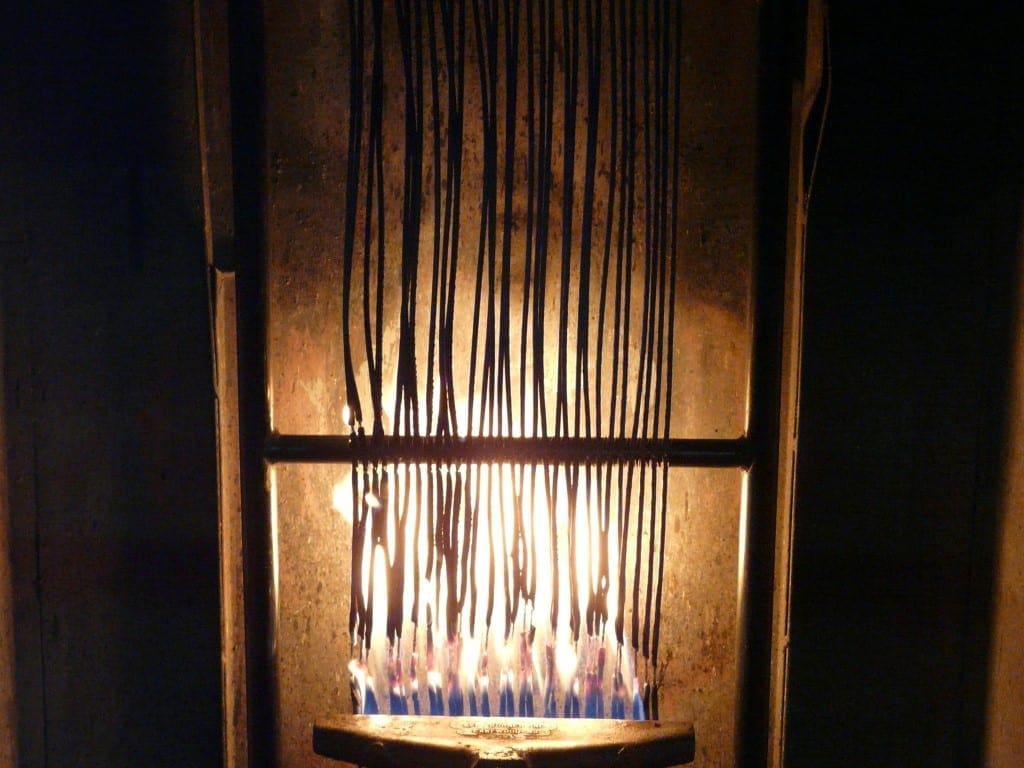
In the UK, there are no legal requirements to use cables of a certain CPR rating for a given purpose, but a broad framework is laid down by BS 7671, and industry bodies, such as the British Cable Association (BCA) issue their own guidelines. These guidelines include:
- Using cables rated class E or higher, and/or rated LSHF, LSOH, OHLS or LSNH.
- Avoiding class F cables
- Ensure that only cables with a known rating are deployed
An escape route is any route that can be used to escape to a place of safety during an emergency. Escape routes include both designated escape routes, such as corridors and hallways, but also open areas through which one may be reasonably expected to pass on their way to a safe place.
Cabling support mechanisms such as heat resistant cable trunking, conduits, trays or casings installed in these areas need to remain able to support the cabling even under the sort of thermal stress that an open fire involves. In practice, this means largely that:
- Cables in these areas must be supported by metal supports with adequate fire resistance properties.
- All fixing elements on which cable management systems rely, such as wall plugs, must have adequate fire resistance properties
These regulations apply to all types of cabling. Furthermore, the cabling itself is taken to mean not only the cables themselves but any busbars and parts which secure and enclose the cable or busbars.
You should bear in mind that the escape routes themselves are not set in stone. The designated fire escape routes have to be assessed and then updated whenever the need arises. In practical terms, this means that you need to:
- Ensure compliance when the cabling system is installed or upgraded
- Audit and, if needed, upgrade the cabling system whenever the designated fire escape routes change, to account for new fire escape routes.

In practical terms, regulations specific to fire escape routes rule out the use of plastic support systems and components in fire escape areas. Stainless steel supports are the most common recommendation, as stainless steel can easily withstand the high temperatures present during a fire, degrades slowly with time, and is easy to integrate into the landscape of any modern building.
Outside fire escape routes, there are no specific legal requirements (other than the ones we talked about in the previous section). Cable management systems and support systems made from less fireproof materials can be used in these areas, but we recommend that you make a decision on a case-by-case basis.
Plastic components are cheaper and easier to install, so they are a viable choice. Using metal fixing in areas near the escape routes, however, can be highly beneficial, even though it may not be legally required.
The right team of London cabling specialists can help you choose the right materials and the right types of cables for any building or office. At ACCL, we make your safety our priority, so all our advice will take into account current UK cabling fire safety recommendations and regulations.
How do installers ensure compliance with UK fire escape cabling requirements? The foundation of design decisions is a thorough survey of the installation environment. This survey aims to establish:
- The designated escape routes
- Mechanical and material properties of escape route elements (such as wall thickness and material)
- Areas of interest in the immediate vicinity of escape routes
Based on this data, cable installers can choose the optimum support and fixing elements, and make recommendations about other areas as well.
How Can You Ensure Continuous Compliance with These Requirements?
We recommend:
- Auditing the wiring installation in designated fire escape routes whenever the escape routes in your London building are changed.
- Periodically auditing the support and fixing systems in designated escape areas. While these systems are sturdy, they are nonetheless susceptible to manufacturing flaws, and some fixing components, such as wall mounts, still rely on the integrity of surrounding wall sections in order to provide adequate levels of support.
Conclusions and recommendations
Ensuring the safety of your staff, clients and collaborators, as well as the safety of firemen, paramedics and other personnel, is a legal requirement for businesses and an obligation for all of us. A wide range of measures is available in order to ensure the level of safety that we should aspire to in this day and age:
- Installing cables conservatively, keeping them safely away from potential fire sources
- Using adequate cables throughout the office area
- Ensuring that cables in fire escape routes are properly supported, even in the case of fire
Cabling fire safety can prove to be complicated, especially if you don’t have the necessary experience. At ACCL, we have been in this business for more than 20 years, so we have seen these standards and requirements change and evolve.
Thus, we can also foresee how the rules will change in the near future. Our goal is to make sure all our clients’ places of business are safe, along with all their personnel. If you’re looking for future-proof solutions that comply with cabling fire safety regulations, we’d love to help.
Give us a call or drop us a line and we’ll set a time and date for your FREE, no-obligations site survey.
Related topics: Modern cabling in building a new home , What is a smart building



Written by
Wayne founded ACCL in 1997 and has led more than 28 years of project delivery, helping organisations design, install and modernise the network infrastructure behind reliable connectivity, office moves and refurbishments. His experience spans copper cabling, fibre backbones, data centre infrastructure, Wi-Fi, CCTV and access control. About ACCL